Freeze-Thaw Resistant Porcelain Tiles for Poland: A Buyer’s Guide to Winter-Proof Sourcing (2026)
July 24, 2026
Frost-Resistant Porcelain Tiles for Poland: What to Check Before You Import
Frost-resistant porcelain tiles for Poland are not a premium upgrade. They are the baseline spec for anything going outdoors, and getting it wrong costs a whole terrace.
Here’s how it usually goes. A container lands in spring. The tiles look perfect, the price was good, the client is happy. By the second March there are hairline cracks along the terrace edge and nobody can explain why. The installer blames the tile. The supplier blames the installation. Neither of them checked the water absorption figure before the order shipped.
We covered the money side of this in what winter-grade tiles cost to import to Poland. This post is the technical half. What frost resistance actually means, the two numbers that prove it, and how to verify what’s in your container before it leaves the factory.
Why a Polish winter cracks the wrong tile
Every tile takes on a small amount of water. How much depends on how dense the body is when it comes out of the kiln.
A dense, high-fired body drinks almost nothing. A cheaper, more porous one drinks more. That water sits in the tiny pores inside the tile and does nothing at all through summer.
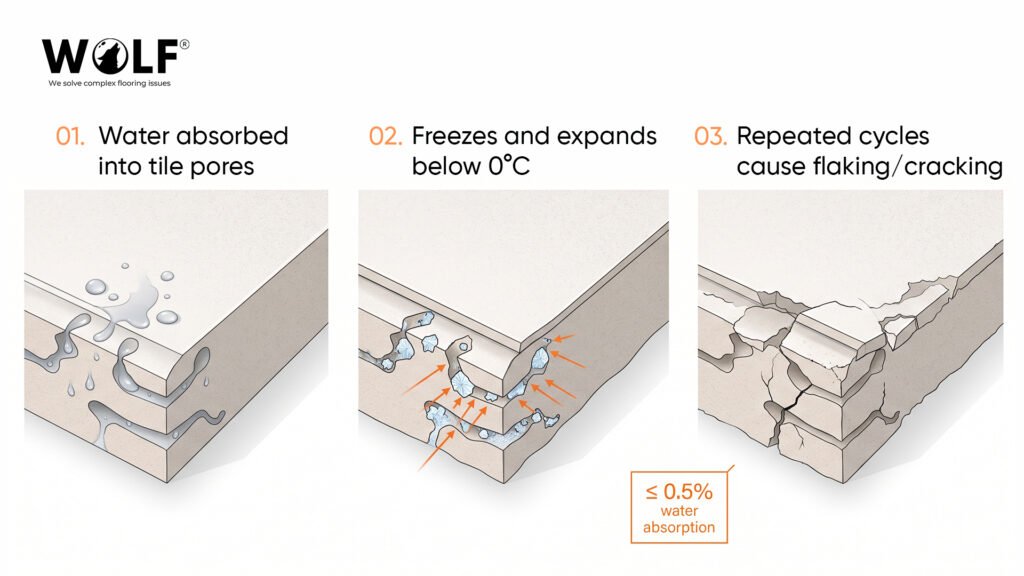
Then the temperature crosses zero. Water turns to ice, ice takes up more space than water, and it pushes outward from inside the tile.
Water enters the pores, freezes, and expands. One cycle does nothing visible, repeated Polish winters bring flaking and cracking. Absorption at or below 0.5% is the line.
One freeze does nothing you can see. The damage builds up. A normal Polish winter runs a tile through that cycle over and over, through the cold months and again through the shoulder seasons when it thaws by day and freezes by night.
After enough cycles a porous tile starts showing it. Surface flaking. Fine cracks. Tiles lifting clean off the substrate. By the time it’s visible the tile is finished and someone is paying to relay the whole area.
This is why the price conversation and the spec conversation are the same conversation. A tile that’s fifteen percent cheaper per square metre looks identical on the pallet. The difference shows up in year three.
For most of Poland this is a rule rather than an edge case. Continental winters with regular sub-zero cycling are the baseline, so any exposed surface needs a tile built for it.
The two numbers that prove it
Most of what gets printed on a spec sheet is marketing. Two figures tell you the truth, and once you know them you can read any supplier’s brochure in about thirty seconds.
Water absorption – Porcelain graded BIa under EN 14411 absorbs 0.5% of its weight in water or less. That 0.5% line is the threshold for genuine frost resistance. Anything above it and you’re relying on luck.
The frost test – EN ISO 10545-12 is the standardised lab test that runs a tile through 100 freeze-thaw cycles and then checks it for damage. Genuine frost-grade porcelain comes out with no cracking, no flaking, no surface change.
That’s the whole spec. Water absorption of 0.5% or lower, plus the EN ISO 10545-12 report for the exact tile you’re buying. A datasheet with the words “frost resistant” printed on it and no test behind it has told you nothing.
Where you actually need it in a Polish project
You don’t need frost-grade porcelain on every square metre, and it’s worth being clear about that so you’re not paying for a spec a heated indoor floor will never use.
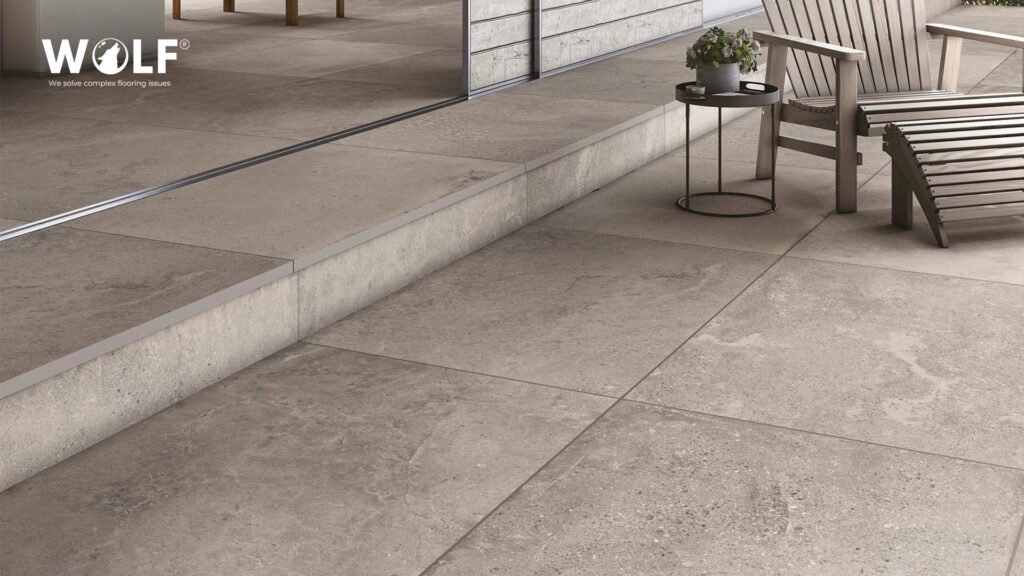
You need it anywhere water can sit on the surface or get into a joint and then freeze. Terraces. Balconies. Facades. Exposed entrances. Pool surrounds. Any outdoor surface in Poland, no exceptions.
Terraces, balconies, facades, entrances and pool surrounds, every exposed surface in Poland needs frost-grade porcelain, and R11 where ice is likely.
Enclosed interiors are different, even unheated ones, because they don’t see the same cycling. Standard-grade porcelain is usually fine there.
The grey areas are unheated garages, covered loggias, and open porches. Worth a five-minute check with your architect instead of a guess. A covered space that still catches wind-driven rain and drops below zero behaves like the outside.
Don't forget the other winter hazard: Slip
Frost grading stops the tile cracking. It does nothing about someone going down on an icy entrance, and that’s a separate spec you have to ask for on the same tile.
Slip resistance runs on the R rating scale. For outdoor entrances that catch rain, snow, and ice, R11 is what you specify.
You don’t have to trade one against the other. Wolf’s frost-grade range for outdoor use is available in R11, so one tile carries both. When you brief a supplier, name both specs. Frost resistance for the body, R11 for the surface.
The three documents to get before the container ships
Buyers rarely get caught buying the wrong tile. They get caught because nobody looked at the paperwork until the tiles had already landed.
For any exterior or exposed order, ask for these three things in writing before you sign off:
The water absorption figure, in writing, for the specific product. Not confirmed verbally on a call.
The EN ISO 10545-12 test report for that exact product line. A general company certificate that doesn’t name the tile isn’t the same document and doesn’t count.
The Declaration of Performance (DoP), which ties the tile to its EN 14411 classification. This is what a project inspector or architect can ask you to produce. Have it on file before anyone asks.
A supplier who can send all three on request is selling you a real frost-grade product. One who stalls, or replies with a general brochure, is telling you something. Push while the order is still open and you still have leverage.
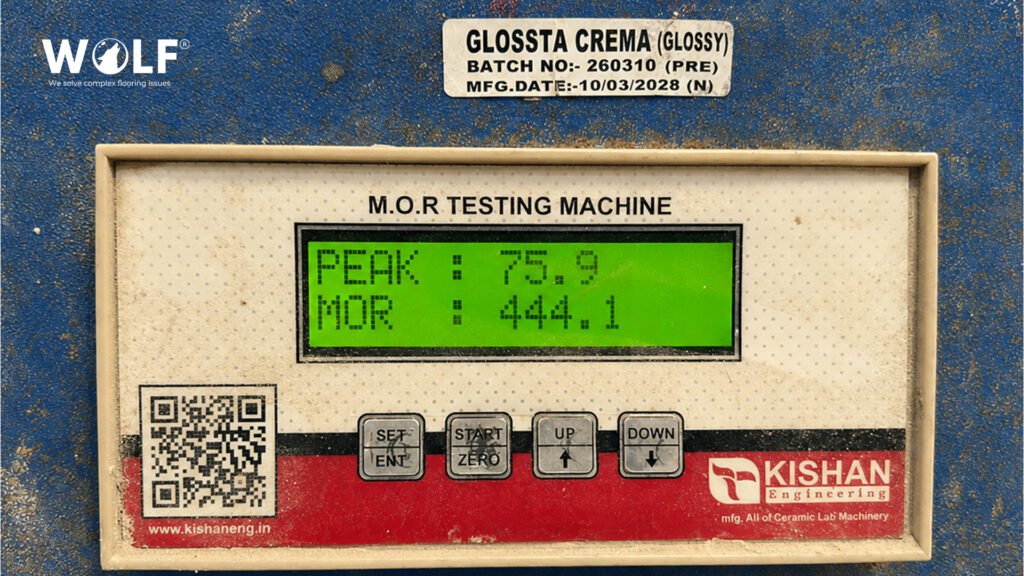
Batch-level testing at the factory is routine, but for exterior orders, ask for the product-specific water absorption figure and the EN ISO 10545-12 report in writing.
One honest note on our own numbers. We’re not going to quote a specific certified frost rating in a blog post, because that figure belongs to a specific collection and its test report, not to a general claim. What we can say is that our export team supplies frost-grade porcelain with the documentation behind it, andour export process is built to get that paperwork to you before your order ships.
Sourcing frost-grade porcelain from Wolf for a Polish project
Acrossour porcelain tile collections, the ranges suited to cold-climate exterior work are the denser, low-absorption bodies made for outdoor and commercial use. They come in the larger formats that work well on terraces and facades.
Tell our team the application, whether that’s a terrace, a facade, an entrance, or a pool surround. We’ll point you to the collections that carry the water absorption figure and the EN ISO 10545-12 report for that use, so you’re not guessing from a general catalogue.
It can, if it's the wrong grade. Density decides it. A porcelain rated at 0.5% water absorption or below handles Polish winters fine. A more porous tile holds water that freezes, expands, and works the tile apart over repeated winters.
R11 for entrances, terraces, and pool surrounds that get wet, snow, or ice. Specify it on the same tile as your frost grading so you get grip and freeze-thaw resistance in one product.
Ask for the EN ISO 10545-12 test report naming the exact product line. If they send a general company certificate or a brochure instead, the claim isn't backed.
No. Plenty of porcelain is made for interiors and absorbs more water than the 0.5% threshold, and it isn't tested for freeze-thaw cycling at all. Put it on an exposed terrace and you're likely looking at cracking after the first hard winter.