Top Porcelain Tile Trends in Albania: Large Formats & Modern Textures for 2026
January 9, 2026
A Tirana showroom owner shared something interesting last month. Customers used to ask for glossy white tiles, the shinier the better however now they barely glance at those displays. They head straight for the warm, stone- look tiles with soothing matte finishes.
Albania’s building boom isn’t slowing down, but the aesthetics have completely shifted. The porcelain tile trends Albania is embracing in 2026 show a market that’s figured out its own style.
Whether you’re running a showroom in Durrës or designing villas in Sarandë, knowing what’s actually moving off shelves matters more than guessing at trends.
Bigger Tiles Took Over (And They're Not Going Back)
Remember when 60×60cm was considered a “large tile”? Those days are gone.
60×120cm Became the New Normal
These may be found everywhere in Tirana’s new housing buildings. Not because they are trendy, but because they are practical.
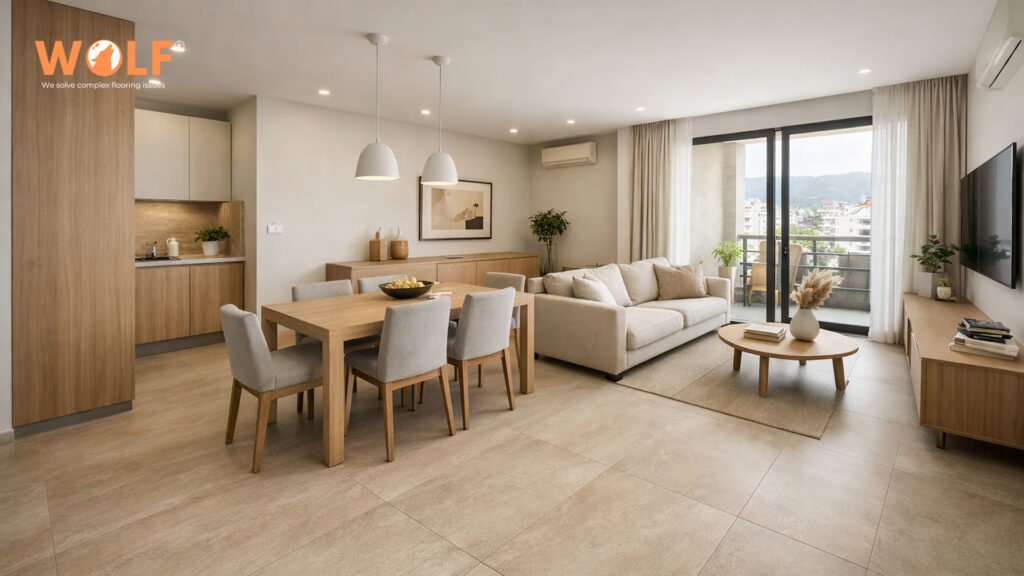
Most Albanian rooms are about 3-4 meters wide. With 60×120cm tiles, you cover that space with 2-3 tiles instead of 5-6 smaller ones. Fewer grout lines make the room appear larger, more open, and, honestly, more expensive.
Installation? Albanian contractors got comfortable with this size pretty quickly. What used to cost extra doesn’t anymore because everyone knows how to do it now.
120×240cm for the Wow Factor
High-end retail and hotels figured something out: your floor makes an impression before customers even see your products.
New shopping centers in Tirana use these massive slabs because they instantly communicate quality. Hotels along the coast install them to compete with Greek and Croatian properties that charge way more per night.
The catch? You need a perfectly level floor and someone who really knows what they’re doing. But when it’s done right, the effect is hard to beat.
80×160cm Porcelain Tiles: An Emerging Format for Coastal Properties
Coastal homes and seaside apartments are increasingly opting for this format as it delivers a refined look without the foundational perfection required by ultra-large slabs. Its proportions make installation more manageable on coastal sites while still achieving a modern, open-floor aesthetic. With accurately rectified edges, 80×160cm tiles also support clean 2mm grout lines, helping interiors feel polished and well-executed without adding unnecessary complexity.
The Great Colour Shift: Cold to Warm
A slight change has been noticed in the Albanian showrooms recently, you’ll notice those cool greys and stark whites that used to dominate displays are quietly disappearing to the back and are becoming less and less popular by each passing day, the reason being?
Everyone Started Asking for Warm Tones
Albanian buyers want spaces that feel comfortable immediately rather than remaining sterile for months unless you add enough furniture to make them feel liveable.
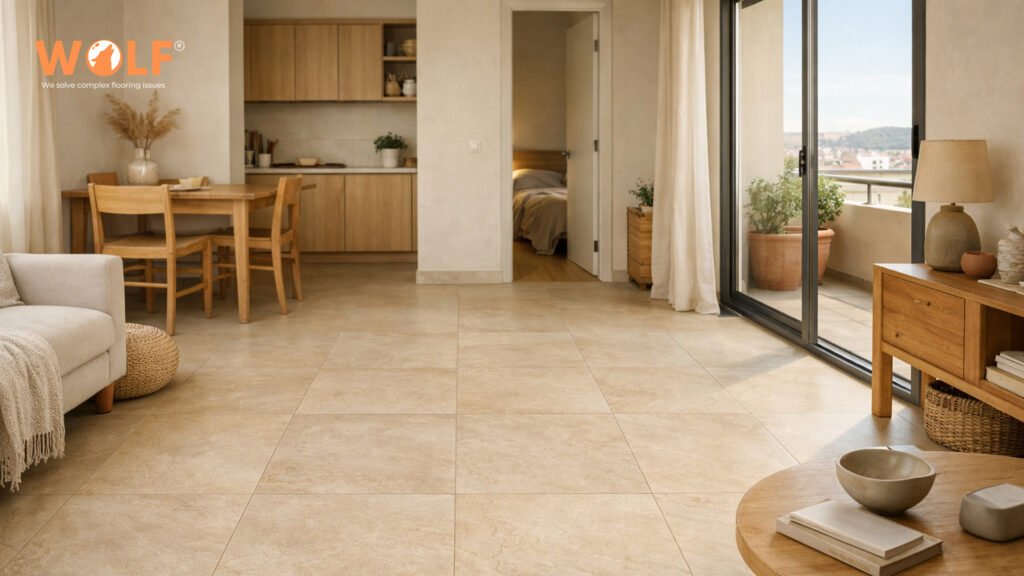
Greige (that grey-beige mix) became the most popular request. Beige came back, but not the yellowish 90s version, think more of a sophisticated sandy tone. Creams and soft ivories found their audience too, especially in homes. Now picture a new penthouse in Tirana. Warm greige floors throughout catch the morning light perfectly and make the space feel inviting from day one, even before furniture arrives.
Real Stone Looks Started Mattering More
Albanian clients have become more selective. They are able to identify counterfeit “marble-look” tiles that fail to replicate the appearance of real stone.
Current trends include : travertine effects with actual texture (not just printed), limestone that looks Mediterranean without the maintenance headaches, concrete aesthetics for modern spaces, and terrazzo making a comeback.
Italian printing technology is used in Wolf Group’s stone-look tiles to give the tile depth; the veining is integrated into the structure rather than merely appearing on the surface. When you see them in person as opposed to in pictures, you can distinguish between the two.
Why Matte Makes More Sense
Tirana gets dusty in summer. Glossy floors show every footprint, every water spot, everything. Matte hides all that.
Plus, textured surfaces give you better grip when wet, important for commercial spaces and family homes where nobody wants slip accidents.
And let’s be honest, modern Albanian design leans toward understated rather than flashy. Matte fits that vibe perfectly. Coastal homes especially like this because walking barefoot on matte porcelain feels better than walking on polished surfaces.
Textured Surfaces Add Character
Albanian designers started using porcelain with subtle 3D textures more than heavily textured, which is just enough to add interest.
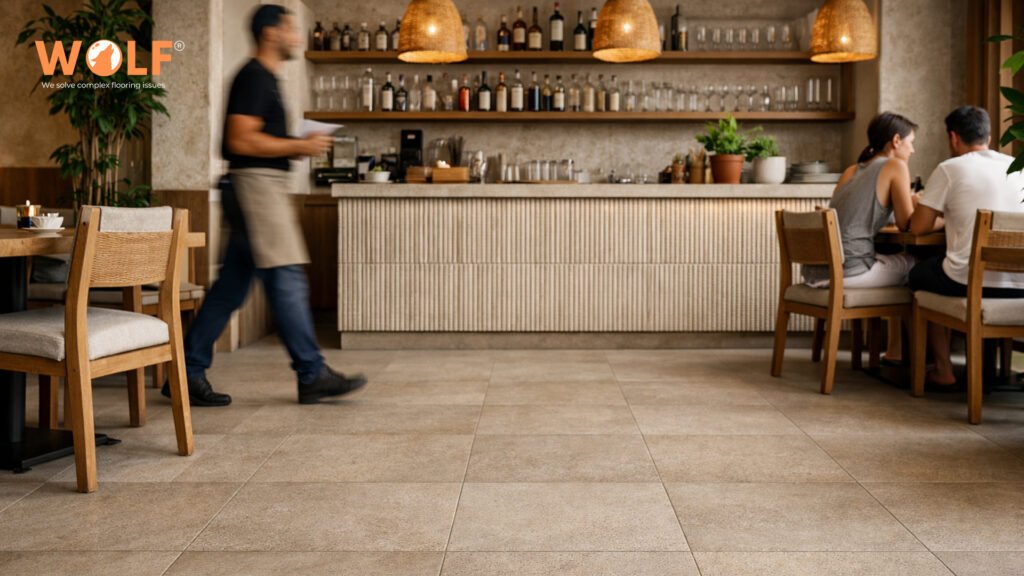
Lightly structured finishes work great for accent walls. Fluted patterns create depth in restaurants and shops where flat walls feel boring. Some stone-look tiles even replicate the actual texture you’d feel on real limestone.
Think about a restaurant in Durrës. Matte textured floors look good and clean easily. The same material on the bar wall adds visual interest without overwhelming the space.
What Retailers Should Actually Stock
If you’re buying inventory for 2026, here’s what moves:
Formats That Sell
Keep plenty of 60×120cm in stock in different colours and finishes. This is your bread and butter. Have some 80×160cm for coastal customers and upscale projects. Keep a few 120×240cm slabs around even if they don’t fly off the shelves, they make your showroom look serious. Don’t forget 60×60cm. Budget projects still need these.
Colours People Want
Stock mostly warm greys, greiges, and beiges with stone looks. Creams and ivories for residential. Some deep charcoal for modern commercial spaces. Gradually reduce cool greys and pure whites. That’s where demand’s falling.
Finishes That Matter
About 65-70% of your floor tile inventory should be matte and honed. Keep polished for bathroom walls. Have some structured surfaces for designers who want something different.
Getting Installation Right in Albanian Climate
Albania’s Mediterranean weather means some things matter more than others when installing tiles.
Your substrate needs to be perfectly flat for large formats. Albanian builders have gotten better about this with proper leveling systems.
Use the right adhesive, polymer-modified stuff made for large format tiles. Regular thin-set doesn’t cut it with 60×120cm and bigger.
Those thin grout lines everyone wants? You need rectified tiles that are cut precisely. That’s where it actually comes from.
Don’t skip expansion joints. Albanian temperatures swing enough between seasons that tiles need room to move without cracking.
For coastal properties using tiles on terraces or pool areas, make sure you’re getting R11 slip resistance and using installation methods that handle moisture.
Commercial vs Residential: Different Needs
What sells for shops and hotels isn’t exactly the same as what goes into homes.
Commercial projects want high-traffic ratings (PEI 4 or 5), big formats that make an impression, matte finishes that stay looking clean, and neutral colours that work with changing merchandise or décor.
Residential buyers care more about warmth (those beiges and stone-looks), practical sizes that balance impact with reality, comfortable feel for walking barefoot, and getting European quality without breaking the budget.
Knowing the difference helps you stock the right stuff for your customer base.
Sustainability’s starting to matter more. Projects are asking about environmental stuff. Manufacturers who can show eco-conscious production will have an edge.
Some custom work might emerge as competition heats up. Digital capabilities could become a differentiator.
But the main direction for 2026 is pretty clear: bigger tiles, warmer colours, matte textures, real-looking stone. This isn’t a fad anymore, it’s just where Albanian design has landed.
Ready to Stock What Albanian Buyers Actually Want?
The porcelain tile trends Albania wants in 2026 aren’t mysterious, just look at what’s going into new buildings from Tirana to Sarandë.
Designers get materials that support good work. Retailers who stock large formats, warm colours, and matte finishes align inventory with real demand instead of outdated guesses.
Wolf Group India manufactures the exact formats, colours, and finishes Albanian projects are specifying. Our tiles use Italian technology that delivers precise dimensional accuracy, those thin grout lines Albanian installers need actually work out properly. We’ve supplied European markets for over 20 years across 40+ countries, so we understand what quality means in demanding markets like Albania.
Whether you’re a designer specifying tiles for coastal villas or a retailer stocking showrooms in Tirana and Durrës, we deliver tiles that meet continental standards with logistics that match Balkan construction speed.
When sourcing large-format porcelain for Albanian projects, dimensional accuracy and consistent supply matter as much as aesthetics. Wolf Group India’s Italian-technology manufacturing addresses these requirements, learn more at Wolf Group India or info@wolfgroupindia.com