

Close
Guatemala’s climate is not forgiving on interiors.
Humidity rises fast. Rain comes heavy. Temperatures shift between warm days and cool evenings. The floor you choose has to handle moisture, foot traffic, and heat, every single day.
Porcelain tiles are one of the strongest choices for tropical homes. They resist moisture, handle heat, and last for decades with minimal upkeep. But once you’ve decided on porcelain, a second question follows immediately:
It’s not just about looks. The finish you choose affects how safe your floor is when wet, how much time you spend cleaning it, how light moves through your rooms, and how your home feels to live in.
This guide breaks it down clearly, room by room and finish by finish, so you can make a decision that works best for Guatemala’s climate and your home’s style. Wolf Porcelain, a trusted porcelain tile manufacturer from India, produces both matte and glossy finishes in formats built for tropical homes, and the comparisons below reflect how these tiles actually perform in real conditions.
Before comparing finishes, it helps to understand why porcelain is the right base material for tropical homes in the first place.
Porcelain tiles are fired at higher temperatures than standard ceramic, which makes them denser and far less porous. In practical terms, this means they absorb very little water. High-quality porcelain typically has a water absorption rate below 0.5%, as defined by international porcelain classification standards, which makes it genuinely suited to humid tropical climates like Guatemala’s.
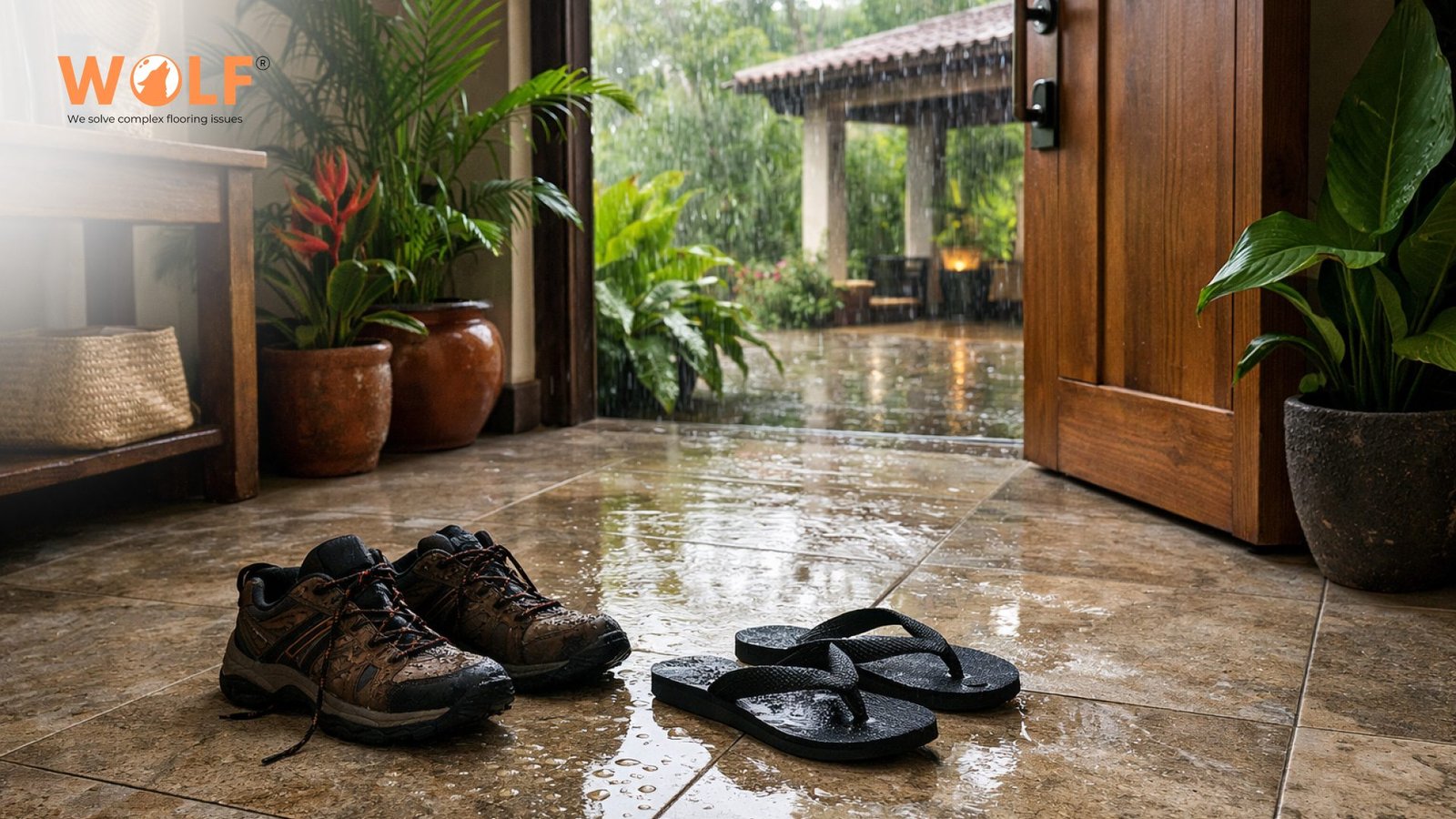
They don’t warp, swell, or crack under temperature fluctuations. They resist staining from spills, mud, and the organic matter that tropical environments carry indoors. And they require nothing more than regular sweeping and mopping to stay in good condition.
For Guatemalan homeowners, this combination makes porcelain one of the best kitchen floor tiles available, and equally reliable in bathrooms, living areas, and covered outdoor spaces.
The finish, however, changes everything else.
Matte porcelain tiles have a soft, non-reflective surface. They don’t shine. They don’t bounce light around the room. What they do instead is grip, hide, and endure.
In humid conditions, wet floors become dangerous quickly. Matte tiles offer better slip resistance than polished surfaces because they are less smooth at a surface level, even without pronounced texture. The absence of a glossy polish means the surface retains more natural grip when water or moisture is present. For kitchens where spills are frequent, bathrooms where floors get wet multiple times a day, and laundry areas that deal with constant moisture, matte is the safer finish.
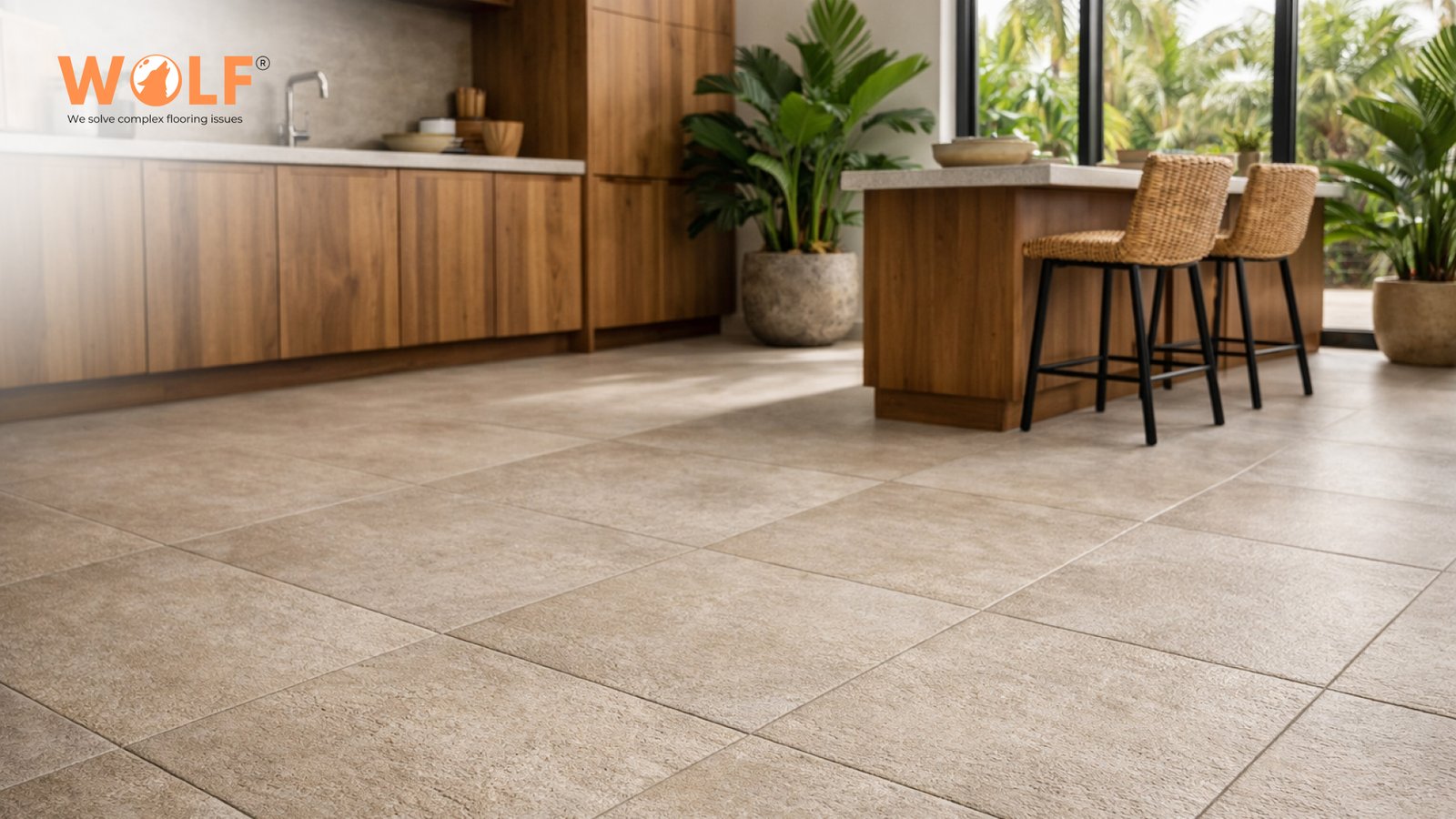
Matte surfaces also hide what glossy surfaces reveal. Water spots, footprints, dust, and everyday smudges are far less visible on a matte tile than on a polished one. In a busy household, especially with children or pets, this makes a noticeable difference in how clean your floor looks between mopping sessions.
The aesthetic of matte tiles leans natural and contemporary. Concrete looks, stone textures, and soft earth tones all translate beautifully in matte finishes. These designs complement the architectural character of Guatemalan homes without competing with the natural landscape outside.
Where to use matte tiles: Kitchens, bathrooms, laundry rooms, hallways, and covered outdoor patios.
For kitchens and bathrooms specifically, 24×24 porcelain floor tiles in matte and glossy finishes offer a versatile size that balances practicality with a clean, modern look. Easy to install and proportioned well for most room sizes.
Glossy porcelain tiles are polished to a smooth, reflective surface. Where matte absorbs light, glossy bounces it, brightening rooms and creating a sense of space that smaller or darker interiors particularly benefit from.
In living rooms, dining areas, and hallways with good natural light, glossy tiles create an open, airy feeling that is difficult to achieve with other materials. The reflective surface picks up light from windows and distributes it across the room, making the space feel larger and more luminous.
Glossy tiles are also easy to wipe clean. Because the surface is completely smooth, spills sit on top rather than settling into texture. A quick mop handles most messes efficiently.
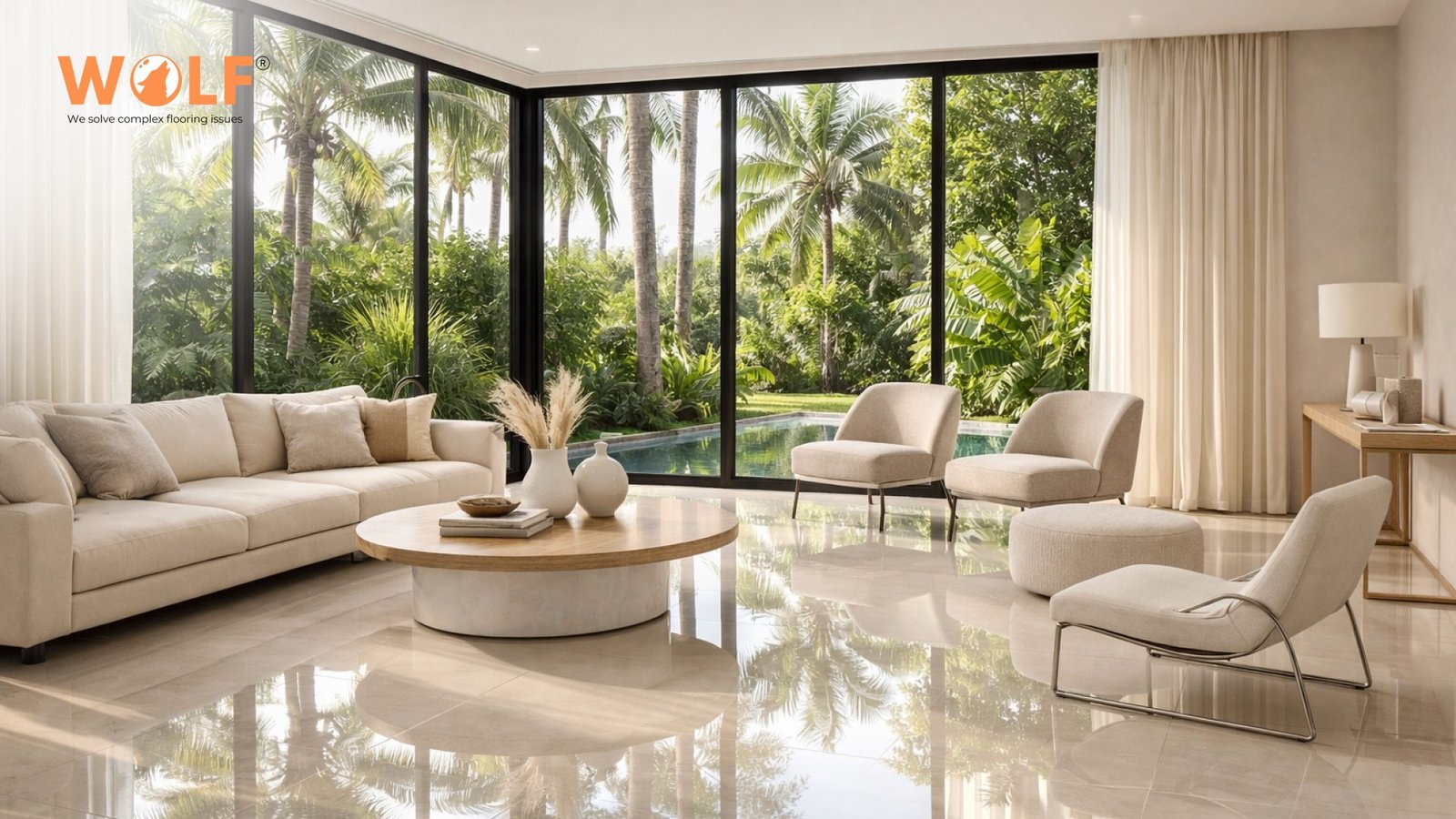
The limitation is honest: glossy tiles show dust, footprints, and water spots clearly. In high-traffic areas or rooms exposed to humidity, they require more frequent cleaning to maintain their appearance. They are also more slippery when wet, which is why they belong in dry living areas rather than kitchens or bathrooms.
Where to use glossy tiles: Living rooms, dining areas, hallways, and commercial reception spaces.
For open living areas, 24×48 porcelain tiles for living rooms reduce the number of grout lines across the floor, creating a seamless, contemporary surface that makes the most of the glossy finish’s reflective quality.
High glossy, sometimes called mirror finish, takes the polished surface one step further. The reflection is near-mirror level, and the visual effect in the right setting is striking.
High glossy tiles suit spaces where design impact is the priority: luxury bathrooms, feature walls, hotel lobbies, and premium residential interiors. They amplify light dramatically and give any room a high-end, finished quality.
The trade-off is maintenance. High glossy surfaces show every mark: fingerprints, water drops, and dust. And need frequent attention to stay looking sharp. They are best kept for dry, lower-traffic areas where their visual effect can be appreciated without the cleaning demands becoming a daily burden.
Not sure which finish suits your space? Here is a straightforward breakdown of how each one performs where it matters most.
Matte is the most practical finish for tropical homes. It offers high slip resistance, hides dust and everyday marks well, and needs the least frequent cleaning. It performs excellently across all conditions in Guatemala’s climate, making it the go-to choice for kitchens, bathrooms, and any area that sees moisture or heavy foot traffic.
Glossy brings brightness and elegance to dry living spaces. It reflects light beautifully, which makes rooms feel more open and spacious. The trade-off is visibility, glossy surfaces show dust, footprints, and water spots more clearly, so they need more regular cleaning. They work well in living rooms and dining areas, but should stay out of wet zones where slip risk increases.
High Gloss Finish is for spaces where visual impact is the priority. The near-mirror surface creates a dramatic, luxury effect and maximises light reflection. It requires the most upkeep and has the lowest slip resistance of the three, so it suits feature walls, accent areas, and premium dry interiors rather than everyday flooring.
In short: use matte where your floor has to perform, glossy where you want it to impress, and high glossy where you want it to be noticed.
The most practical approach for a Guatemalan home is not to choose one finish throughout. The idea is to match the finish to the room’s function. Many Guatemalan homes feature open living areas connected to patios or terraces, which makes the transition between indoor and outdoor surfaces an important consideration. Slip resistance and moisture performance matter not just inside the bathroom but wherever indoor and outdoor living overlap.
Matte. Spills are constant, floors get wet, and grip matters. A matte tile in a neutral stone or concrete tone keeps the kitchen looking clean with minimal effort.
Matte. Safety is the priority in wet areas. A textured matte surface significantly reduces slip risk, especially for children and older family members.
Glossy or high glossy. This is where the visual impact of a reflective surface pays off. A 24×48 glossy tile in a light tone opens up the room and catches natural light beautifully.
Either works depending on traffic level. For busy entrance hallways that connect to outdoor areas, matte is more forgiving. For interior corridors with controlled foot traffic, glossy adds elegance.
Matte only. Moisture, rain splash, and bare feet make grip essential.
To see how both finishes look across different sizes and surface designs, view all tile collections with 3D previews before committing to a choice.
A growing number of retailers and contractors in Guatemala and across Central America source porcelain tiles from India, and the reasons are straightforward. Many importers work directly with matte finish porcelain tile exporters in India to access durable, humidity-resistant surfaces suited to tropical climates at competitive export pricing.
Indian manufacturers produce both matte and glossy finishes at a technical level that meets international quality standards. Tiles are fired to high density, tested for water absorption and surface durability, and manufactured in consistent batches that make large-scale projects reliable.
The design range is wide. Stone looks, concrete textures, marble-inspired surfaces, and minimalist solid tones are all available in both finishes and across multiple sizes, giving retailers and homeowners genuine variety rather than a limited catalogue.
For importers and retailers evaluating quality and compliance, our quality certifications and manufacturing standards outline how Wolf Porcelain’s production meets the benchmarks that export markets require.gg
Matte tiles have a textured, non-reflective surface that provides better grip and hides marks, making them the practical choice for wet and high-traffic areas. Glossy tiles have a smooth, reflective surface that brightens rooms and creates an elegant look, best suited to dry living spaces.
Matte is the safer choice for wet areas in tropical climates like Guatemala's. The textured surface provides grip when floors are wet, significantly reducing slip risk. Glossy tiles are smoother and more slippery underfoot when moisture is present.
Glossy tiles show dust, water spots, and footprints more visibly than matte tiles. In humid climates where floors encounter moisture frequently, they require more regular cleaning to maintain their appearance. For high-traffic or wet areas, matte is the lower-maintenance option.
24×24 tiles are well-proportioned for kitchens and bathrooms. They are manageable to install and balanced in scale for smaller rooms. 24×48 tiles suit open living areas and dining spaces, where the larger format reduces grout lines and creates a more seamless, spacious look.
Yes, and it's often the best approach. Combining matte in wet functional areas with glossy in dry living spaces gives each room the finish that suits its purpose. Many Guatemalan homeowners use matte throughout kitchens and bathrooms and glossy in living and dining areas.
Indian porcelain tiles are recognised for combining consistent manufacturing quality with competitive export pricing. Manufacturers in India offer a wide range of designs and finishes that meet international durability standards, making them a practical sourcing option for retailers and contractors across Central America.
High glossy tiles have a near-mirror reflective surface, more intense than standard glossy. They create maximum visual impact and suit feature walls, luxury bathrooms, and premium residential interiors. Because they show marks easily and can be slippery, they are best used selectively in dry, lower-traffic spaces.
Choosing between matte and glossy is easier when you can compare both finishes in real surface detail, not just imagine them from a screen.
Wolf Porcelain supplies matte and glossy porcelain tiles to homeowners, retailers, contractors, and distributors across international markets, with export-ready packaging and consistent production batches for projects of any scale.
Explore finish options in our 3D collection viewer to compare surfaces in real lighting conditions before choosing the right tile for your home.