
Close
The conversation usually starts the same way.
A procurement manager in Zagreb describes ordering tiles six months ahead of schedule, adding buffer time, and still watching a project stall because the third shipment arrived in a shade that did not match the first two. The supplier was responsive before payment. After it, less so.
This is not an isolated story. It circulates across Croatian import businesses with enough regularity that it has stopped sounding like bad luck and started sounding like a structural problem.
The response has been measured but clear. Croatian importers are not abandoning international sourcing. They are becoming more deliberate about where that sourcing happens. And increasingly, the answer is pointing away from China and toward India.
Trade patterns across Eastern Europe show a gradual diversification in sourcing, with India gaining a larger share in porcelain tile imports. This is not accidental. It reflects deliberate decisions by procurement teams that have weighed the alternatives and found India more reliable in practice.
If you are evaluating sourcing options, this guide on how Croatian distributors can source tiles from Indian manufacturers offers a deeper starting point.
This article breaks down what is changing and why India is becoming a preferred choice for porcelain tile suppliers croatia searches and sourcing decisions.
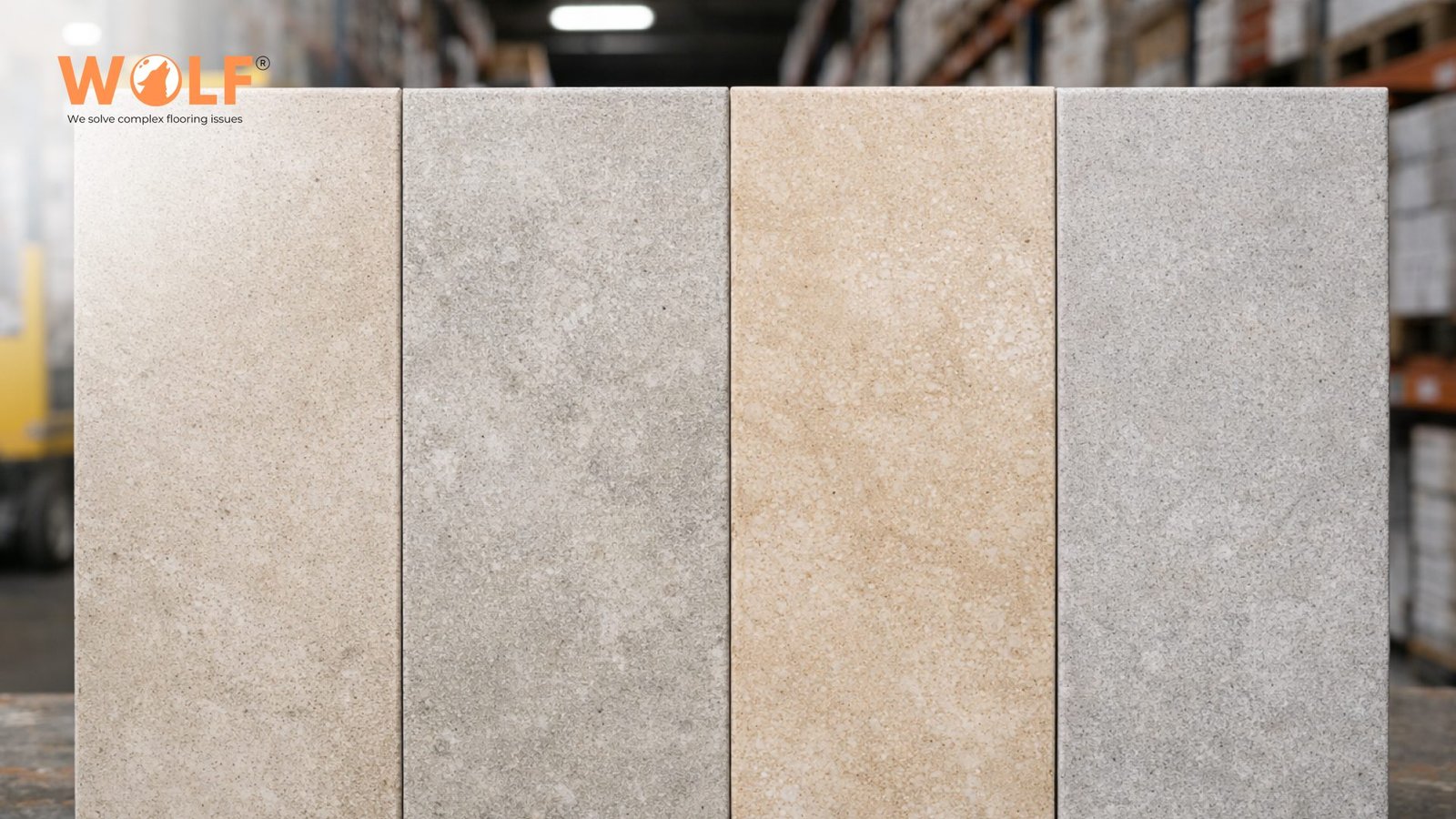
Croatia’s construction and renovation sector has matured considerably over the past decade. The volume of demand was once enough to drive purchasing decisions on its own. Now the quality of that demand has changed.
Importers are now curating product portfolios, not just moving volume. They serve architects, interior designers, and developers with specific project requirements, and that shift changes everything about how sourcing decisions are made.
Three priorities now sit at the centre of every import conversation:
Croatia’s Mediterranean architecture and coastal renovation market add a layer of specificity that not every supplier can meet. Projects increasingly require warm stone tones, natural limestone-inspired surfaces, matte textures suited to sun-exposed spaces, and finishes that age gracefully in humid coastal conditions.
China still commands a significant share of global tile exports. But Croatian buyers have grown more selective about what they need from a supplier relationship. Competitive pricing alone no longer closes the conversation. This is where India is entering the market in a serious and sustained way.
This is why more buyers searching for porcelain tile suppliers Croatia are now evaluating Indian manufacturers alongside traditional sourcing markets.
This change is not emotional or political. It is being driven by side-by-side operational comparison, and the results are consistent enough that they are changing purchasing patterns across the region.
Factor | China | India |
Pricing Stability | Fluctuates frequently | More predictable |
Batch Consistency | Common variation issues | Improved repeatability |
Communication | Slows post-payment | Structured export communication |
Lead Times | Increasing unpredictability | More stable shipping cycles |
Compliance Focus | Varies by supplier | Better alignment with export compliance requirements |
Chinese tile pricing has become harder to plan around. Internal cost pressures, policy shifts, and freight volatility have introduced unpredictability that procurement teams find difficult to absorb when managing multi-phase projects with fixed client budgets.
Indian suppliers offer a different pricing dynamic: clearer cost breakdowns, more stable pricing cycles across production periods, and genuine flexibility in bulk negotiation. For import managers building annual procurement plans, that predictability has real commercial value.
Shade variation between batches is the issue Croatian importers mention most often. A distributor can lose a client relationship over a floor tile that does not match between the first and second delivery of the same project.
Indian manufacturers, particularly those operating from Morbi with Italian manufacturing technology and standardized process controls, have made significant investments in batch repeatability. The production systems now in place in leading facilities are designed specifically to address the consistency problem that has historically plagued bulk tile imports.
Import managers often describe a pattern with Chinese suppliers: strong responsiveness during the sales process, slower engagement once payment is secured, and limited visibility during production. For buyers managing tight project timelines, that communication gap creates risk.
Indian exporters built for international business, particularly those with 20+ years of experience and exports across 40+ countries, operate with documentation systems, dispatch coordination, and client communication processes that reflect the expectations of European procurement teams rather than the habits of a domestic-focused manufacturer.
Repeatability is what separates a supplier from a partner. Indian manufacturers increasingly understand that a Croatian importer placing a second or third order is doing so because the first order performed exactly as expected. That understanding is shaping how best porcelain tile manufacturers in India for export approach quality control across the production cycle.
This is clearly reflected in how procurement teams now shortlist porcelain tile suppliers Croatia for long-term partnerships.
Price may open the conversation. Compliance determines whether it closes.
European buyers operate within a regulatory environment that does not bend for competitive pricing. Croatian importers sourcing for commercial and residential projects face inspection requirements, project approval processes, and client specifications that all require verifiable documentation.
The key compliance requirements that Croatian procurement teams now verify before finalizing any supplier include:
Indian exporters have aligned their documentation and production systems closely with these requirements. This is not a recent development. It reflects years of investment by export-focused manufacturers who understood that European market access depends on meeting European standards without exception.
You can review our certifications including ISO and CE compliance to understand how export-focused manufacturers structure their compliance processes.
For procurement teams, supplier certification reduces the risk of project delays, customs complications, and client-side approval issues that can arise when documentation is incomplete or not independently verified.
If compliance and documentation are part of your sourcing checklist, reviewing supplier certifications early can prevent costly delays later.
Design has moved from a secondary consideration to a primary one. Croatian distributors serving architects and interior designers are under pressure to offer collections that reflect current market tastes rather than generic catalogs built for undifferentiated global demand.
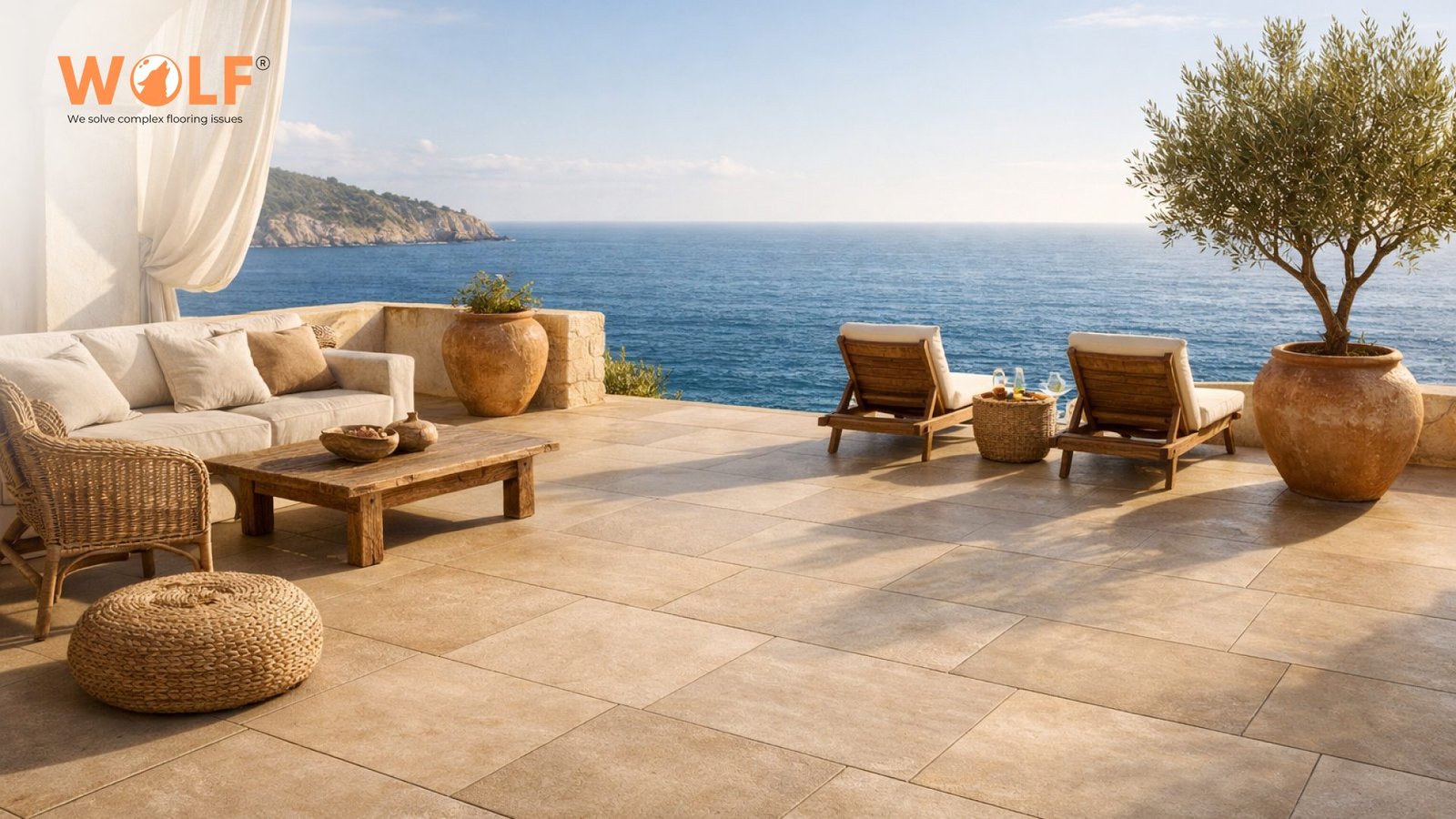
Croatian projects, particularly those in the coastal renovation and hospitality sectors, are drawn toward a specific aesthetic vocabulary:
Indian manufacturers have developed an attentiveness to export market design trends that is increasingly difficult to match. Collections are built with international specifications in mind, not adapted for them after the fact. The result is a design range that gives Croatian importers genuine variety without the sourcing complexity of working across multiple suppliers to achieve it.
For distributors trying to differentiate on product rather than price, that design depth is a commercial advantage.
Standardization in tile sizing matters for two practical reasons: logistics efficiency and installation compatibility. Croatian contractors and project managers work within established size conventions, and importers who deviate from those conventions create friction for their distribution partners.
Two formats dominate Croatian project specifications:
The most widely used residential floor format in Croatia. It handles well during installation, generates manageable waste levels, and carries stone-look and matte finishes convincingly across living areas, kitchens, and bathroom floors.
Explore full collections here: 600×600mm porcelain tiles in stone-look finishes
The format of choice for modern interiors where the visual priority is continuity rather than pattern. Fewer grout lines across a wall or floor surface create a cleaner, more premium result that aligns with the direction contemporary Croatian residential and hospitality projects are moving.
Explore full collections here: 600×1200mm porcelain tile designs
Indian manufacturers supply both formats in consistent batch quality, making them suitable for the kind of repeat bulk imports that Croatian distributors rely on across annual purchasing cycles.
Logistics reliability is where the China-to-India comparison has become most stark for Croatian importers over the past few years.
Shipping from China has faced sustained disruption. Port congestion, freight cost volatility, and unpredictable waiting times have made it genuinely difficult for import managers to build reliable project delivery schedules around Chinese supply chains. When a delay compounds a delay, the importer absorbs the cost and the client relationship takes the damage.
India presents a different logistical picture.

Shipping schedules from Indian export ports are more consistent. Container handling at Mundra and Nhava Sheva has improved significantly for European-bound freight. Routing to Adriatic ports, which serve as the natural entry point for Croatian importers, has become more direct and more reliable than it was five years ago.
For procurement teams, more predictable lead times mean more confident project commitments to clients. That reliability is one of the primary reasons India is gaining sustained traction among porcelain tile exporters in India to Eastern Europe.
To understand the full process, explore our end-to-end export process for European shipments.
There is a particular kind of supplier risk that procurement managers rarely talk about openly but think about constantly. It is the risk of a supplier who performs adequately until they are comfortable, then gradually becomes less responsive, less consistent, and less invested in the relationship.
Croatian importers have encountered this pattern often enough with Chinese suppliers that many are now explicitly looking for supplier relationships with stronger structural incentives for long-term performance.
Indian manufacturers, particularly reliable tile exporters in India with genuine export infrastructure, are offering something different: production systems built for repeatability, manufacturing capacity that scales with order growth, and export processes that treat documentation and communication as part of the product rather than an afterthought.
Morbi’s position as a concentrated manufacturing cluster means buyers are not locked into a single supplier. They have access to variety within a single sourcing geography, which simplifies logistics while maintaining competitive tension across supplier relationships.
For Croatian procurement teams managing import relationships across multiple product lines and project types, that combination of reliability, variety, and commercial structure is a meaningful improvement on what Chinese sourcing has delivered in practice.
For many Croatian importers, the decision is no longer about finding a cheaper supplier. It is about avoiding costly mistakes.
The shift is driven by pricing transparency, consistent quality, and better supply reliability from Indian manufacturers. Procurement teams that have experienced batch variation and communication gaps with Chinese suppliers are finding that Indian exporters built for European markets offer a more dependable operational experience.
Yes. Export-focused Indian manufacturers comply with ISO quality management standards, CE marking requirements, and EN 14411 porcelain tile performance standards. These certifications are standard documentation for European market entry and are provided as part of the export package by reputable manufacturers.
Leading manufacturers use Italian manufacturing technology, standardized process controls, and batch traceability systems that link every production run to documented quality parameters. This infrastructure directly addresses the shade variation and dimensional inconsistency problems that have historically affected large tile imports.
The 600×600mm format is the dominant residential floor specification. The 600×1200mm format is increasingly specified for modern interiors and commercial applications where visual continuity across large surfaces is a design priority.
Shipping timelines are generally stable and competitive, typically ranging between 20 and 35 days depending on port routing and vessel schedules. Croatian importers benefit from direct Adriatic port access which simplifies inland logistics after arrival.
Yes. Indian manufacturers produce warm stone tones, limestone and marble-inspired finishes, and matte textures that align well with Mediterranean-style homes in Croatia.
Importers should verify certifications, batch consistency, production capacity, and communication during production. Export experience and documented compliance are strong indicators of lower sourcing risk.
Croatia’s tile import market has moved past the point where price alone drives supplier selection. Importers have accumulated enough experience with the limitations of purely cost-driven sourcing to know what that approach costs them in client relationships, project delays, and operational friction.
This is where the shift toward Indian suppliers becomes more than a trend and starts becoming a sourcing strategy for buyers searching for porcelain tile suppliers in Croatia. It reflects a fundamental reassessment of what a supplier relationship should deliver, and India’s manufacturing sector is increasingly positioned to meet that standard.
This sourcing change is the result of accumulated experience meeting a supply market that has invested seriously in the things Croatian buyers now prioritize: consistent quality, reliable logistics, European compliance documentation, and design ranges that serve a sophisticated local market.
For procurement teams ready to make that comparison directly, the documentation and the supply track record tend to speak for themselves.
Compare our pricing, consistency, and lead times with your current supplier and request a competitive quote.