

Close
If you’re specifying or sourcing tiles for construction along Croatia’s Adriatic coast, material selection is a technical decision with real financial consequences.
A tile that performs well in a showroom catalogue can begin showing surface deterioration, cracking, or slip failures within a single summer season when it cannot handle the combined stress of salt air, intense UV exposure, pool chemicals, and winter freeze-thaw cycles. That is why Croatian architects, contractors, and tile importers are scrutinising porcelain specifications more carefully in 2026 and not just aesthetics.
Demand is growing steadily across Dubrovnik, Split, Zadar, and Rijeka, where boutique hotels, holiday villas, apartment developments, and pool projects continue to move forward. The same conditions apply across the broader Adriatic coastal projects in Montenegro and Slovenian Istria face identical salt, UV, and moisture demands, and buyers in those markets are increasingly applying the same specification criteria. For all of these applications, export-grade porcelain remains the material of choice: it combines design flexibility with outdoor performance that natural stone cannot match without considerable maintenance overhead.
At Wolf Porcelain Tiles, we supply export-grade porcelain to distributors and project buyers across 40+ countries, including specifications commonly required for coastal Mediterranean environments.
Croatia’s tourism infrastructure continues to support new construction and renovation activity at pace.
Hotels are upgrading pool decks and terraces to meet guest expectations. Developers are building sea-facing villas with large-format outdoor living areas. Property owners are renovating balconies, outdoor kitchens, and garden terraces, many under EU-funded development programmes that have accelerated coastal construction activity in recent years.
In all of these spaces, the material must handle salt carried by sea air, strong UV through long Adriatic summers, heavy foot traffic in hospitality settings, pool water and cleaning chemicals, and temperature changes during coastal winters that still bring freeze-thaw risk. Natural stone can meet some of these demands but requires more maintenance and is less predictable over time. Porcelain offers a more controlled solution: colour-stable, easy to maintain, and manufactured to traceable technical standards.
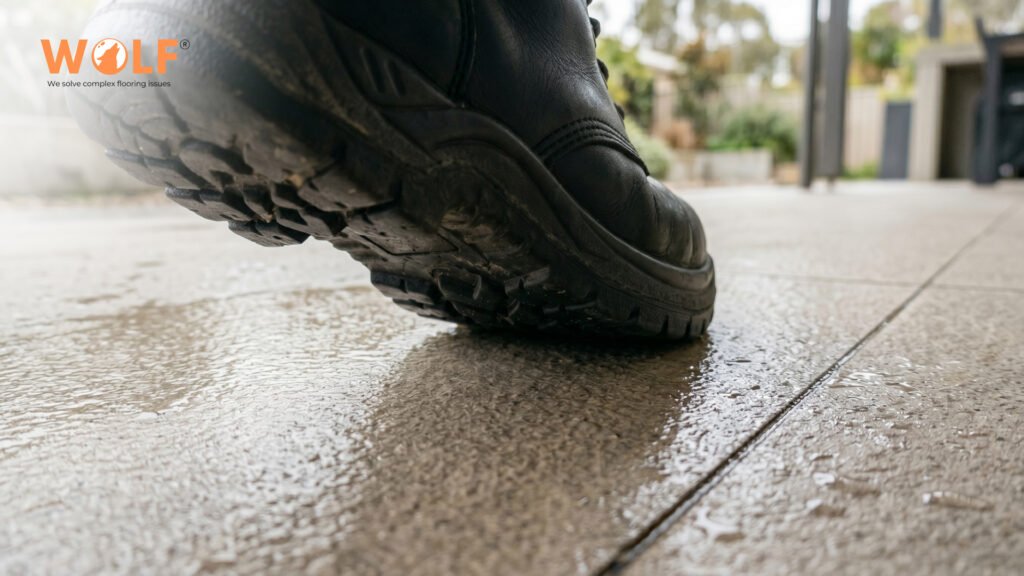
Not every porcelain tile is designed for outdoor use, and the Adriatic environment is more demanding than most. Architects specifying for Croatian projects typically verify the following before approving a material:
Design preferences on the Croatian coast are moving toward natural, understated surfaces. Here is what is being specified most in 2026:
Indoor-outdoor continuity : Using the same collection inside and outside is increasingly specified in high-end villas and resort projects along the coast.
The right tile size depends on the application, installation conditions, and the visual result the project requires.
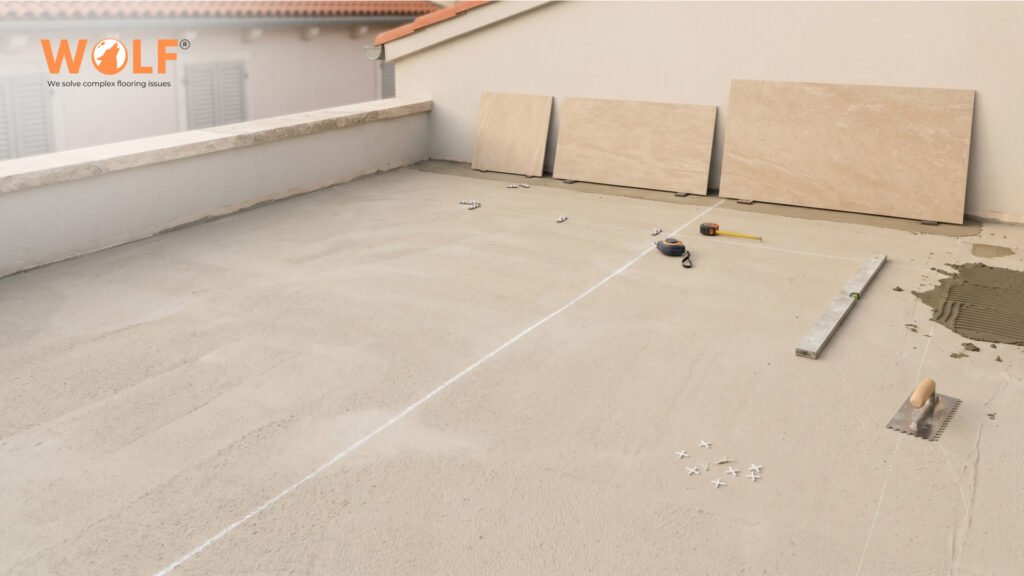
Croatian distributors and project buyers sourcing outdoor porcelain in 2026 are increasingly comparing two supply origins: Italian manufacturers and Indian manufacturers from Morbi, Gujarat. Both can meet EN 14411 outdoor performance requirements. The decision usually comes down to four factors.
Indian porcelain at export pricing is typically 30–50% lower per square metre than equivalent Italian products at comparable technical specifications. For large-format terrace and pool deck projects, this difference is significant at volume.
Italian manufacturers often operate on longer lead times for specific formats or finishes, particularly for large orders. Morbi exporters generally carry broader stock depth across formats including 600x600mm, 600x1200mm, and 800x1600mm, with faster turnaround on standard specifications.
Italy retains an edge in high-end decorative ranges and proprietary surface treatments. For the stone-look matte and textured finishes that dominate Croatian coastal specification, Indian manufacturers now offer comparable visual quality at the standard sizes most commonly specified.
Both origins can supply EN 14411-compliant products. The key difference is documentation rigour at the point of export. Established Indian manufacturers provide full test reports and compliance documentation as standard; buyers should verify this before committing to any supplier, regardless of origin.
For Croatian buyers sourcing at scale for hospitality or development projects, a blended approach, Italian product for feature areas or interior showpiece surfaces, Indian product for large outdoor expanses, is increasingly common. For more detail on the import process, see our guide to porcelain tile suppliers in Croatia sourcing from India.
The Morbi manufacturing region in Gujarat is one of the world’s largest ceramic and porcelain production hubs, accounting for roughly 70% of India’s ceramic tile output and supplying export markets across Europe, North America, and the Middle East. Croatian distributors are well-established in this supply chain.

The sourcing case is built on competitive unit pricing at export volumes, wide design selection across formats and finishes, export-ready packaging that reduces transit damage, consistent production capacity for repeat orders, and EN 14411-compliant manufacturing. Shipments are typically routed through Mundra port and arrive at Adriatic entry points including Rijeka, Split, and Ploče.
Wolf Porcelain Tiles provides full export documentation and logistics support for international buyers, with export reach to 40+ countries. Our container loading guide helps buyers estimate square metre capacity before confirming order volumes.
For projects in Croatia and across the European Union, technical compliance is a purchasing requirement. EN 14411 defines the performance requirements for ceramic and porcelain tiles, covering water absorption, breaking strength, abrasion resistance, chemical resistance, and frost resistance.
Importers sourcing from India for Croatian projects should request full test reports and certifications before confirming an order. Wolf Porcelain Tiles holds multiple export-related certifications and operates quality-controlled manufacturing processes aligned with EU market requirements.
Our collections are developed for export markets where durability and compliance matter as much as design. For coastal and Mediterranean projects, the most frequently specified categories include stone-look matte porcelain, concrete-effect porcelain, textured anti-slip finishes, and large-format neutral collections.
Available in 600×600 mm, 600×1200 mm, and 800×1600 mm formats, these collections are suited to pool decks, hotel terraces, sea-facing balconies, outdoor lounges, and villa pathways, anywhere the material must perform reliably across multiple seasons without intensive maintenance.
Request free tile samples to review finish, texture, and slip rating before placing a bulk order.
If you are sourcing salt-resistant or slip-resistant tiles for Adriatic coastal projects, we can help you shortlist the right collection based on your application, format requirement, and delivery timeline.
Our export team supports Croatian distributors, contractors, and architects with product catalogues, technical data sheets, sample dispatch, container planning, and export documentation.
Matte and textured finishes are the standard specification for exterior coastal use, they offer better slip resistance, lower glare, and easier maintenance in salt and sun conditions.
High-density porcelain with quality glazes is well-suited to marine environments. Always verify salt resistance certification before specifying for coastal use.
600x600 mm and 600x1200 mm are the most commonly specified formats. For large premium terraces, 800x1600 mm is increasingly preferred.
Yes, when they meet EN 14411 outdoor performance requirements, which applies to Croatian coastal locations, including southern Dalmatia.
Yes. Croatian importers regularly source export-grade porcelain tiles from the Morbi region in Gujarat, with shipments arriving via Rijeka, Split, and Ploče.
For the matte and textured finishes most commonly specified for outdoor coastal use, Indian manufacturers now offer comparable technical performance at EN 14411 standard, at significantly lower cost per square metre. Italian products retain an edge in high-end decorative ranges.
R10 for general outdoor use; R11 for pool decks and areas with sustained water exposure.
Use the sample request form on our website. Samples can be dispatched to Croatia within 10 days.