
Close
Something’s shifting in the Dominican Republic tile market. Distributors who’ve relied on European and Spanish suppliers for years are adding a new source to their inventory: Indian porcelain tiles.
The reason isn’t what you might think. It’s not about cutting corners or offering budget alternatives. It’s about running a smarter business. Better margins. Consistent quality. Modern designs. Supply reliability.
With construction costs rising and the Dominican real estate market growing steadily, distributors need suppliers who deliver both quality and value. Indian manufacturers are proving they can do exactly that.
Let’s look at why this shift is happening and what it means for tile distributors across the Dominican Republic.
The Dominican Republic construction sector is accelerating, and the numbers tell a compelling story.
The country imported over $200 million in ceramic tiles during 2024, ranking among the top importers in Latin America and the Caribbean. Demand keeps climbing as the real estate boom continues.
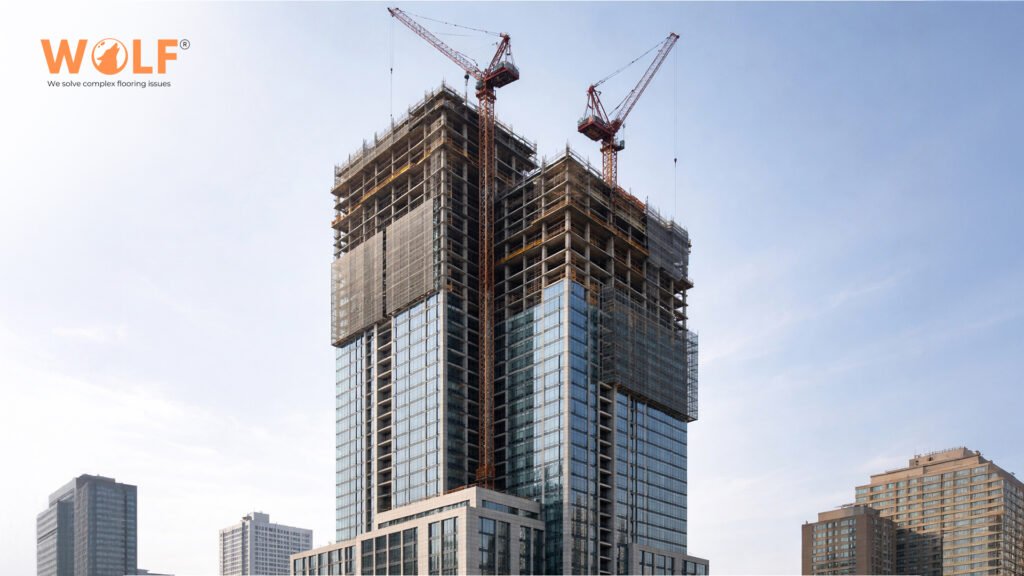
Construction costs are rising. Tourism is booming, the Dominican Republic welcomed over 11 million tourists in 2024. Every hotel renovation, vacation rental, and luxury villa needs tiles.
Development is everywhere. Areas like Cap Cana have seen dramatic property value increases over five years. Punta Cana, Las Terrenas, Sosúa, construction projects continue across the country. The real estate market is projected to grow steadily through 2029.
Traditional import prices for ceramic tiles in Latin America and the Caribbean averaged $6.80 per square meter in 2024. Your costs keep rising: shipping, warehousing, staff, insurance.
You can’t control construction costs. You can’t control property values. But you can absolutely control where you source your inventory. And that’s where India enters the picture.
India is the world’s second-largest ceramic tile exporter.
In 2023, Indian manufacturers shipped 589.5 million square meters of tiles globally. Porcelain tiles accounted for approximately 72-75% of those exports. Several manufacturers already supply Latin American markets, including the Dominican Republic.
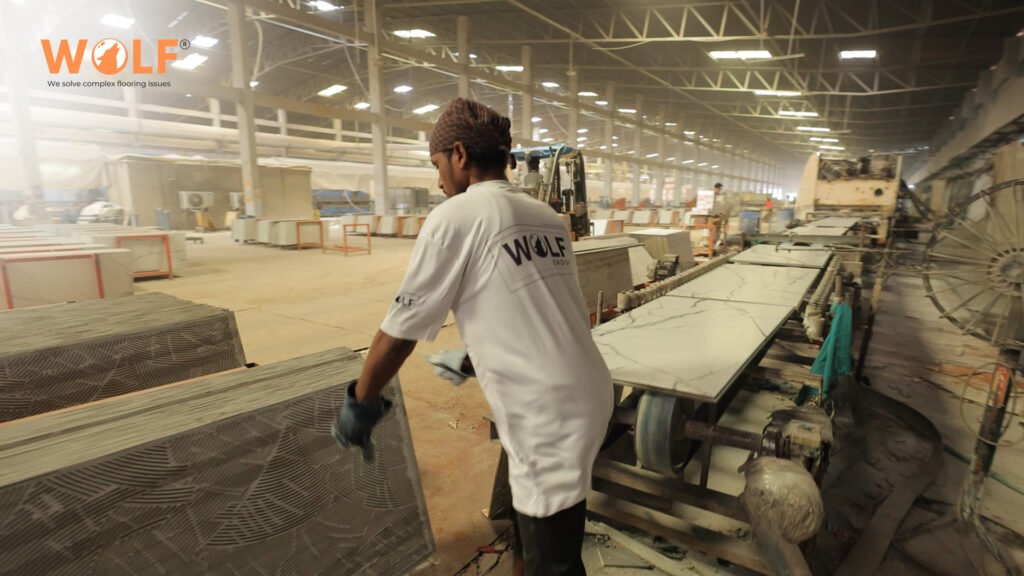
Modern Indian tile factories in Morbi, Gujarat (where approximately 90% of India’s tiles are produced) use Italian machinery, the same Sacmi presses and LB kilns that European manufacturers use. The same digital printing technology creates realistic marble and wood effects.
Indian manufacturers invested heavily in this equipment because they’re competing globally in export markets.
Average import price for ceramic tiles in the Caribbean: $6.80 per square meter (2024 data). Average export price for Indian porcelain tiles: approximately $4.20 per square meter in 2024.
This significant price differential creates opportunities for distributors to improve their business economics while maintaining competitive retail pricing.
The biggest question distributors ask: “Will the quality match what my customers expect?”
Fair question. Your reputation depends on what you sell.
Export-focused Indian manufacturers test production batches for:
Export markets demand documentation. European buyers, Middle Eastern developers, North American distributors, they all require proof. Indian manufacturers developed rigorous quality control to meet global market standards.
For distributors, this means fewer warranty claims, fewer customer complaints, and fewer tiles that arrive damaged or don’t match previous shipments.
The Dominican Republic’s climate tests materials: humidity, heat, temperature swings from air conditioning, and salt air in coastal areas.
Porcelain tiles handle these conditions well. Their extremely low water absorption rate (below 0.5%) means moisture can’t penetrate and cause problems. They don’t expand or contract significantly with temperature changes. They resist salt damage better than many natural stones.
Indian manufacturers export extensively to Southeast Asia, the Middle East, and other regions with challenging climates, giving them experience with tropical applications.
Wood-look porcelain tiles appeal to international buyers with their natural aesthetic. The durability suits rental properties and high-traffic areas. The resistance to moisture and termites solves Caribbean climate challenges that real wood flooring cannot.
Indian manufacturers’ digital printing technology creates realistic grain patterns, color variation, and surface textures that mimic popular wood species.
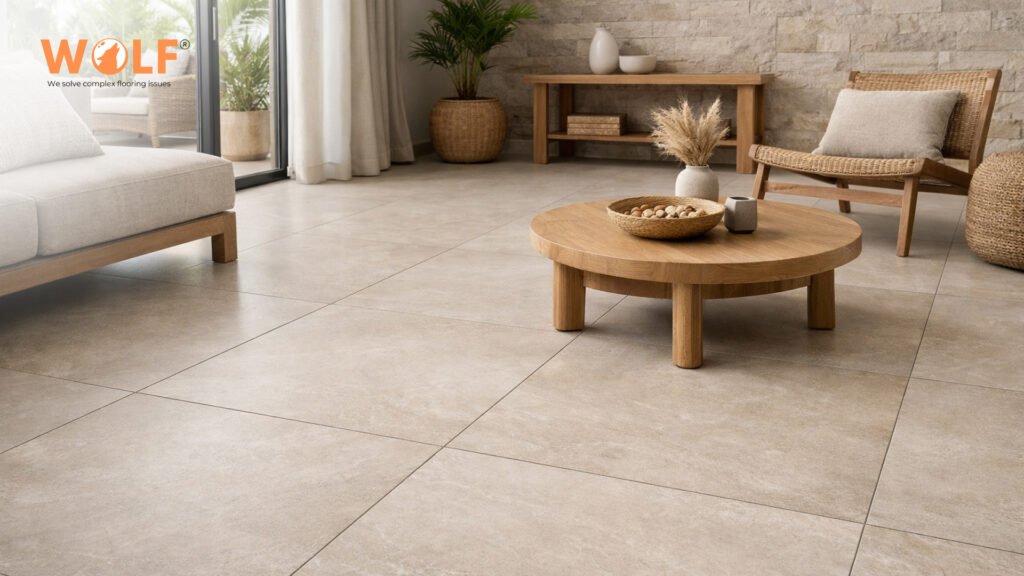
Luxury developments want the marble look, but real marble in a beach climate stains, etches, and requires constant maintenance.
Porcelain tiles that replicate Carrara marble, Calacatta, travertine, or limestone deliver the high-end aesthetic while performing reliably in tropical conditions.
Indian manufacturers produce marble effects across multiple price points, from builder options to premium designer lines with book-matched veining.
The Dominican market has moved toward larger tiles. Indian manufacturers invested in the presses and kilns needed for large format production, allowing distributors to source contemporary sizes without limited design options.
Indian manufacturers offer multiple finish options:
Often these finishes are available within the same design family, allowing specification of matching tiles in different finishes for different applications within a single project
Importing from India is straightforward once you understand the process.
Indian tiles typically ship from Mundra Port (serving the Morbi manufacturing cluster) to Dominican ports. Most transactions run on FOB (Free on Board) or CIF (Cost, Insurance, and Freight) terms.
Many Indian exporters already serve Latin American markets. They understand container packing for long ocean voyages and Caribbean customs procedures.
Established Indian exporters provide:
Professional exporters treat relationships seriously. They want long-term partnerships, not one-time orders.
Distributors winning with Indian tiles follow similar strategies.
They don’t immediately stock dozens of SKUs from India. They start with bestselling categories: wood-look tiles in a few colors, marble effects, large format neutrals. Products with proven demand.
This minimizes risk. You’re testing specific products with specific customers and seeing what works.
Successful distributors don’t market Indian tiles as “the cheap option.” They position them as smart value for projects where performance matters.
Quality standards. Modern designs. Reliable supply. Competitive pricing. That message resonates with contractors, developers, and architects working on mid-range to upper-mid projects.
Distributors who succeed spend time explaining porcelain versus ceramic, water absorption rates, why certain finishes work better in specific applications, and how to specify tiles for different uses.
This education builds trust. Architects call you first because you help them solve problems. Contractors specify your tiles because they know you’ll recommend what actually works.
You can’t sell tiles from a catalog in any market. People want to see and touch samples.
Successful distributors create showroom displays that position Indian tiles alongside traditional suppliers. No separation. No “budget section.” Just good products at different price points.
Most customers care about three things:
They care about results more than origin.
Focus your conversations on specifications and aesthetics. Share test reports showing water absorption below 0.5%. Demonstrate color consistency across batches. Let the product speak for itself.
Reputable manufacturers stand behind their products. Before placing significant orders, establish clear terms:
Get these terms in writing. Test them with your first small order.
You don’t need to beat premium European brands at their own game. You need to serve the market segments where value matters alongside quality.
Most Dominican construction is solid mid-range to upper-mid projects where buyers want quality but also reasonable pricing: beach rentals, middle-class housing, commercial spaces, hospitality renovations.
Several trends suggest this shift toward Indian suppliers will continue.
The real estate market is projected to grow at 2.85% annually through 2029. Tourism shows no signs of slowing. Infrastructure improvements continue. All of this drives tile demand.
Indian manufacturers have production capacity to scale with distributor growth. They’re running modern factories with daily output measured in thousands of square meters.
The global move toward large format tiles, realistic natural effects, and modern matt finishes aligns with Indian manufacturing capabilities. These are the product categories where Indian factories invested heavily.
As Dominican buyer preferences continue evolving toward contemporary aesthetics, Indian suppliers offer the design diversity to keep showrooms current.
If you’re considering Indian porcelain tile suppliers for your Dominican Republic business, here’s a practical approach.
Request samples from 2-3 established Indian manufacturers who already export to Latin America. Compare quality against your current suppliers. Check dimensional accuracy. Test color consistency. Verify certifications.
Evaluate the total package: product quality, design range, delivery reliability, communication responsiveness, and terms.
Factor everything: tile cost, shipping, customs duties, warehousing, insurance, operational costs. Compare your total landed cost per square meter against what you’re paying now.
Then calculate margins based on realistic wholesale prices in your market.
Place a container order of your most reliable bestsellers—categories where you have consistent demand and understand your market well.
This minimizes risk while letting you test the entire process: ordering, shipping, customs, delivery, storage, sales, customer feedback.
Monitor: customer response, contractor feedback, quality issues, reorder patterns, warranty claims.
Compare this data against your existing suppliers. Let real performance guide your decisions.
If the first container works well, communicate with your supplier. Share feedback. Discuss your market. Explore additional product lines.
A manufacturer who understands your specific needs, market dynamics, and growth plans becomes genuinely valuable.
The Dominican tile market is growing. Competition is fierce. But you can control where you source your inventory.
Distributors making this shift aren’t doing it because Indian tiles are trendy. They’re doing it because the business case makes sense: quality that meets export standards, modern designs, reliable supply, and pricing that improves business economics.
Your market is changing. Your sourcing strategy should change too.
Wood-look textures, marble effects, and large format neutral tiles see strong demand, particularly in matt and anti-slip finishes suited to tropical climate performance.
Based on 2024 data, Indian porcelain tiles averaged approximately $4.20 per square meter export price, compared to $6.80 per square meter average import price for ceramic tiles in the Caribbean market.
Look for water absorption test reports showing below 0.5% for porcelain, breaking strength certifications, and dimensional accuracy specifications meeting international standards.
Yes, porcelain tiles with water absorption below 0.5% handle Caribbean humidity, heat, and coastal salt air effectively, often outperforming natural stone in tropical conditions.
Approximately 90% of India's tiles are produced in the Morbi cluster in Gujarat, which ships primarily from Mundra Port.
Based on 2023-2024 data, porcelain tiles (porcelain stoneware) accounted for approximately 72-75% of India's ceramic tile exports.
Wolf Porcelain Tiles manufactures premium porcelain and ceramic tiles using advanced Italian technology. With two decades of experience supplying over 40 countries worldwide, we understand what Caribbean distributors need: consistent quality, modern designs, reliable delivery, and competitive pricing.
Our product range includes formats Dominican projects demand, from standard sizes to large format slabs. We offer wood-look designs, marble effects, and contemporary neutrals in finishes suited to tropical climates: matt surfaces, anti-slip textures, and semi-polished options.
For distributors, showrooms, and wholesalers in the Dominican Republic looking to strengthen their product portfolios, we invite you to explore our collections. Our export team understands Latin American market requirements and can provide technical specifications, certified test reports, and samples to help you make confident sourcing decisions.
Contact us to discuss how our porcelain tiles can enhance your competitive position in the growing Dominican construction market.
Wolf Porcelain Tiles
Technical specifications and dealer information: wolfporcelaintiles.com
Export inquiries: info@wolfgroupindia.com