

Close
A contractor in Cerro Verde finishes tiling a mountain lodge terrace at 2,000 meters elevation. Looks perfect. Feels solid. The client loves the natural stone aesthetic.
Six months later, he gets the call. Half the tiles have spider-web cracks radiating from the corners. Not because the installation was bad. Not because materials were cheap. Because nobody accounted for what happens when morning temperatures hit 2°C and afternoon sun pushes surfaces past 28°C, sometimes within four hours.
El Salvador’s mountain regions create a flooring challenge most contractors don’t see coming. Cerro Verde, Santa Ana Volcano areas, and the northern highlands around Chalatenango experience temperature swings that make coastal tiles fail within a year. The altitude changes everything.
His competitor working on a nearby eco-lodge? Used freeze-thaw porcelain tiles El Salvador’s mountain conditions demand. Two years later, those tiles still look like installation day.
The difference wasn’t the price. It was the understanding that elevation creates forces standard tiles can’t handle.
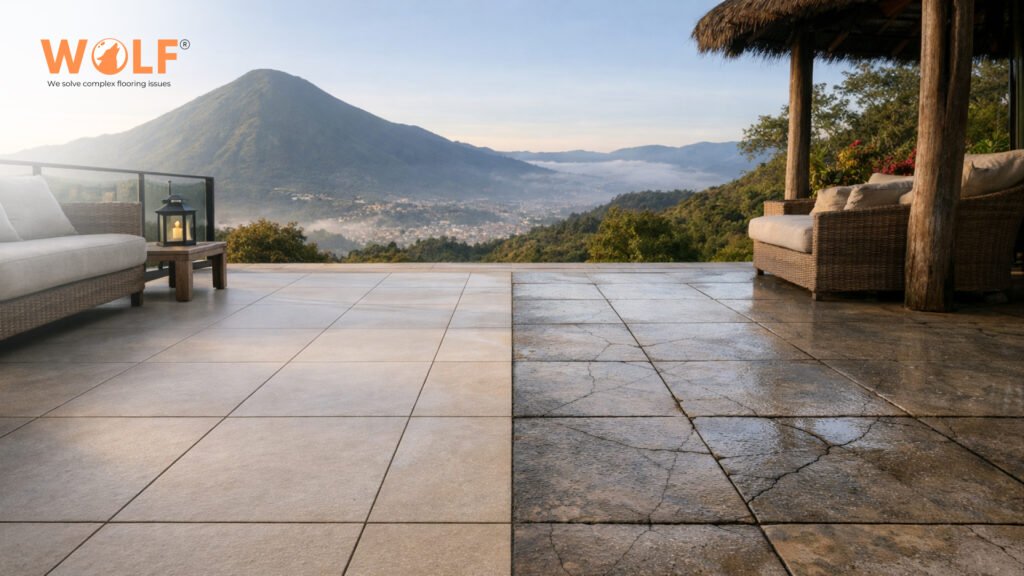
Drive an hour from San Salvador’s sweltering streets and you’ll need a jacket. The volcanic highlands don’t follow coastal rules, up here, temperature swings do what tropical heat never could: crack tiles from the inside out.
Here’s what happens in places like Cerro Verde or the mountains around Apaneca:
This temperature cycling happens frequently throughout the year in higher elevations. Each cycle creates micro-stresses inside the tile. After a few months, those stresses become visible cracks.
Regular ceramic tiles, even quality ones, have water absorption rates around 3-7%. That’s fine for San Salvador or coastal areas. In the mountains? That absorbed water becomes ice that creates internal fractures.
Freeze-thaw resistant porcelain has water absorption below 0.5%. When tiles barely absorb water, there’s nothing inside to freeze and expand.
Think of it like this: a sponge left outside in freezing weather will crack and crumble after ice forms in all those tiny holes. A solid piece of glass won’t, there are no holes for water to get into. Porcelain works the same way.
Test this during supplier evaluation: pour water on an unglazed tile edge. If it soaks in noticeably within 30 seconds, it’s not true porcelain.
Frost Resistance Ratings: European-tested tiles show frost resistance through ISO 10545-12 testing. Tiles passing this test survive at least 100 freeze-thaw cycles without damage.
For Salvadoran mountain applications, this matters more than fancy designs. A beautiful tile that cracks after one cold season isn’t beautiful anymore.
Thermal Shock Resistance: Beyond freeze-thaw, mountain installations need tiles that handle rapid temperature changes without stress fractures. Quality porcelain is tested to withstand severe thermal shock without surface cracking or loss of performance. In real-world terms: your tile won’t crack when cold morning fog hits sun-warmed surfaces, or when afternoon rain suddenly cools tiles heated all day.
Glossy tiles look stunning in showrooms. But in mountain environments with morning fog and temperature swings, they create two problems:
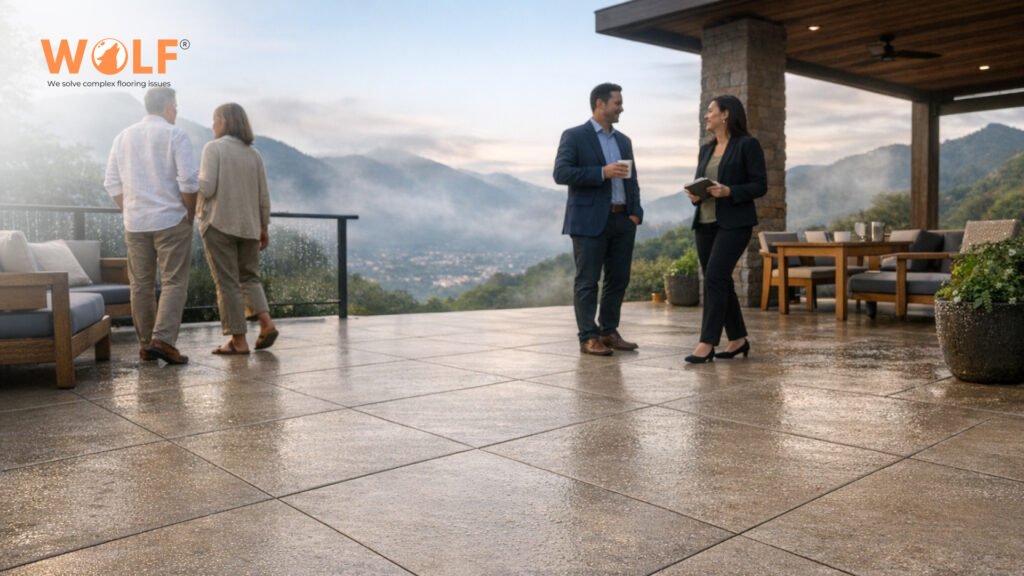
For mountain lodges, restaurants, or residential projects above 1,500 meters, specify matte or textured finishes with slip resistance rating R10 or higher.
Dark tiles absorb more heat, creating greater temperature differentials between surface and substrate. In mountain sun followed by cool evenings, this accelerates thermal stress.
Lighter colors like beiges, light greys, natural stone looks, reflect heat rather than absorbing it. They also hide the mineral deposits common in mountain well water better than dark tiles.
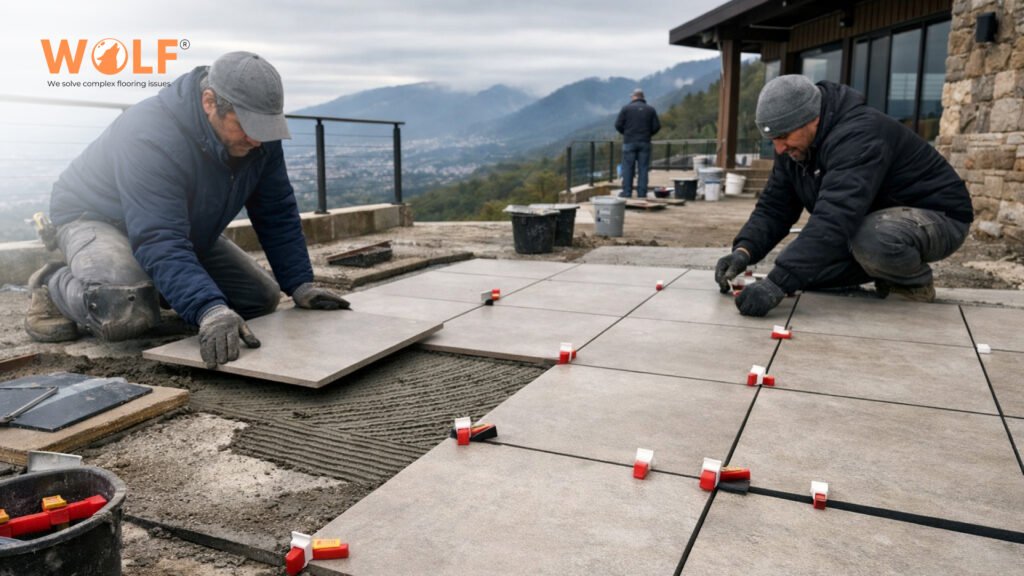
For outdoor terraces, patios, and walkways in Cerro Verde or similar locations: stick with 60×60cm. The format has proven itself in European alpine applications for decades.
Standard 10mm tiles work for protected areas. For mountain terraces exposed to weather extremes, consider 12-15mm thickness. The extra mass helps resist thermal shock and provides better structural stability.
Strong mountain winds add extra stress to tile installations. Thicker tiles handle this better without flexing or developing stress cracks.
Standard thin-set mortar fails in freeze-thaw environments. You need polymer-modified adhesive specifically rated for exterior mountain applications with:
In tropical lowlands, you might skip expansion joints on smaller installations. In the mountains, never.
Temperature swings cause tiles to expand and contract. Without joints every 3-4 meters to accommodate movement, something has to give, usually tiles crack or tent upward.
Use flexible joint sealant rated for exterior use in cold climates. Standard grout in expansion joints defeats their purpose.
Mountain construction often uses locally sourced materials. Ensure your substrate is:
Volcanic soils common in Cerro Verde and Santa Ana areas can settle unevenly. Proper substrate prep prevents tiles from moving with ground shifts.
1. Dry season (November-April):
2. Rainy season (May-October):
Unlike coastal tiles fighting salt and humidity, mountain porcelain battles dust, temperature extremes, and occasional frost. Simple maintenance prevents problems before they start.
Avoid pressure washing at extreme temperatures. Hitting cold tiles with hot water (or vice versa) creates thermal shock similar to weather cycling.
Don’t use acidic cleaners that can damage grout joints. Mountain well water is often already slightly acidic, adding harsh chemicals accelerates joint deterioration.
Not all porcelain is created equal. Look for manufacturers who:
Wolf Group India manufactures freeze-thaw resistant porcelain tiles specifically engineered for challenging climates. Our Italian-technology production creates tiles with water absorption rates of 0.2-0.3%, well below the 0.5% threshold critical for mountain applications.
Various formats available in matte and textured finishes with slip resistance ratings R10-R11, suitable for El Salvador’s mountain environments. Tiles meet ISO 10545-12 frost resistance standards, ensuring performance through temperature cycling common in Cerro Verde, Santa Ana volcano areas, and northern highlands.
Two decades manufacturing for demanding European alpine markets and high-altitude South American applications means we understand what El Salvador’s mountain regions require. Our tiles don’t just meet specifications, they prove themselves in real-world conditions similar to yours.
Technical specifications, installation guidelines, and format availability at wolfporcelaintiles.com or info@wolfgroupindia.com.
Freeze-thaw resistant porcelain has water absorption below 0.5%, meaning almost no water penetrates the tile body. When water can't get inside, it can't freeze and expand to crack tiles. Standard ceramic absorbs 3-7% water, enough to cause damage through mountain temperature cycling.
60×60cm (600×600mm) is the proven standard for mountain exteriors at altitudes above 1,500 meters. This format balances modern aesthetics with practical durability, accommodating thermal expansion without stress cracking. Larger formats risk problems in extreme temperature variations.
Always choose matte or textured finishes (R10+ slip resistance) for any mountain exterior application. Morning fog and temperature-related condensation make glossy surfaces dangerously slippery. Matte finishes also handle thermal stress better than glossy glazes that can craze under temperature cycling.
Any location above approximately 1,200-1,500 meters elevation needs freeze-thaw resistant materials. This includes Cerro Verde National Park, Santa Ana Volcano areas, northern Chalatenango highlands, and mountain regions around Apaneca and Juayúa where temperatures regularly drop near freezing.
Mountain temperature swings, from near-freezing mornings to warm afternoons, happen approximately 200-250 days yearly at altitude. Water absorbed by ceramic tiles freezes overnight, expands, and creates micro-cracks. After months of cycling, these become visible damage. Porcelain's minimal absorption prevents this.
With proper installation using appropriate adhesives and expansion joints, quality freeze-thaw resistant porcelain performs 15-20+ years in El Salvador's mountain conditions. Many European alpine installations exceed 25 years. Standard ceramic in the same conditions often shows damage within 2-3 seasons
Choose contractors with specific high-altitude or cold-climate installation experience. They understand critical details: polymer-modified exterior adhesive, expansion joint placement every 3-4 meters, proper slope for drainage, and substrate preparation for temperature extremes. Experience matters more than low quotes.