

Close
US tile distributors are changing how they source inventory. More are connecting directly with Indian tile manufacturers exporting to the USA, building relationships that cut out traditional middlemen and reshape their profit margins.
This shift comes as American construction projects increasingly specify large-format porcelain tiles, particularly 24×48 and 48×48 inch formats, while India establishes itself as a major player in porcelain production. With the US ceramic tile market valued at $5.19 billion in 2025 and expected to grow at 7.11% annually through 2034, distributors are looking for suppliers who can deliver quality products at competitive prices.
For tile distributors, importers, and wholesale buyers, understanding this sourcing landscape means examining three areas: why demand for large-format tiles keeps growing, what makes Indian manufacturers competitive, and how the logistics actually work.
Let’s look at each.
American preferences in tile sizing have shifted noticeably over the past five years. Walk into any newly renovated hotel lobby or modern residential project, and you’ll likely see fewer grout lines and more continuous surfaces.
American homeowners and designers are embracing large-format porcelain tiles like never before. These supersized tiles, typically measuring 24×48 inches or larger, create sleek, continuous surfaces that make spaces feel bigger and more sophisticated. The trend has moved far beyond high-end projects, becoming mainstream in residential renovations and new construction.
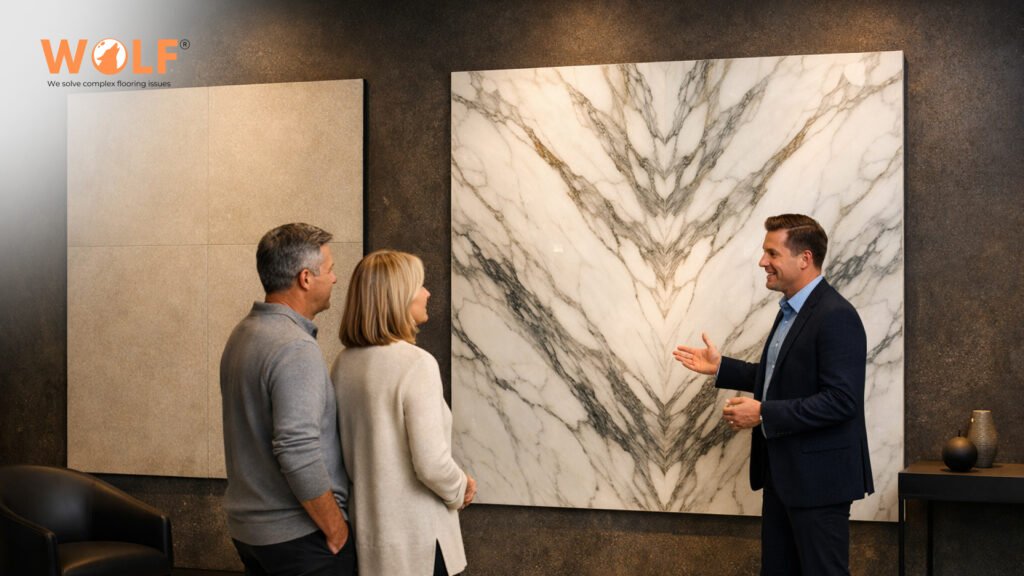
What’s driving this shift? Minimalist design philosophies that emphasize clean lines and fewer grout joints have captured the American imagination. Homeowners want that luxury hotel look in their own bathrooms and kitchens. Large-format tiles deliver exactly that – uninterrupted surfaces that reflect light beautifully and create visual flow throughout a room.
Social media platforms showcase stunning installations featuring these oversized tiles, inspiring millions of homeowners to upgrade their spaces. Interior designers report that clients specifically request large-format options, even when traditional smaller tiles might be more budget-friendly upfront.
The practical benefits seal the deal. Fewer grout lines mean easier cleaning and maintenance – a huge selling point for busy families. These tiles also offer better water resistance in wet areas, making them perfect for shower walls and bathroom floors.
Indian tile manufacturers exporting to the USA have responded quickly to this demand, developing production lines specifically for large-format pieces that meet American aesthetic preferences and technical requirements.
Commercial construction has become a massive driver for large-format porcelain demand. Hotels, restaurants, office buildings, and retail spaces are specifying these tiles for both practical and aesthetic reasons.
Property developers love large-format tiles because they speed up installation times on big projects. Covering 1,000 square feet with 24×48 tiles takes significantly less time than using traditional 12×12 options. Time savings translate directly to reduced labor costs – a critical factor in today’s tight construction market.
Bulk porcelain tile suppliers from India have stepped up to meet these commercial demands. Major hotel chains are sourcing directly from Indian manufacturers to ensure consistent supply across multiple properties. Restaurant groups follow similar strategies, maintaining design continuity across locations while managing costs.
The numbers are impressive. A single hotel project might require 50,000 square feet of large-format tiles. Retail chains renovating multiple locations can order hundreds of thousands of square feet at once. These volume requirements make direct sourcing not just attractive, but necessary for meeting project timelines and budgets.
Commercial architects appreciate the durability and low maintenance characteristics of large-format porcelain. These tiles handle heavy foot traffic while maintaining their appearance over years of use. The reduced grout lines also mean fewer places for dirt and bacteria to accumulate – crucial for healthcare facilities and food service environments.
Cost comparisons reveal why direct sourcing appeals to distributors. Traditional distribution channels can add 40-60% in markup between manufacturer and end user. Working directly with ceramic tile exporters in India for the USA eliminates multiple middlemen and captures significant savings.
Here’s how typical costs break down for 60×120cm (24×48 inch) large-format porcelain tiles (prices shown are landed at warehouse including AD/CVD):
Traditional Wholesale Channel:
Direct from India:
Potential savings: $5,000-$7,000 per 10,000 sq ft project
Smart distributors are building relationships with large format porcelain tile exporters in India to secure these advantages. The savings aren’t just on the product itself, direct relationships often mean better payment terms, customized sizing options, and priority allocation during high-demand periods.
Container-load purchasing makes the economics even more attractive. For example, a single 20-foot container of 60×120cm format tiles typically holds approximately 15,000 square feet, depending on thickness and packaging. Distributors ordering full containers get the best pricing and can pass meaningful savings to their customers.
Tile exporters in India to USA often provide additional value-added services like custom packaging, consolidated shipping, and technical support that traditional wholesalers charge extra for. These partnerships create competitive advantages that go beyond simple price comparisons.
Risk management becomes easier with direct sourcing too. Distributors can visit manufacturing facilities, inspect quality control processes, and build personal relationships with production teams. This direct oversight often results in better quality consistency than working through intermediaries who may source from multiple suppliers.
India wasn’t always a go-to source for US tile imports. That changed as manufacturers invested heavily in technology and quality systems.
Indian manufacturers, particularly in Morbi, Gujarat (which produces 90% of India’s tiles), have transformed their facilities. Major ceramic companies invested billions in Italian and German equipment. These facilities feature digital printing technology creating photorealistic effects, automated sorting systems, and advanced kiln technology ensuring consistent firing temperatures.
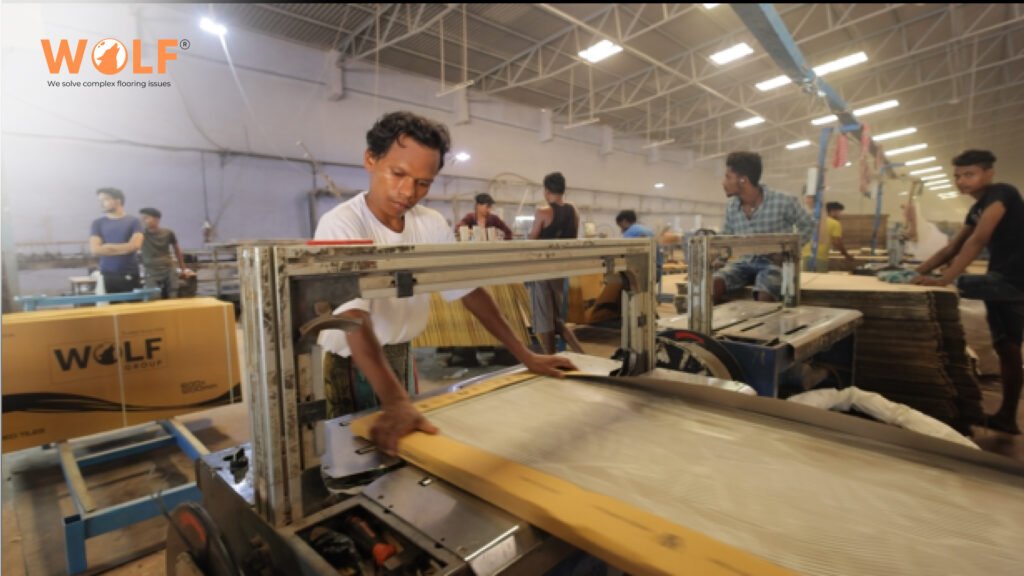
Modern Indian plants operate continuous firing kilns reaching 1,200°C, producing tiles with water absorption rates as low as 0.05%. Large format porcelain tile exporters in India use hydraulic presses applying up to 500 tons of pressure, creating tiles that match European density standards.
The pricing advantage tile exporters in India to USA maintain stems from significantly lower labor costs, skilled ceramic technicians earn 15-20% of their Italian or Spanish counterparts while maintaining comparable expertise. This translates to large-format porcelain priced 30-40% below European alternatives while maintaining healthy margins.
Manufacturing efficiency compounds these advantages. Indian plants operate with lean principles, optimizing production schedules to maximize kiln utilization and minimize waste.
Leading manufacturers hold comprehensive international certifications: ANSI A137.1, ISO 13006, GREENGUARD for low emissions, and LEED compliance. Third-party laboratories verify tile performance including water absorption below 0.5%, slip resistance meeting ADA standards, and thermal shock resistance for extreme US climate variations.
Major manufacturing clusters in Gujarat offer direct access to Mundra Port, the primary export hub for Morbi tile manufacturers. Additional shipments route through Mumbai and JNPT ports for specific destinations.
Typical shipping routes from Mundra to major US ports:
West Coast (Los Angeles, Long Beach, Oakland): 35 to 40 days
East Coast (New York, Savannah, Charleston): 40 to 50 days via Suez Canal
Gulf Coast (Houston): 50 to 55 days via Suez Canal
Multiple shipping lines operate regular container services, providing flexibility for different delivery schedules and cargo volumes.
Understanding the practical steps helps distributors evaluate whether this approach fits their business model.
Successful distributors invest time researching potential partners, often traveling to India to visit facilities. The most effective partnerships span multiple years, giving both sides predictable volumes and pricing structures.

The verification process includes checking certifications, reviewing export history, and conducting third-party audits. Wolf Porcelain Tiles, a leading porcelain tile manufacturer and exporter in India, has supplied the US market for two decades, understanding the quality standards and documentation requirements American projects demand.
Distance doesn’t prevent effective oversight. Experienced distributors implement multi-stage inspection processes beginning before production starts. Pre-production approvals include sample testing, color matching, and dimensional verification. Many employ third-party inspection services in India for random quality checks during production.
Most distributors work with specialized freight forwarders who understand transporting heavy, fragile ceramic goods. Smart distributors negotiate long-term contracts for better rates and priority booking during peak seasons.
Understanding our export process from inquiry to delivery helps distributors plan inventory and manage timelines. The shipping process requires careful container loading supervision, proper dunnage, corner protectors, and strategic weight distribution to prevent damage during ocean transit.
Major entry ports like Long Beach, New York, and Savannah have expertise managing ceramic imports. Distributors work with licensed customs brokers who specialize in ceramic imports, handling classification under HTS codes 6907 and 6908. The entire clearance process takes 2-5 business days.
Managing large-format tile inventory requires warehouse systems designed for heavy, breakable products. Storage facilities need specialized racking with reinforced shelving preventing warping while allowing forklift access. Many distributors implement just-in-time strategies combined with buffer stock management.
Many US distributors develop proprietary designs with Indian partners. The process involves selecting base specifications, working with design teams on surface patterns, and ordering sample production runs. Some manufacturers provide private label services, typically requiring larger minimum order quantities but offering market differentiation through exclusive designs.
Understanding which sizes move fastest helps distributors make smart inventory decisions.
The 24×48 inch (600×1200mm) format has become standard for modern commercial interiors. Hotels, office lobbies, retail spaces specify this size for fewer grout lines, faster installation, visual expansion, and easy maintenance. Distributors report consistent demand across commercial and high-end residential projects.
Manufacturers offering 600×1200mm porcelain tile collections typically develop designs specifically for North American market preferences, including realistic stone and wood effects in both matte and glossy finishes.
For luxury hotels, corporate headquarters, and upscale retail, the 48×48 inch (1200×1200mm) format creates dramatic impact. These 48×48 large-format porcelain slab tiles work well in expansive lobbies and open-plan spaces where seamless surfaces make architectural statements.
Matte surfaces dominate commercial projects for better slip resistance, easier maintenance, and contemporary aesthetics. High glossy finishes suit specific applications, feature walls, boutique retail, spa environments where dramatic reflection adds value. Many manufacturers offer both finishes within design families, allowing architects to specify coordinating patterns for different applications.
US distributors typically save 25-35% compared to working through domestic intermediaries. Savings become more pronounced with large-format tiles since these premium products carry higher margins in traditional channels.
Forward contracts lock in exchange rates 3-6 months ahead for predictable costs. Many manufacturers offer USD quotes to simplify this. Natural hedging through consistent order schedules works best for distributors with steady monthly imports.
Marine cargo insurance is critical, all-risk coverage runs 0.15-0.30% of cargo value. Letters of Credit provide security for both parties but add 1-2% in bank fees. Trade financing preserves working capital. Volume incentives offer 2-5% discounts for annual commitments exceeding $500,000.
ANSI A137.1 specification serves as the primary benchmark, covering dimensional tolerances, water absorption, breaking strength, and thermal shock resistance. GREENGUARD and GREENGUARD Gold certifications verify low chemical emissions for indoor air quality-sensitive environments.
ASTM C648 tests measure breaking strength, minimum requirements range from 250-400 pounds-force. Slip resistance testing follows ANSI A137.1 standards using the DCOF AcuTest (Dynamic Coefficient of Friction) method, with commercial applications demanding DCOF values of 0.42 or higher. Freeze-thaw resistance testing validates performance across US climate zones.
When evaluating direct sourcing from India, most distributors ask similar questions. Here’s what matters in practice.
Expect 60-90 days from order to warehouse delivery:
– Production: 15-30 days
– Ocean freight: 20-30 days
– Customs: 3-5 days
This timeline means planning ahead becomes essential, maintain safety stock of your bestselling formats and establish regular ordering schedules rather than reactive purchasing.
Here’s the reality: Origin matters significantly for import compliance with AD/CVD duties, tariff classifications, customs documentation, and UFLPA requirements, all depend on the country of origin. Experienced distributors work with customs brokers to navigate these requirements for Indian imports.
However, when presenting tiles to commercial customers, focus shifts to performance. Architects verify specifications. Contractors assess installation characteristics. Developers evaluate cost and timeline. For end customers, origin becomes secondary once tiles meet project specifications and carry proper certifications. Present products based on technical merits: water absorption rates, breaking strength, slip resistance, and warranty terms. Let documented performance speak for quality.
When customers compare flooring options, many reference resources like porcelain tiles vs luxury vinyl plank in the US to understand material performance differences.
Start small and test thoroughly. Order one container of specific products. Use them on actual customer projects. Track installation feedback. Monitor any issues. Evaluate the tiles after several months of real-world use.
If quality holds and customer satisfaction stays positive across multiple shipments, you’ve likely found a reliable partner. If problems surface early, you’ve discovered this before committing significant capital or damaging customer relationships.
The US ceramic tile market is projected to reach $9.64 billion by 2034, growing at 7.11% annually. Porcelain tiles dominate with 55-57% market share. Commercial construction continues driving demand, while labor shortages make faster-installing large-format tiles increasingly attractive.
Design trends favor what India produces well,realistic natural stone effects, wood-look planks, modern matte finishes, and large seamless surfaces. Indian manufacturers investing in sustainability capabilities position themselves well for evolving US market demands.
Direct sourcing isn’t right for every distributor. You’re likely a good fit if you move significant volume justifying container orders, can manage 60-90 day lead times, focus on commercial projects where margins matter, and are willing to invest time building manufacturer relationships.
For many, the answer is a hybrid approach: maintain some traditional supplier relationships while adding direct Indian sourcing for high-volume commercial categories. When exploring product options, distributors can browse all tile collections by size to understand what formats align with their market needs.
Lead times range from 60-90 days total, including 15-30 days production, 20-30 days ocean freight from Indian ports to US ports, and 3-5 days customs clearance.
The 24×48 inch (600×1200mm) format dominates commercial specifications, with 48×48 inch (1200×1200mm) growing in luxury hospitality and corporate projects requiring dramatic surfaces.
Indian manufacturers typically offer large-format porcelain at 30-40% below European pricing while maintaining comparable quality through modern Italian technology and equipment.
Look for ANSI A137.1 certification, ISO 13006 standards, GREENGUARD certification for low emissions, water absorption testing below 0.5% for porcelain, and breaking strength ratings meeting commercial specifications.
Yes, many established exporters offer custom design development and private label services, typically requiring larger minimum order quantities than standard product imports but providing market differentiation.
A standard 20-foot container holds approximately 1,500-2,000 square meters of tiles, while 40-foot containers double that capacity. Most manufacturers base minimum orders on full container loads.
Matte finishes dominate commercial projects for better slip resistance, easier maintenance, and contemporary aesthetics, while high glossy finishes suit specific applications like feature walls and boutique retail where dramatic reflection adds design value.
Wolf Porcelain Tiles manufactures large-format porcelain using Italian technology with two decades of experience supplying international markets. Our product range includes the formats US commercial projects demand,24×48 and 48×48 inch tiles in matte and high glossy finishes.
Our export team understands American market requirements and can provide technical specifications, certified test reports, and samples to help evaluate whether direct sourcing fits your distribution strategy.
Contact our export sales team to request a sample kit for US distributors. We’ll provide product information, pricing details, and shipping logistics to help you make informed sourcing decisions.