Outdoor living areas define everyday life in Honduras’ colorful landscapes, from the fierce tropical sun of Roatán to the humid breezes of San Pedro Sula. But it’s not easy to keep a patio safe during tropical downpours and cool underfoot.
Traditional materials fade under UV exposure, crack from thermal cycling, or become extremely slippery when wet. Somewhere in Tegucigalpa, a homeowner replaced their entire pool deck after glossy ceramic tiles caused safety concerns and visible fading within months. The replacement cost exceeded Q20,000, which was an expensive lesson in choosing materials that match Honduras’ demanding conditions.
Landscape architecture across Honduras is shifting toward outdoor porcelain tiles engineered specifically for tropical performance. Non-porous surfaces resist moisture, UV-stable pigments prevent fading, and textured matte finishes provide grip even when wet.
Here’s how to choose outdoor tiles that handle Honduras’ heat and humidity while creating spaces you’ll actually use year-round.
Why Honduran Heat and Humidity Can't Beat Porcelain
Honduras presents a unique challenge: extreme ultraviolet (UV) exposure and high humidity levels.
The Low-Absorption Advantage
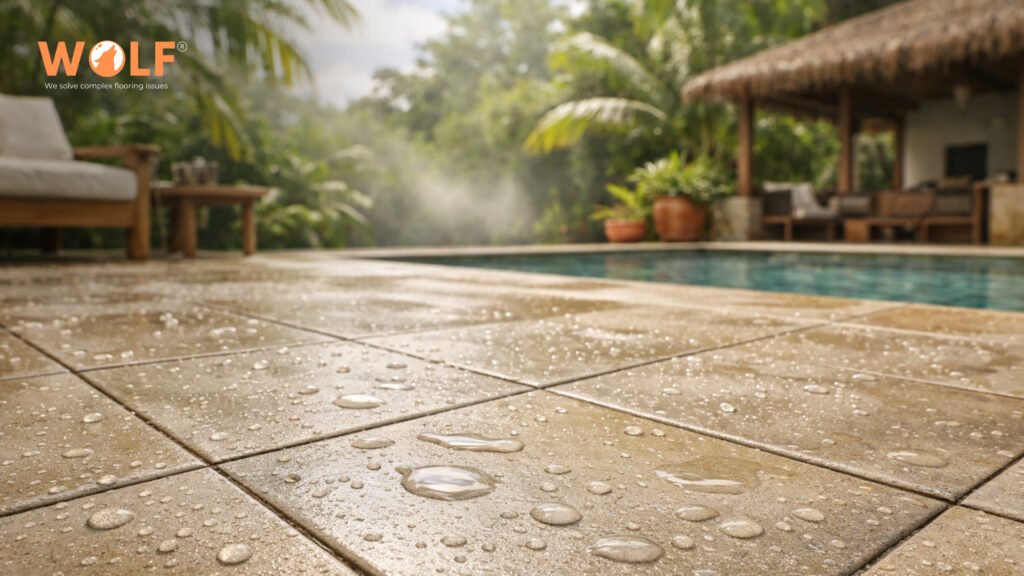
Outdoor porcelain is engineered to be virtually non-porous, with water absorption rates below 0.5%.
This means moisture stays on the surface rather than soaking in, preventing the deep-seated mold and mildew that often plagues concrete or natural stone in damp environments. Standard tiles often absorb moisture, leading to mold growth or structural weakening over time.
Picture a patio in La Ceiba where morning dew and afternoon humidity are constants. Non-porous porcelain dries quickly while porous materials trap moisture that breeds algae and creates slippery conditions.
UV Protection & Color Longevity
The intense Honduran sun can bleach the life out of a patio in just a few seasons.
Quality porcelain tiles resist this fading through their glazed surface layer. During manufacturing, tiles are fired at extremely high temperatures (approximately 1,200-1,400°C), which fuses the glaze into a glass-like surface. This process locks mineral-based pigments into the glaze, creating UV-stable colors that don’t fade easily under sunlight.
The glaze becomes both chemically and physically stable, forming a protective barrier that handles years of Honduras’ intense UV exposure without degrading. This is why quality porcelain maintains its appearance season after season. The protection comes from the fused surface glaze, not a coating that can wear away.
Mastering the Finish: Slip Safety and the Matte Advantage
For patios and pool decks, safety cannot be compromised. “Tactile minimalism” finishes that resemble natural stone yet feel safe underfoot became popular in 2026.
The Matte Grip That Saves Lives
Glossy tiles are skating rinks in tropical climates. Always look for matte or textured finishes with slip resistance rating (R-value) of R11 or higher for outdoor areas.
A property developer in Roatán installed glossy porcelain on a beachfront terrace, attracted by the polished look in the showroom.Within eight months, humidity condensation and morning dew made the surface dangerously slippery. After a near-accident with a visiting family, they replaced the entire installation with R11-rated matte porcelain. The difference in safety and usability justified the investment.
Cool-Touch Color Strategy
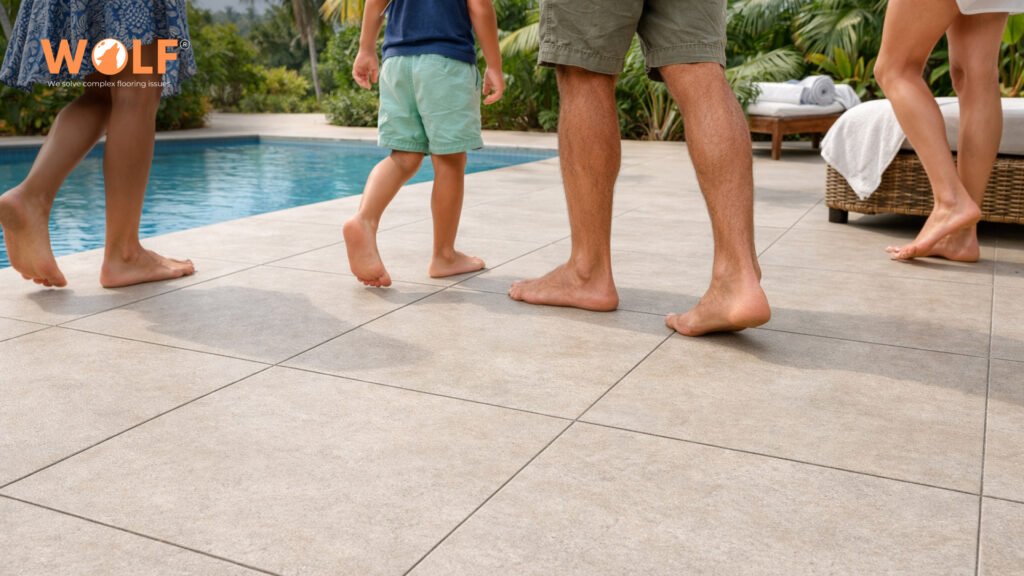
Lighter-colored tiles reflect heat rather than absorbing it, keeping your patio significantly cooler than dark stone or concrete during midday sun.
In Tegucigalpa’s intense heat, dark tiles can reach surface temperatures above 65°C, too hot for bare feet. Light beiges and greys stay significantly cooler, making outdoor spaces actually usable during peak sun hours.
Scale and Style: Choosing the Right Format for Honduras
The size of your tile changes the entire aesthetic and practical performance of your backyard. For 2026, two formats dominate Honduran luxury builds.
1. The Versatile 24×24 Format
Approximately 600×600mm in size, these tiles represent the gold standard for residential patios.
They’re easy to install, offer balanced proportions, and work perfectly for garden paths or smaller terraces. Most Honduran tile installers have extensive experience with this format, reducing installation errors that lead to costly problems.
Thermal expansion matters in Honduras’ daily temperature cycling. The 24×24 format provides good balance which is large enough to look modern, not so large that thermal stress becomes problematic.
2. The Grand 48×48 Statement
For a “resort” feel, large-format 48×48 slabs (approximately 1200×1200mm) are the go-to for designers creating upscale outdoor spaces.
Fewer grout lines mean fewer gaps where dirt and mold can accumulate in humid conditions. Seamless transitions create an expansive, high-end look that makes small courtyards feel like grand estates.
Suppose you have a narrow balcony or galley-style patio. Installing large slabs lengthwise can make the space appear wider by reducing visual clutter from grout lines.
The catch? Substrate preparation must be perfect. Large formats need absolutely flat, stable bases to avoid lippage (uneven edges) and potential cracking from Honduras’ varied soil conditions, sandy coastal soil versus volcanic soil in different regions.
3. Thickness Matters for Honduran Applications
Standard indoor tiles measure approximately 8-10mm thick. For Honduras outdoor installations, look for 10-12mm minimum, ideally 12-15mm for pool decks and high-traffic areas.
For driveways or raised pedestal systems, 20mm thickness offers much higher impact resistance. Thicker tiles better resist thermal stress and impact damage when furniture gets dragged or heavy planters dropped.
The Critical 2% Drainage Rule
Every outdoor tile installation in Honduras needs proper slope for water drainage, approximately 2% grade means for every meter of length, the surface drops 2cm.
This seems minor but makes an enormous difference. Proper slope prevents standing water that breeds algae and creates slip hazards. Water flows to drainage points instead of sitting on surfaces where tropical humidity already creates challenges.
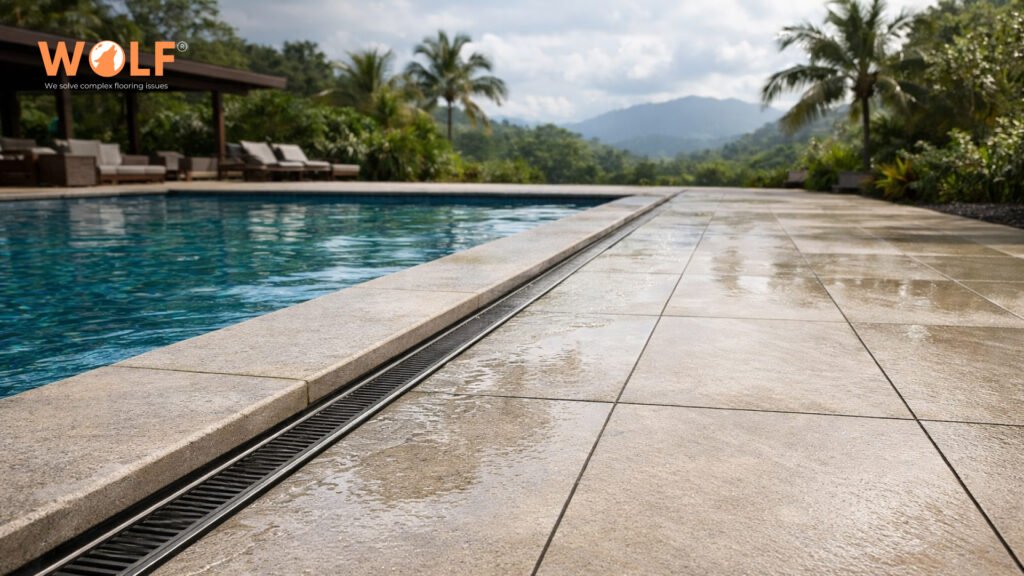
For pool decks specifically, slope away from the pool edge toward drainage channels. You don’t want pool water constantly flowing back onto deck surfaces.
Maintenance for Honduras' Demanding Climate
Unlike natural stone, porcelain never needs sealing. But some care keeps surfaces performing optimally in tropical conditions.
Regular Cleaning Prevents Buildup
A regular sweep and occasional mop with pH-neutral soap are all it takes to prevent dirt buildup.
Honduras’ combination of dust, pollen, and humidity creates surface film on outdoor tiles. Weekly sweeping or hosing removes this before it becomes stubborn.
Pressure washing works but uses moderate pressure (around 1,500 PSI). Too much pressure can erode grout joints over time.
Coastal Areas and Salt Spray
Natural stone like travertine is porous and can be stained by salt spray or tropical debris.
Porcelain is impervious to salt and chemical cleaners, making it the superior choice for coastal maintenance. A simple rinse with fresh water after storms removes salt residue before it can cause any issues.
Algae Prevention
Coastal Honduras locations sometimes see green algae growth on outdoor surfaces, especially in shaded areas where moisture lingers.
Best prevention: ensure proper drainage so water doesn’t stand. Trim vegetation to improve air circulation and reduce shaded, damp areas where algae thrives.
Beyond Floors: Creative Applications
Designers are increasingly using matte porcelain for outdoor feature walls and BBQ stations.
Its heat resistance makes it ideal for areas near grills or outdoor kitchens, surfaces that might reach high temperatures from radiant heat wouldn’t affect porcelain’s performance or appearance.
Outdoor shower walls in coastal properties, garden feature walls, and even exterior building facades benefit from porcelain’s durability and low maintenance in Honduras’ challenging climate.
Ready to Transform Your Outdoor Space?
Choosing outdoor porcelain for Honduras projects means balancing aesthetics with tropical climate demands : UV stability, slip resistance, and materials engineered for constant heat and humidity exposure.
Wolf Group India manufactures outdoor porcelain tiles using Italian technology with specifications suited for demanding tropical environments. Available formats include 60×60cm and 120×120cm with R11 slip resistance and thickness options from 10-20mm. Technical information and product specifications are available at wolfporcelaintiles.com or info@wolfgroupindia.com.
Frequently Asked Questions About Outdoor Porcelain Tiles in Honduras-
1. Who should use 20 mm thick porcelain tiles?
20 mm porcelain tiles are recommended for high-load outdoor areas such as driveways, commercial patios, rooftop terraces with pedestal systems, and spaces with heavy furniture. For most residential patios, pool decks, and garden walkways, 12–15 mm outdoor porcelain tiles offer sufficient durability at a more practical cost.
2. Why is porcelain a better choice than natural stone in coastal areas like Roatán?
Porcelain absorbs very little water, making it highly resistant to humidity, salt air, mold, and staining. Unlike natural stone, it does not require sealing, which reduces long-term maintenance. In coastal environments, porcelain delivers more consistent performance and easier upkeep.
3. Where can matte porcelain tiles be used besides outdoor flooring?
Matte porcelain tiles are suitable for several outdoor applications, including:
Exterior feature and accent walls
Outdoor kitchen backsplashes
BBQ and grill surrounds
Facades and boundary walls
Shower walls in coastal properties
Their resistance to heat, moisture, and stains makes them ideal for exposed outdoor areas.
4. Why are lighter tile colors recommended for outdoor spaces in Honduras?
Lighter shades such as beige, cream, and light grey reflect more sunlight and stay cooler under direct sun. This improves comfort in hot cities like Tegucigalpa and San Pedro Sula, especially for barefoot areas around patios and pools.
5. How should outdoor porcelain tiles be cleaned in humid climates?
Maintenance is simple:
Sweep regularly to remove debris
Mop occasionally with a mild, pH-neutral cleaner
Rinse with fresh water after coastal storms to remove salt residue
Ensure proper drainage to reduce algae buildup
Porcelain tiles do not need sealing, unlike many natural stones.
6. How long do outdoor porcelain tiles last in Honduras’ climate?
With proper installation, outdoor porcelain tiles typically last 25 years or more. Many manufacturers offer 15–25 year warranties, making porcelain a durable and cost-effective choice for tropical and coastal conditions.