

Close
If you’re planning a renovation in Poland right now, you’ve probably noticed something: everyone’s asking about the same tile styles.
Terracotta tones that bring warmth to kitchens. Wood-look planks that handle bathroom moisture without the problems of real wood. Matte stone effects in soft beiges that make small apartments feel bigger.
These aren’t random choices. Porcelain tile trends in Poland are shifting toward finishes that solve real problems Polish homeowners face, tiles that work with underfloor heating, handle climate extremes from Zakopane winters to Wrocław summers, and still look current five years from now.
Cool greys that dominated recent years are being replaced by warmer tones. Polish buyers want warmth, natural textures, and tiles that feel less sterile and more lived-in.
Here’s what’s actually selling in Polish showrooms in 2026, and why these specific styles work for Polish homes.
Poland’s ceramic tiles market is projected to reach $1.17 billion by 2030. The sector serves a mature, renovation-driven market where porcelain tiles command significant market share due to their technical properties and design versatility.
Polish households are investing in home improvements. Rising disposable incomes and home improvement initiatives encourage renovations. These renovations typically prioritize durable, low-maintenance materials that improve home value.
Porcelain tiles fit perfectly. They offer durability, easy maintenance, and design flexibility that natural materials cannot match. For Polish families renovating apartments in older buildings or updating suburban homes, porcelain solves practical problems while delivering contemporary aesthetics.
Polish consumers increasingly research products before purchasing. They understand tile specifications. They compare options. They want materials that balance aesthetics with performance.
Porcelain tile trends in Poland reflect these priorities. Polish buyers seek tiles that look beautiful, perform reliably, suit their climate, and offer reasonable pricing. They’re willing to invest in quality but expect value.
Matte stone-effect porcelain dominates Polish showrooms in 2026. This isn’t surprising, matte finishes align perfectly with contemporary Polish interior design preferences.
Matte surfaces hide water spots, dust, and minor scratches better than glossy alternatives. In Polish homes where natural light varies seasonally, matte tiles create warmth without glare. They suit the clean, contemporary interiors popular in Polish urban apartments and the comfortable, practical spaces preferred in suburban homes.
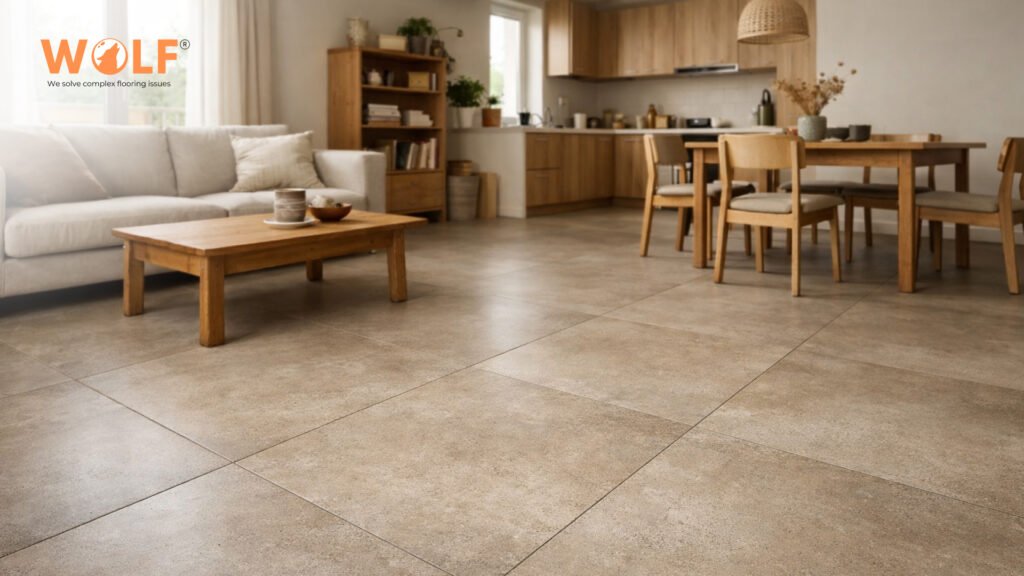
Matte finishes complement the warm neutral palettes trending in Polish interiors. Beiges, soft greys, and earthy tones work beautifully with matte stone effects, creating calm, inviting spaces that feel both modern and timeless.
Limestone-effect porcelain in soft grey and beige tones sells consistently. These tiles deliver organic character without the maintenance requirements of natural limestone. Polish buyers use them throughout homes like living areas, kitchens, bathrooms, hallways.
Concrete-effect tiles appeal to Polish homeowners wanting industrial-modern aesthetics. These tiles work particularly well in open-plan spaces common in newer Polish construction, where consistent flooring creates visual flow.
Travertine-effect porcelain is gaining traction. The warm, Mediterranean character suits Polish buyers creating spa-inspired bathrooms and comfortable living spaces. Matte versions offer natural texture without the porous surface issues of authentic travertine.
Terracotta represents one of the strongest color trends in porcelain tile trends Poland is experiencing. This warm, earthy tone brings natural vibrancy to Polish interiors.
After years of cool greys dominating Polish homes, terracotta offers a refreshing alternative. This color connects to natural elements, creating grounded, calming spaces. Terracotta pairs beautifully with the wood furniture, natural textiles, and warm metal fixtures popular in contemporary Polish design.
Terracotta-toned tiles work in various applications. As flooring in living areas, they create cozy, welcoming spaces. In kitchens, terracotta backsplashes add personality without overwhelming. In bathrooms, terracotta accents provide warmth that cool-toned tiles cannot match.
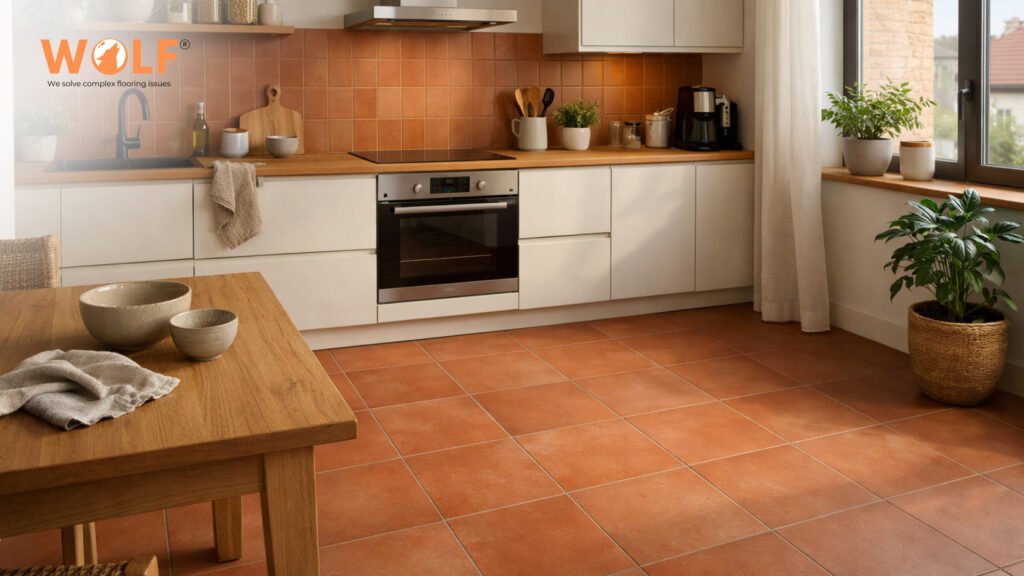
Progressive Polish designers combine terracotta with neutral bases. A terracotta feature wall or accent area paired with cream or beige tiles creates sophisticated contrast. Checkerboard patterns using terracotta and cream offer modern takes on classic designs.
Terracotta works particularly well in Polish homes with abundant natural wood elements. The warm tones complement oak flooring, walnut furniture, and wooden architectural details common in Polish interiors.
Wood-look porcelain continues strong sales across Poland. This makes sense, Poles love wood’s natural warmth, but real wood floors present challenges in bathrooms, kitchens, and basements.
Polish homes traditionally featured wood floors. But wood requires maintenance, expands with humidity, scratches easily, and performs poorly in moisture-prone areas. Wood-look porcelain solves these problems while delivering the desired aesthetic.
These tiles work throughout Polish homes. Bathrooms can have wood aesthetics without moisture concerns. Kitchens get wood looks without worrying about spills. Basements become livable spaces with wood-style flooring that handles humidity perfectly.
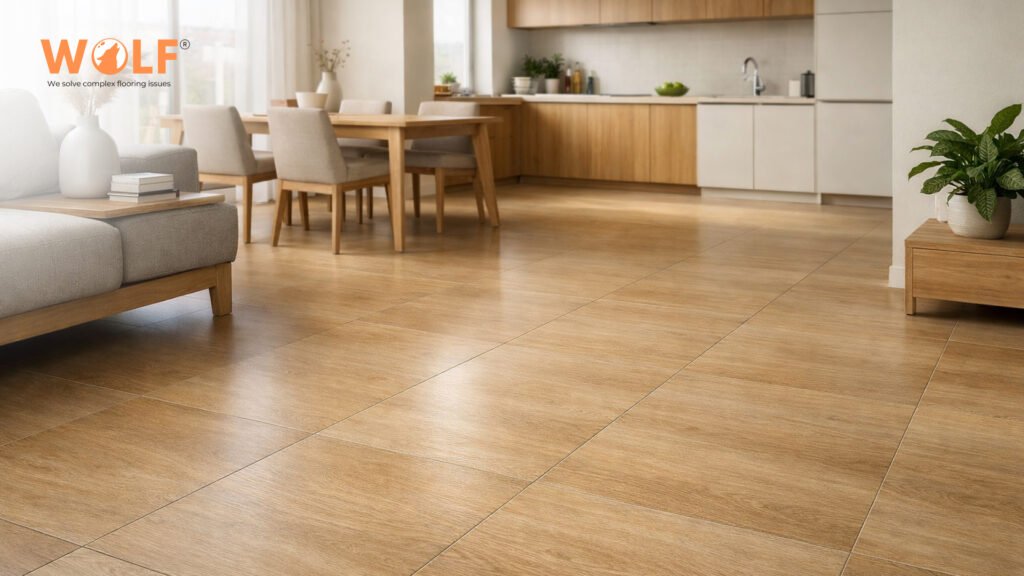
Medium wood tones perform best. Oak and ash effects align with traditional Polish preferences while suiting contemporary interiors. These natural, understated colors work in various design styles from traditional to modern.
Longer plank formats create more convincing wood installations. The extended length makes the wood appearance more realistic. Polish buyers increasingly specify these formats for living areas and bedrooms where they want authentic wood character.
Textured surfaces that replicate wood grain add authenticity. Smooth, flat wood-look tiles don’t convince Polish buyers. The subtle surface texture makes the critical difference between obvious imitation and believable wood effect.
Large-format porcelain tiles have become standard in Polish construction and renovation projects. The trend toward oversized tiles shows no signs of slowing.
Fewer grout lines create cleaner, more contemporary looks. Polish buyers renovating older apartments want modern aesthetics, large-format tiles deliver that instantly. The seamless appearance makes rooms feel more spacious, important in Polish urban apartments where space efficiency matters.
Practical benefits drive adoption too. Less grout means easier cleaning and maintenance. For Polish families, this practical advantage influences purchase decisions significantly.
Large-format tiles suit the minimalist design trend popular in Polish interiors. Clean lines, uninterrupted surfaces, and simple elegance all favor larger sizes.
Standard large formats work well in Polish homes. These sizes suit typical Polish room dimensions and installation practices. Polish tile setters have experience with these formats, making installation straightforward.
Large-format tiles appear in bestselling finishes, matte stone effects, wood looks, and terracotta tones in larger sizes create strong sales combinations. Polish buyers want contemporary sizes in the aesthetics they prefer.
Poland’s climate tests materials. Cold winters. Warm summers. Humidity variations. Temperature fluctuations. Porcelain tiles handle these conditions exceptionally well.
Porcelain’s extremely low water absorption rate means moisture can’t penetrate and cause problems. This matters in Polish bathrooms, kitchens, and entryways where moisture exposure is common. Polish buyers appreciate materials that won’t crack from freeze-thaw cycles in unheated spaces.
Porcelain doesn’t expand or contract significantly with temperature changes. In Polish homes with underfloor heating (increasingly common in renovations), this stability is essential. The tiles perform reliably without cracking or lifting.
Porcelain resists staining and scratching better than many alternatives. Polish families with children and pets need durable surfaces. Porcelain delivers that durability while looking beautiful.
Many Polish renovations include underfloor heating installation. Porcelain tiles work excellently with these systems. The tiles conduct heat efficiently, don’t crack from thermal cycling, and maintain their appearance over years of heating use.
Polish buyers specifically ask about underfloor heating compatibility when selecting tiles. Porcelain’s suitability for these installations makes it a preferred choice for comprehensive renovations.
Several broader design trends influence porcelain tile trends in Poland.
Polish interiors are embracing “warm minimalism”- clean, uncluttered spaces with warm, inviting materials. This aesthetic favors matte finishes, natural tones, and organic textures. Porcelain tiles fit perfectly, offering the clean look minimalism requires with the warmth contemporary buyers want.
Polish designers increasingly incorporate nature-inspired elements. Stone-effect tiles, wood-look planks, and terracotta tones all connect to natural materials. These choices support the biophilic design trend while offering better performance than authentic natural materials.
Progressive Polish projects combine matte and glossy finishes thoughtfully. Matte floors with glossy accent walls. Smooth tiles complemented by textured surfaces. This layered approach creates sophisticated interiors with depth and interest.
When selecting tiles for Polish homes, several practical factors matter beyond aesthetics.
Polish tile installation standards are high. Professional installers expect quality materials that install properly. Porcelain tiles from reputable manufacturers meet these standards, ensuring installations that perform well long-term.
Proper substrate preparation matters in Polish buildings, particularly older structures. Porcelain tiles require level, stable surfaces. Polish installers understand these requirements and prepare accordingly.
Polish homeowners want beautiful surfaces that don’t require constant maintenance. Porcelain tiles deliver this. Regular sweeping and occasional mopping keep them looking excellent. No sealing. No special treatments. Just simple, practical maintenance.
Polish buyers seek value and quality that justifies price. Porcelain tiles offer excellent long-term value. The durability means tiles last for decades. The performance means fewer problems. The aesthetics mean spaces stay current longer.
Understanding porcelain tile trends in Poland helps homeowners and designers make informed decisions that balance aesthetics, performance, and long-term value.
Wolf Porcelain Tiles manufactures premium porcelain collections using advanced Italian technology. With two decades of experience supplying European markets, we understand what Polish homeowners, designers, and retailers need: tiles that balance contemporary aesthetics with practical performance, consistent quality, and competitive pricing.
Our 2026 collections include the finishes Polish projects demand: matte stone effects in warm neutrals, terracotta-toned designs in various formats, wood-look porcelain with realistic grain patterns, and large-format options that create seamless contemporary spaces.
For Polish homeowners planning renovations, designers specifying materials, and retailers building inventory, we offer collections proven to meet Polish market preferences. Our tiles handle Poland’s climate conditions, work with underfloor heating systems, and deliver the durability Polish buyers expect.
Contact us to discuss how our porcelain tile collections can enhance your Polish project with quality materials designed for lasting beauty and reliable performance.
Matte stone-effect tiles, terracotta-toned designs, and wood-look porcelain dominate Polish preferences. Warm neutral palettes and large-format sizes are also trending strongly.
Porcelain offers superior durability, lower water absorption, better performance with underfloor heating, and greater design versatility. Polish buyers value these technical advantages for long-term home investments.
Yes, matte finishes suit Polish interiors perfectly. They hide water spots and dust, create warmth without glare, and complement contemporary design preferences popular in Poland.
Absolutely. Wood-look porcelain handles Poland's temperature variations, humidity changes, and heating cycles excellently. Unlike real wood, porcelain won't expand, contract, or be damaged by moisture.
Large-format tiles have become standard in Polish projects. These sizes create contemporary looks, reduce grout lines, and suit the clean aesthetics popular in Polish interior design.
Terracotta tones bring natural warmth to Polish interiors. They pair beautifully with wood elements common in Polish homes and complement the warm neutral palettes trending in contemporary Polish design.
Yes, porcelain tiles work excellently with underfloor heating systems. They conduct heat efficiently, remain stable through thermal cycling, and maintain their appearance over years of use.

1 Comment
This article is good and nicely formatted. The site is useful and professional.