
Close
Your showroom space is valuable. Every display you install, every collection you stock, every square metre of floor space costs money.
So here’s the question UK tile retailers face right now: Which porcelain tiles will customers actually buy in 2026?
Not what looks interesting in trade magazines. Not what won design awards. What walks out your door on the back of a sale.
If you run a boutique tile showroom or independent retail space, you already know your customers have changed. They arrive with Pinterest boards saved on their phones. They’ve watched renovation shows. They know exactly what matte versus gloss means. And they’re comparing your products against what they’ve seen online.
The UK tile market continues evolving toward porcelain over natural stone, large formats over small, and realistic digital effects over traditional plain colours. For retailers, this shift creates opportunity, but only if you stock what customers are asking for.
Let’s look at the porcelain tiles for UK showrooms that are actually selling in 2026.
Walk into any successful UK tile showroom right now, and you’ll see matte stone-effect porcelain prominently displayed. There’s a reason for that.
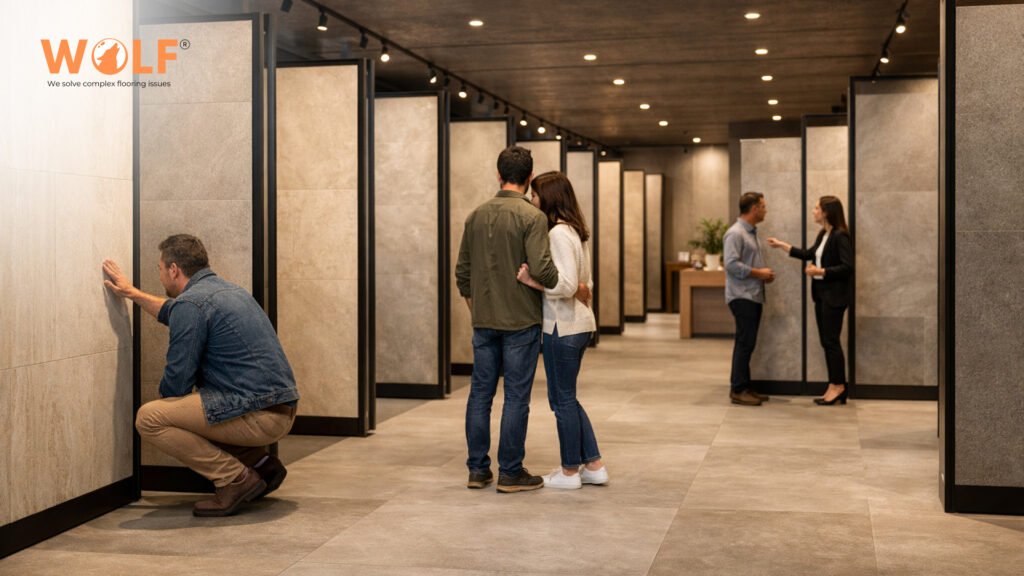
Matte finishes are dominating UK tile trends. Industry reports consistently identify matte as the leading finish preference, particularly in stone-effect tiles that replicate limestone, concrete, and natural slate.
Customers love matte for practical reasons. The non-reflective surface hides water spots, dirt marks, and scratches better than glossy alternatives. In UK homes where natural light can be limited, matte tiles create warmth without glare.
The aesthetic appeal matters too. Matte finishes suit the contemporary, minimalist interiors popular across UK residential projects. They work beautifully in Scandinavian-inspired designs, modern rustic spaces, and the “warm minimalism” trend that’s replacing stark white interiors.
Limestone-effect porcelain in soft greys and beiges sells consistently. These tiles deliver organic appeal with none of the maintenance issues of real limestone. Customers use them throughout homes, bathrooms, kitchens, hallways, living areas.
Concrete-effect tiles in matte finishes appeal to customers wanting industrial-modern aesthetics. The smooth, refined surface works for floors and walls, particularly in open-plan spaces where consistent flooring creates visual flow.
Travertine-effect porcelain is experiencing renewed popularity. The warm, Mediterranean character suits customers creating spa-inspired bathrooms and coastal-feel interiors. Matte versions offer the natural texture without the porous surface issues of authentic travertine.
These porcelain tiles for UK showrooms balance aesthetics with the practical performance retailers need.
Matte tiles need proper lighting. Unlike gloss surfaces that catch attention naturally, matte finishes require good ambient illumination to showcase their subtle texture and colour depth. Position your matte stone displays where natural light can enhance them, or invest in quality overhead lighting.
Show matte tiles in large installations, not just sample boards. A full floor or wall display demonstrates how the seamless look transforms spaces. Customers struggle to visualize matte’s impact from small samples, they need to see it at scale.
While matte dominates overall sales, high-gloss marble-effect tiles remain essential stock for UK showrooms. These tiles deliver luxury aesthetics that certain customer segments specifically request.
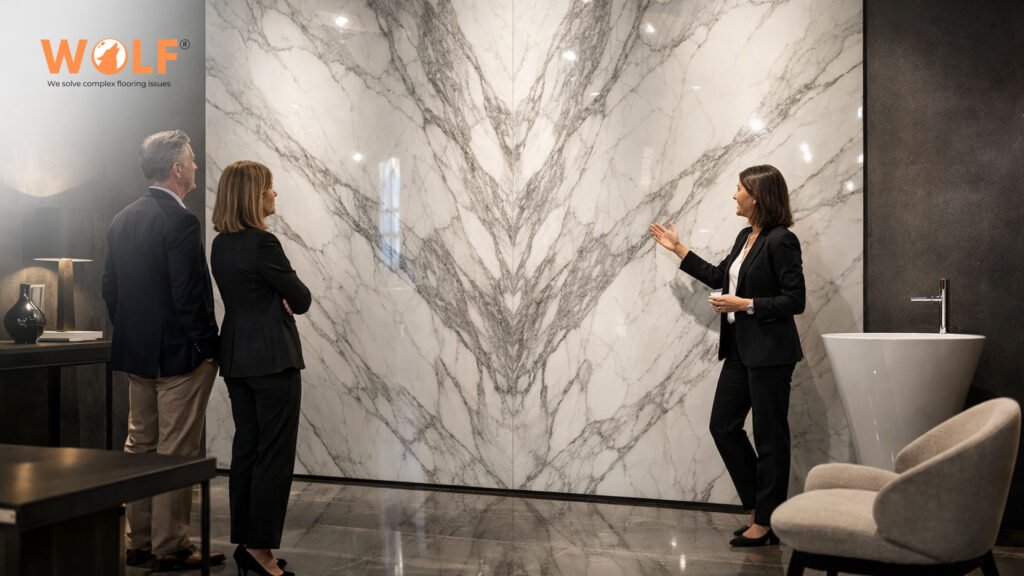
High-gloss finishes on marble-effect porcelain create sophisticated, high-end spaces. The reflective surface amplifies the veining patterns, making them more dramatic and visually striking. For bathrooms, feature walls, and statement floors, nothing delivers luxury impact quite like glossy marble.
Advanced digital printing technology now replicates marble with remarkable accuracy. Customers get the prestigious look of Carrara or Calacatta without the maintenance requirements, staining issues, or expense of natural marble.
White marble with grey veining remains the bestseller. Classic Carrara-style patterns suit a wide range of interior styles and offer the timeless elegance customers associate with marble.
Bold veining patterns are trending stronger. Customers want marble with personality, dramatic veins, rich contrasts, book-matched panels that create feature walls. High-gloss finishes make these patterns more impactful.
Warmer marble tones are gaining ground. Industry trend reports identify movement toward beiges, creams, and marble with warmer undertones rather than stark white and cool grey combinations.
High-gloss marble needs theatrical presentation. Directional lighting that highlights the veining creates the “wow moment” customers respond to. Position spotlights to catch the glossy surface at angles that show the depth and dimension.
Install high-gloss marble vertically for maximum impact. Feature walls show these tiles better than floor displays. Customers immediately understand how glossy marble creates luxury when they see it covering a full wall section.
Pair high-gloss displays with matte options in similar colourways. This demonstrates how customers can combine finishes within the same project, glossy feature walls with matte floors, for example.
Large-format porcelain tiles continue dominating UK sales. The trend toward oversized tiles shows no signs of slowing, making them essential stock for any serious tile retailer.
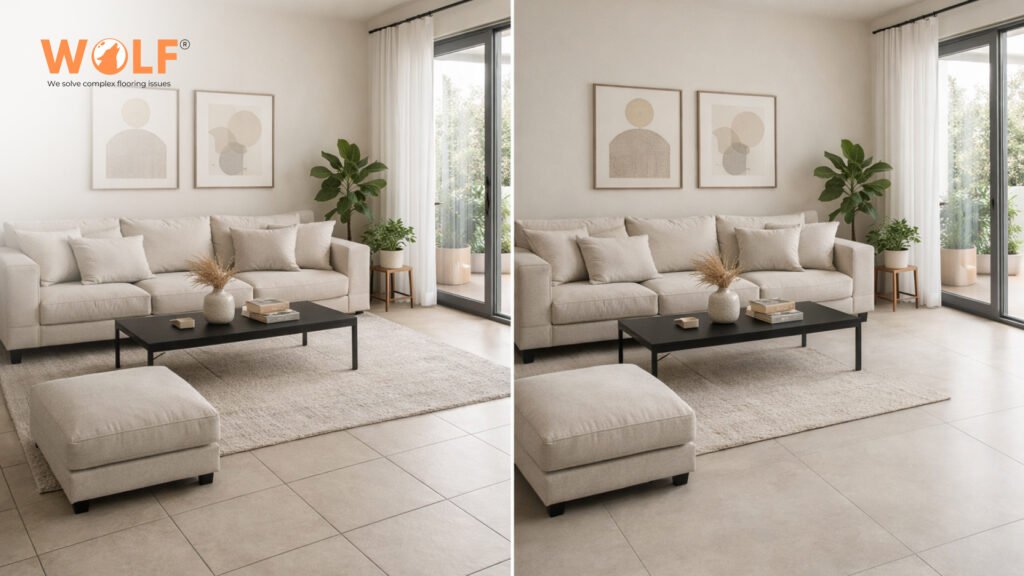
Fewer grout lines create cleaner, more contemporary looks. Customers renovating older properties want modern aesthetics, and large-format tiles deliver that instantly. The seamless appearance makes rooms feel more spacious and open.
Practical benefits matter too. Less grout means easier cleaning and maintenance. For busy families, rental properties, and commercial spaces, this practical advantage influences purchase decisions.
Large-format tiles suit the minimalist design trend. Clean lines, uninterrupted surfaces, and simple elegance all favour larger tile sizes over smaller, busier formats.
Large-format displays require proper infrastructure. These tiles are heavy and need stable, well-engineered display systems. Metal display racks provide the strength and stability necessary for safely showcasing large panels.
Invest in substantial display installations. Industry experts note that large-format tiles, often 24×48 inches or larger, need dedicated showroom sections where customers can see their full impact. Small samples don’t convey how these tiles transform spaces.
Show large formats in bestselling finishes. Matte stone effects and high-gloss marble in large sizes create your strongest sales combinations. Stock what sells, not what’s unusual.
Textured porcelain tiles are redefining UK bathroom and kitchen aesthetics. The move toward tactile surfaces adds a sensory dimension that flat tiles cannot match.
Three-dimensional surfaces are gaining significant traction. From subtle linear grooves to bold geometric reliefs, textured wall tiles add depth and visual interest. These tiles work beautifully on feature walls, splashbacks, and shower enclosures.
Fluted tiles represent the latest development in textured tiling. These thin, linear tiles feature rounded, fluted edges creating multi-dimensional wall coverage. They’re appearing in bathrooms where customers want unique surface treatment with sophisticated appeal.
Advanced manufacturing now creates textures you can see and feel. Veining isn’t just printed, it’s embossed. Stone textures replicate the natural surface variations of slate and limestone. Wood grain patterns have realistic depth.
Display textured tiles with proper lighting. Three-dimensional surfaces need directional light to show the shadows and depth that make them interesting. Without good lighting, textured tiles look flat and unimpressive.
Show textured tiles in appropriate applications. Feature walls and accent areas demonstrate how texture adds interest without overwhelming entire rooms. Most customers won’t tile whole bathrooms in heavily textured surfaces, but they’ll use them strategically.
Textured tiles offer higher margin opportunities. Customers perceive them as premium products and accept corresponding pricing. Make them visible in your showroom, they attract attention and generate profitable sales.
Wood-look porcelain continues strong sales across UK retail. Digital printing now creates grain patterns, colour variations, and surface textures that convincingly mimic popular wood species.
Customers want wood’s natural warmth without the maintenance issues. Real wood in bathrooms and kitchens presents problems, moisture damage, expansion, contraction, refinishing requirements. Wood-look porcelain solves these problems while delivering the desired appearance.
These tiles work throughout homes. Customers install them in bathrooms without moisture concerns. They use them in kitchens without worrying about spills. They extend them into living areas for consistent flooring across open-plan spaces.
Medium to light wood tones perform best. Oak and ash effects align with contemporary UK design preferences. These natural, understated colours suit various interior styles from traditional to modern.
Larger plank formats create more convincing wood installations. The longer the plank, the more realistic the wood appearance. Stock options that work with underfloor heating are common in UK installations.
Textured surfaces that replicate wood grain add authenticity. Smooth, flat wood-look tiles don’t convince customers. The subtle surface texture makes the difference between obvious imitation and a believable wood effect.
Stocking the right tiles matters, but display execution determines whether inventory sells or sits collecting dust.
When selecting porcelain tiles for UK showrooms, display strategy matters as much as product selection.
Room vignettes sell better than sample boards. A bathroom corner with matte stone tiles installed, a kitchen splashback featuring glossy marble, a living area floor with wood-look planks, these installations help customers visualize products in actual use.
Complete the scene with complementary elements. Add fixtures, accessories, or furniture pieces that show scale and context. Customers need to imagine these tiles in their homes, not just see them on showroom walls.
Large-format tiles require dedicated display space. Industry sources identify 24×48 inches as a common large-format size, but many tiles exceed even that. Your display infrastructure needs to safely support these sizes.
Dedicate specific showroom sections to large panels. Use metal frames and stable mounting systems. Include soft, directional lighting that highlights surface textures and finishes.
Show large formats fully installed, not leaning against walls. The seamless, spacious effect only becomes apparent when tiles are properly displayed in substantial installations.
Demonstrate how matte and gloss work together. Show textured accent walls complementing smooth floor tiles. Help customers understand how to combine products rather than just selling individual items.
This approach increases sales values. Customers who buy coordinated products for different applications spend more than those purchasing single tile types.
UK customers increasingly research before visiting showrooms. Have specifications readily available like slip ratings, installation requirements, thickness options, suitability for underfloor heating.
Staff should discuss practical considerations alongside aesthetics. Knowledgeable retailers build trust. Customers return to showrooms where staff genuinely help them make informed decisions.
Some trends generate excitement but haven’t proven consistent sales yet. Stock conservatively until customer demand justifies a larger inventory.
Terrazzo-style porcelain is experiencing renewed interest. The speckled composite appearance adds personality without overwhelming spaces. Modern terrazzo offers subtle, sophisticated colour palettes that work in contemporary interiors.
Stock terrazzo in neutral base colours with understated speckles. Save bold, vibrant designs for accent pieces that customers buy in smaller quantities.
While trend reports identify movement toward warmer hues, terracotta tones, and bold patterns, conservative neutrals still dominate UK sales. Stock what reliably sells, not what might sell.
Consider bold options as accent inventory. A few colourful or patterned tiles serve customers wanting statement pieces without tying up significant capital in slow-moving stock.
Wolf Porcelain Tiles manufactures premium porcelain collections using advanced Italian technology. With two decades of experience supplying independent retailers and boutique showrooms across Europe, we understand what UK customers buy, not just what looks good in catalogues.
Our 2026 collections focus on the finishes UK showrooms need: matte stone effects in contemporary neutrals, high-gloss marble replications with realistic veining, large-format options including 24×48 sizes and larger, textured surfaces for feature applications, and wood-look designs in popular oak and ash tones.
For UK tile retailers and boutique showrooms looking to strengthen their product ranges with collections proven to sell, we offer trade-focused support: competitive wholesale pricing, reliable stock availability, technical specifications and samples, and display guidance to help you showcase tiles effectively.
Contact us to discuss how our porcelain tile collections can help your showroom compete effectively in the growing UK market.
Matte finishes dominate sales, particularly in stone-effect tiles. Customers prefer the non-reflective surface that hides marks and suits contemporary interiors.
Large-format tiles reduce grout lines, create seamless modern looks, make spaces feel more open, and offer easier maintenance, all priorities for UK customers.
Look for water absorption test reports showing below 0.5% for porcelain, breaking strength certifications, and dimensional accuracy specifications meeting international standards.
Yes, porcelain tiles with water absorption below 0.5% handle Caribbean humidity, heat, and coastal salt air effectively, often outperforming natural stone in tropical conditions.
Approximately 90% of India's tiles are produced in the Morbi cluster in Gujarat, which ships primarily from Mundra Port.
Based on 2023-2024 data, porcelain tiles (porcelain stoneware) accounted for approximately 72-75% of India's ceramic tile exports.