
Close
Sarah’s contractor stands in her Nashville kitchen holding a piece of luxury vinyl plank. She installed this exact floor three years ago. Cost about $12,000 for the whole first floor. It looked amazing in the showroom.
Now there’s a permanent dent where the fridge sits. Traffic patterns show as dull streaks from the hallway to the kitchen. The seam by the sliding door has started lifting despite promises that LVP handles moisture perfectly.
“How much to replace it?” she asks.
“Another $12,000. Maybe a bit more with inflation.”
She does the math quickly. That’s $24,000 over six years for flooring that still won’t make it to her ten-year anniversary in this house.
Down the street, her neighbor installed porcelain tile in 2019. Looks exactly the same today as installation day. Will probably look the same in 2039.
This conversation is happening in living rooms across America right now. The porcelain tiles vs LVP in USA homes debate isn’t theoretical anymore. It’s about real money, real timelines, and what homeowners actually want from their forever homes in 2026.
The numbers tell an interesting story. LVP dominated the 2010s because it solved immediate problems. Fast installation. Lower upfront costs. DIY-friendly. But now those 2015 and 2018 installations are showing their age. Homeowners are realizing that “affordable” and “cheap to replace every decade” aren’t the same thing.
Meanwhile, porcelain technology has caught up. Large format tiles create the seamless look Americans want. Prices have become more accessible. And the designer flooring choice USA professionals make increasingly leans toward materials that last. Porcelain tiles, with their robust manufacturing process, offer unparalleled durability and longevity, making them an excellent long-term investment.
Here’s what’s actually driving decisions in 2026.
When comparing porcelain tiles vs LVP installations, longevity separates these materials dramatically.
LVP is engineered plastic with a printed layer protected by a wear coating. It handles water well and installs quickly over most subfloors.
But here’s what happens over time. The wear layer gradually dulls from foot traffic. Heavy furniture can dent the surface permanently. Sharp pet claws create scratches that can’t be buffed out. Seams can lift in humid climates despite waterproof claims.
Quality LVP typically lasts 10-20 years depending on traffic levels and product grade. After that, you’re looking at a replacement.
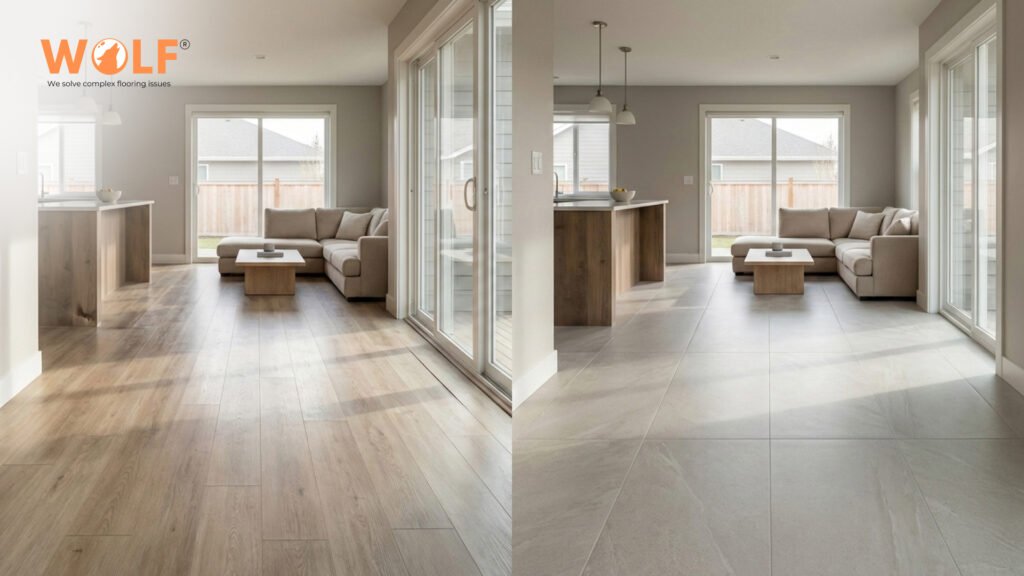
Porcelain gets fired at extremely high temperatures (over 1,200°C), creating a dense, nearly impervious material. It doesn’t have a wear layer that can fade. The color and pattern go through the entire tile thickness.
Properly installed porcelain can last 50+ years or even generations. You’ll find original porcelain floors in century-old buildings still looking remarkable. The material doesn’t degrade from UV exposure, foot traffic, or climate extremes.
In practical terms, you buy porcelain once. You might replace LVP two or three times over the same period.
One of the biggest large format porcelain tile benefits driving the 2026 market is visual impact.
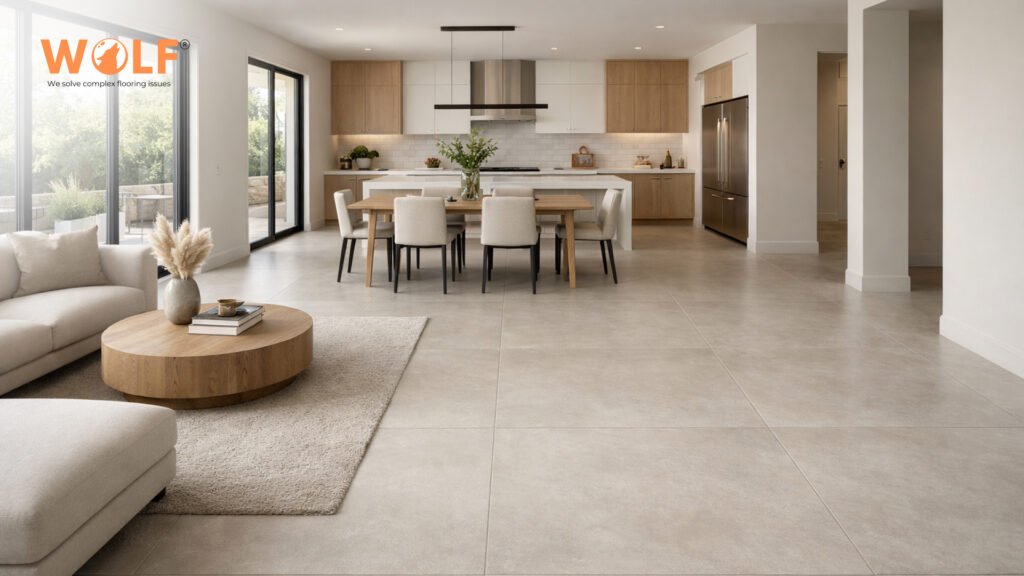
The 48×48 porcelain slabs format has transformed how American homes look and feel.
Why designers love this size:
Picture a typical open-concept living area flowing into a kitchen. With LVP planks, you see hundreds of seams creating a busy, segmented look. With 48×48 porcelain, you get dramatically fewer grout lines. The visual difference is striking.
While 48×48 makes statements in large spaces, the 24×24 format remains essential for:
This size delivers the clean, modern look of large format tiles without the installation challenges of massive slabs.
Vinyl planks typically measure 6-9 inches wide by 36-48 inches long. You’re locked into that narrow plank proportion. You can’t create the monolithic, stone-like expanse that large format porcelain provides.
The old objection to tile was grout maintenance. Fair concern in 2010. Less relevant in 2026.
Today’s high-performance grouts offer:
With large format tiles like 48×48, you have far fewer grout lines to maintain anyway. A living room that would have had many grout line intersections with standard tile has far fewer with large format.
LVP markets itself as maintenance-free. Mostly true for daily cleaning. But:
Porcelain maintenance is straightforward. Sweep and mop. Grout lines get sealed once during installation. Reseal every few years if you want extra protection. That’s it.
Both materials have appropriate applications. Understanding when to use which helps you make better decisions.
The stone-look porcelain trends in 2026 USA focus on authentic marble, limestone and concrete effects. Modern printing technology creates patterns so realistic that most people can’t distinguish them from natural stone.
Benefits over real stone:
Both LVP and porcelain handle water well. But porcelain’s waterproof performance doesn’t degrade over time. The core material is inherently water-resistant, not relying on coatings or sealed seams that can fail.
For coastal homes in Florida or high-humidity areas in the Southeast, this permanent waterproofing matters.
American homes have gotten bigger and more open. Great rooms combining kitchen, dining and living areas create high-traffic zones that need serious durability.
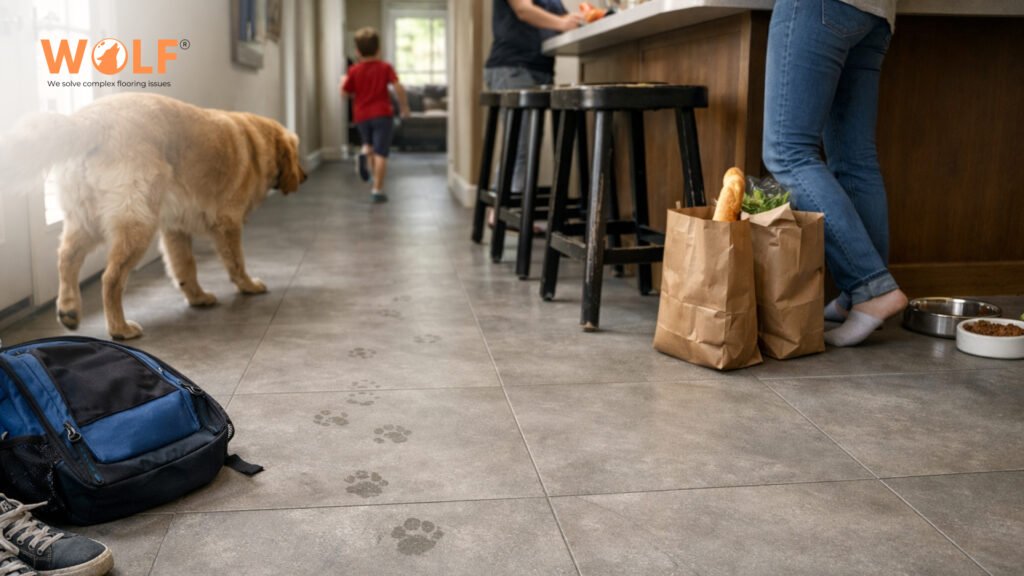
Large format porcelain handles this traffic without showing wear patterns. LVP develops visible traffic lanes over time where the wear layer dulls from repeated foot traffic.
High humidity and temperature extremes favor porcelain. LVP can expand and contract with temperature swings. Seams may show movement over time.
Porcelain stays dimensionally stable regardless of climate. Popular for indoor-outdoor flow (tile continuing from kitchen to covered patio) common in southern architecture.
Cold climates with radiant floor heating increasingly choose porcelain. It conducts and retains heat better than vinyl.
Snow and salt tracked indoors won’t damage porcelain. LVP can show wear patterns at entries where wet boots constantly cross.
Desert heat and sun exposure test flooring materials. UV can affect some LVP products over time, especially near large windows.
Porcelain’s fired-in color doesn’t fade. Popular for the indoor-outdoor California lifestyle where flooring flows to patios and pool decks.
Advantages:
Challenges:
Requirements:
Benefits:
The higher installation cost for porcelain reflects the skill required. Poor tile installation shows immediately. Poor LVP installation might not show problems for months or years.
American National Standards Institute (ANSI) sets specifications for porcelain tiles sold in USA markets. Look for:
Both LVP and porcelain can carry FloorScore certification for low VOC emissions. Important for USA indoor air quality standards and LEED projects.
Commercial projects require ADA-compliant slip resistance. Porcelain tiles can be specified to meet these requirements. Important for commercial applications or universal design homes.
Dimensional consistency: Large format tiles must be precisely sized (rectified edges) for narrow grout lines.
Through-body color: Better quality shows color/pattern throughout tile thickness, not just surface.
Low water absorption: Should be well below 0.5% for true porcelain classification.
Batch consistency: Color should match across production batches for large projects.
Wolf Group India manufactures large format porcelain tiles using Italian technology that meets ANSI A137.1 standards for USA markets. Available formats include:
All formats feature rectified edges for minimal grout lines and water absorption rates below 0.5%. Available in stone-look aesthetics (marble, limestone, concrete effects) and modern color palettes suited to American design preferences.
Manufacturing with Italian technology ensures the dimensional precision USA installations demand. Over 20 years supplying international markets means understanding what American designers and contractors require for successful projects.
Technical specifications and USA dealer information available at wolfporcelaintiles.com or info@wolfgroupindia.com.
Porcelain is a fired ceramic material that lasts 50+ years with minimal maintenance. LVP is engineered vinyl that typically lasts 10-20 years and may show wear patterns over time. Porcelain costs more upfront but doesn't need replacement. LVP costs less initially but you might replace it twice over 30 years.
Porcelain tile is generally valued higher in home appraisals, particularly quality stone-look large format tiles. Appraisers recognize it as a permanent upgrade. LVP is seen as standard finish flooring. The difference matters most in higher-end homes where buyers expect premium materials.
LVP works well for DIY projects, rental properties, basement remodels with uneven subfloors, or situations where immediate budget constraints outweigh long-term value considerations. Also good for homeowners who want the slight warmth and softness vinyl provides underfoot.
48×48 porcelain slabs work beautifully in open-concept living areas, large kitchens, and master suites where seamless expanses create dramatic impact. Use 24×24 formats in bathrooms (better for floor slopes), mudrooms, and smaller spaces where installation flexibility matters.
Designers cite authenticity, longevity, and visual impact. Large format porcelain creates the seamless stone-like surfaces clients want for modern open plans. It integrates with radiant heating, handles high traffic without showing wear, and provides the substantial feel that signals quality. Clients increasingly view homes as long-term investments rather than short-term assets.
Choose installers with specific large format experience. They need proper leveling systems, large format tile cutters, and understanding of USA substrate requirements. Ask to see portfolios of previous large format work and verify they understand ANSI installation standards. Experience matters more than low bids for these installations.