Why Requesting Tile Samples Before Importing is Non-Negotiable
May 29, 2026
Porcelain Tile Samples From India: What Importers Actually Need to Check
You’ve seen the catalogue. The prices make sense. The supplier says export-quality.
But requesting porcelain tile samples from India before committing to a bulk order isn’t optional. It’s the step that separates a smooth first shipment from an expensive mistake.
A catalogue image can’t tell you if the finish is consistent, whether the edges are calibrated, or if the color arriving at your warehouse matches what you approved. You find that out when you’re holding the actual tile.
By the time a container lands at your port, there’s no do-over.
What Actually Goes Wrong When You Skip the Sample
The problems aren’t dramatic. They’re just expensive.
A distributor in Europe approves a beige marble-look tile based on catalogue images. The tiles arrive. The tone is cooler than expected. Their showroom layout doesn’t work with it anymore.
A contractor in the Gulf expects rectified edges for a commercial job with tight grout joints. The tiles come with calibration variance. The installation crew raises it on-site. Delay. Complaints. Costs.
Neither situation is rare. Finish variations, shade inconsistency between production batches, thickness differences, fragile packaging that doesn’t survive sea freight. These are real sourcing risks. Every single one of them becomes obvious the moment you hold a sample.
One tile before a 20-foot container. That’s the math.
What to Check in a Tile Sample Before Your Bulk Order
Don’t just look at it. Evaluate it.
Surface and Finish
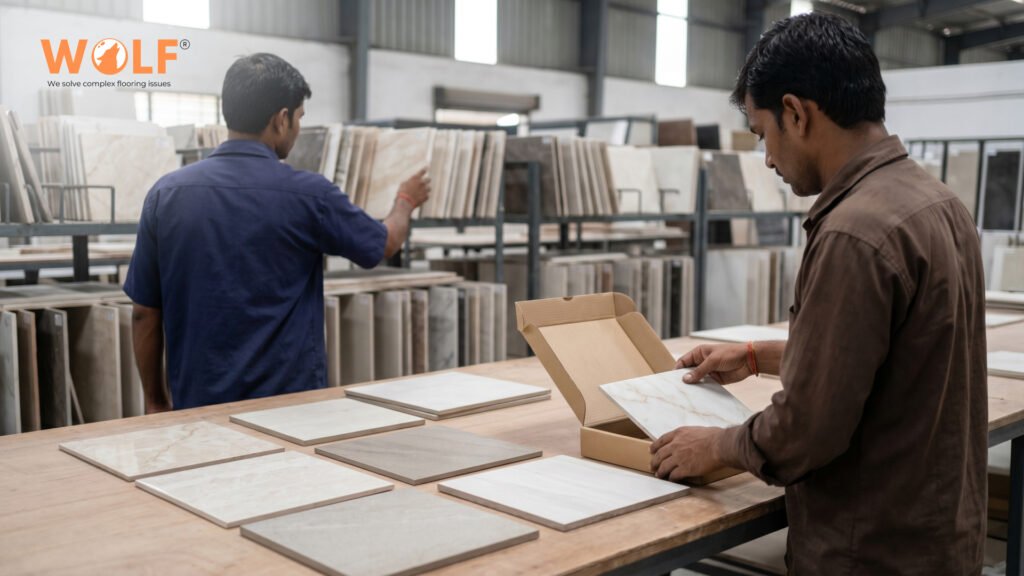
Hold the tile at an angle under direct light. Check for pinholes, dull patches, uneven polishing. A properly finished porcelain tile looks clean across the entire surface.
Matte finishes should feel controlled and even. Not dusty or rough in patches. Glossy tiles should reflect cleanly. Warped or broken reflections mean the glazing has issues.
For larger formats like the600x1200mm collection, surface quality matters even more because there’s more area for problems to show up.
Edge Calibration
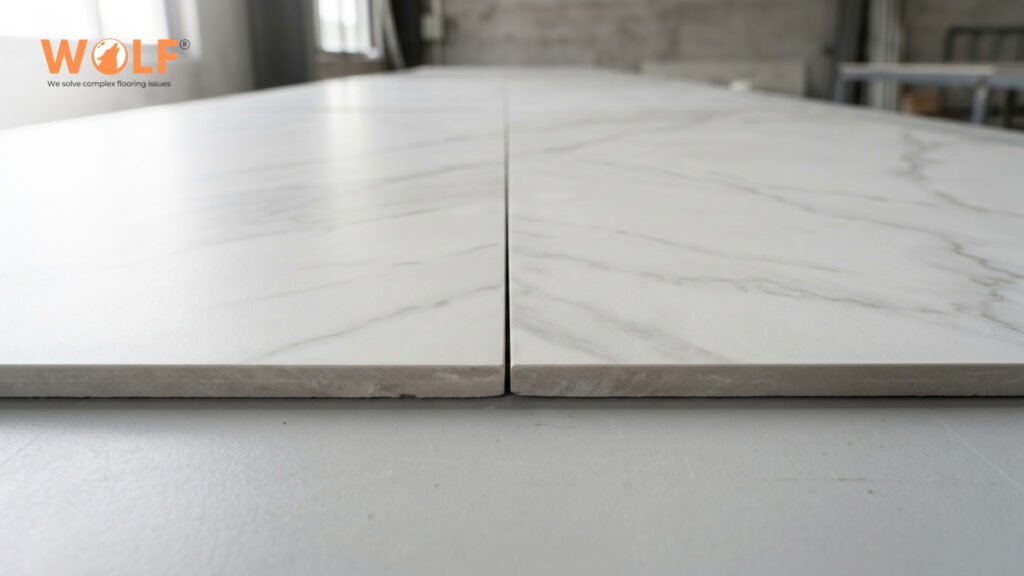
Place two sample tiles next to each other. Do the edges meet properly?
Rectified porcelain should have sharp, consistent edges that allow tight installation joints. Variation between two pieces from the same collection is a red flag for what the full batch will look like.
Place two pieces edge to edge. If the joint is sharp and even like this, calibration is correct. If there's a visible gap or lip, that's a problem worth catching before the container ships.
Water Absorption
For export-grade porcelain, water absorption should be below 0.5%. That number tells you the tile is dense enough for bathrooms, commercial floors, outdoor use, and cold climates where weaker tiles crack under freeze-thaw cycles.
Ask for the technical spec sheet with your sample. Most serious Morbi tile factory samples will come with one. Any manufacturer who can’t provide it is worth being cautious about. You can also checkWolf’s export markets and manufacturing standards before deciding who to work with.
Color Across Multiple Pieces
One tile is not enough to evaluate color.
Natural stone-look and marble-look porcelain tiles are designed to have variation. That’s intentional. But the variation should be controlled. When a sample kit includes multiple pieces from the same collection, you can see the actual range of patterns and shades before approving the order.
If two pieces from the same SKU look like different tiles, that’s a consistency problem.
Packaging
Check the carton. Carton strength, edge protection, how tightly the tiles are packed. Weak export packaging leads to breakage in transit. If it looks underdone during sampling, it won’t improve when a full container is dispatched.
Check all five of these before you approve anything.
How to Request a Free Tile Sample From an Indian Manufacturer
Most new buyers don’t want random samples. They want something relevant to their project.
That’s exactly how the process at Wolf is structured.
Sample kits are put together based on your specific requirements, not pulled randomly off a shelf. This is what Step 2 actually looks like.
Step 1: Share your requirements.
Size, finish, project type, target market. The more specific, the more useful the sample kit. Submit everything directly on therequest sample page.
Step 2: The team curates a relevant kit.
Not random pieces. Based on what you asked for. Matte stone-look for commercial flooring, marble-look glossy for retail showrooms, anti-slip outdoor finishes for landscaping.
Step 3: It ships to your door.
You compare finishes, review specs, show it to clients or your design team. You make a decision with something real in front of you.
Buyers who want to understand shipping timelines and export documentation before committing can explore theWolf export process for more details.
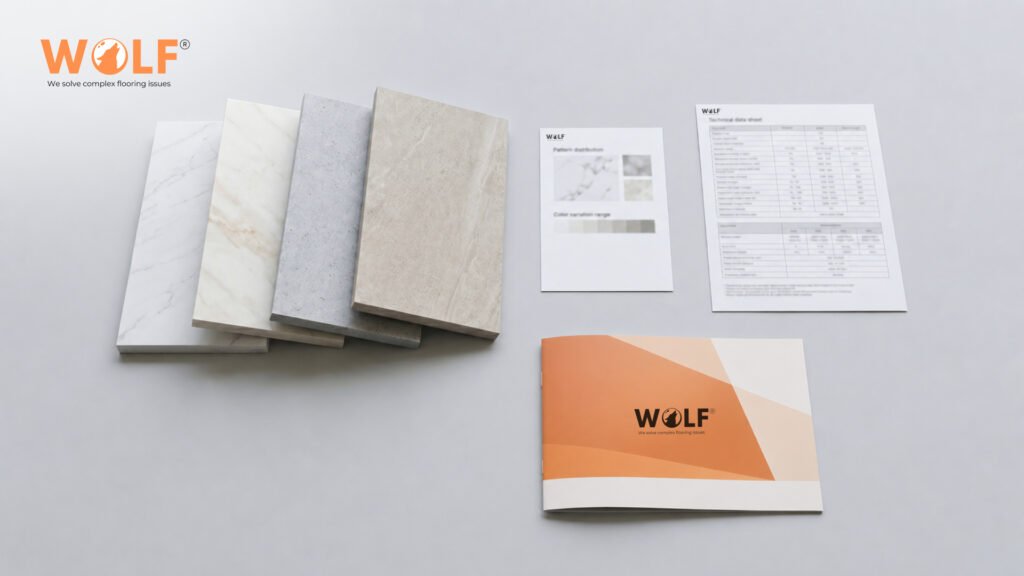
What's Inside a Wolf Sample Kit
Here’s what arrives when the package shows up.
What arrives when you request a sample kit, tile pieces, a pattern reference card, technical spec sheet, and company brochure. Everything you need to evaluate before placing a bulk order.
4 to 5 tile pieces selected based on your collection preference and finish requirements. Enough to compare faces and texture across the range.
A card showing how the tile pattern varies across pieces – useful for marble-look and stone-look collections where pattern range is part of the design.
A technical specification sheet covering tile size, thickness, water absorption, finish type, and packing information. This is what you use when comparing Wolf against other Morbi tile factory samples you’re evaluating.
A company brochure covering manufacturing capabilities, export markets, and available collections. Helpful context before container planning starts.
The Step Most First-Time Importers Skip
Pricing conversations are important. But they come after you know the product is right.
The finish, the edges, the color under your market’s lighting, the packaging quality. None of that is in a catalogue. You have to hold it.
The importers who’ve been sourcing from India for years still request samples every time they add a new collection. Not because they doubt the supplier. Because physical evaluation is how you remove doubt before committing.
If this is your first shipment, that step matters even more.
So you can physically check finish quality, edge calibration, color consistency, and packaging before a container ships. Fixing those issues after delivery costs far more.