Porcelain Tile Importers in Dominican Republic: Complete Sourcing Guide From India
July 1, 2026
Indian Porcelain Tiles for Dominican Republic Importers
Most tile distributors in the Dominican Republic aren’t short on buyers right now. They’re short on stock that matches what’s actually selling, and short on margin because two or three trading companies are taking a cut before a single box reaches Santo Domingo. That combination is why import tiles India Dominican Republic searches have picked up over the past year, importers going straight to the factory instead of staying in that chain out of habit.
This one’s for anyone bringing tiles into the DR for resale. Distributors stocking a showroom, contractors sourcing for hotel and residential jobs, trading companies adding porcelain without adding a second warehouse. We’ll get into sizes, ports, real timelines, and what changes once you’re buying direct from a factory instead of through two or three middlemen.
The DR's construction market keeps adding square footage
Tourism is still the engine here. Punta Cana, Santo Domingo, Samaná, there’s resort expansion alongside residential growth happening at the same time, and both need flooring that holds up to heat, humidity, and constant traffic without needing resealing every two years.
That growth is showing up as steady, year-round demand rather than a seasonal spike. Apartment buildings, gated communities, restaurant fit-outs, retail buildouts, it all adds up. For a distributor, the real challenge isn’t finding buyers, it’s keeping enough of the right sizes and finishes in stock so you’re not turning away a 2,000 square meter order because your usual supplier sold out three weeks ago.
Construction tiles DR distributors can’t keep on the shelf
Right now that demand splits fairly evenly between residential renovation tile and commercial-grade porcelain for hospitality and retail builds. Distributors who can hold both, not just whichever sells faster, are the ones picking up repeat orders instead of one-off sales.
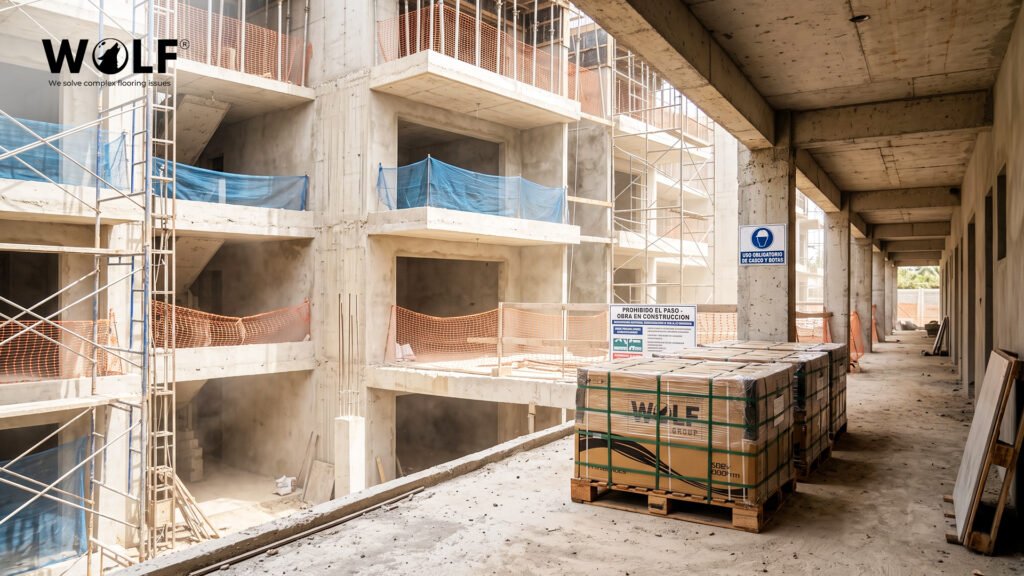
Imported porcelain tiles staged on-site at a residential build in the Dominican Republic, ready for installation.
Why importers are buying porcelain tiles from India instead of Europe
Cost is part of it, but it’s not the whole story. Here’s what actually changes when you go direct.
Cutting out a layer of middlemen means the price difference shows up where it matters, in your margin, not just on the invoice. If you’re currently buying from a trading company that’s buying from a factory, you’re paying for someone else’s markup before the tile even ships. Going direct removes that.
The catalogue side surprises a lot of first-time buyers. Indian factories run thousands of SKUs across marble-look, stone finish, concrete texture, wood-look porcelain, and large slabs. That means you can stock for a hotel project and a residential renovation off the same supplier instead of juggling three separate accounts just to cover different finishes.
Production scale is the other piece people underestimate. Morbi, Gujarat runs some of the largest tile manufacturing clusters in the world, which means a small trial order this month doesn’t put you at the back of the line for a full container next quarter.
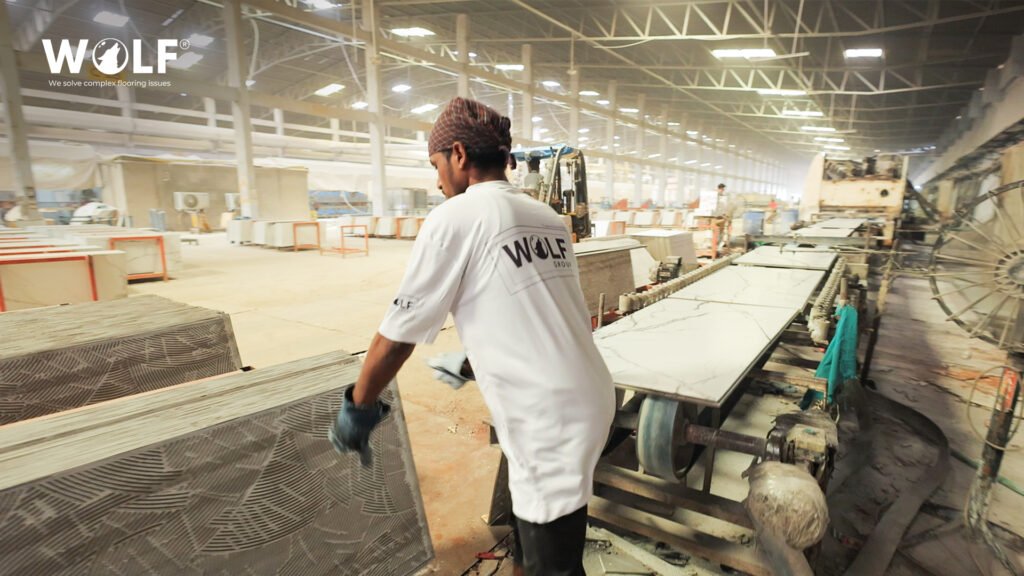
Inside a Morbi, Gujarat manufacturing facility, one of the production hubs supplying Indian porcelain tiles to Dominican Republic importers.
And the paperwork side is usually less painful than expected, as long as you’re working with a manufacturer that exports regularly. Commercial invoices, packing lists, certificates of origin, the documents customs actually want, a manufacturer that’s done this hundreds of times has it ready before you even ask. We handle that part for you so you’re not the one chasing missing forms at the port.
Tile sizes and finishes that actually move in DR projects
Stocking the right mix matters more than stocking everything.
600x600mm for homes and renovations
Still the most requested size for residential work. Bedrooms, kitchens, living rooms, it fits almost any layout and it’s what most homeowners already expect walking into a showroom.
600x1200mm for commercial spaces
600x1200mm porcelain tiles have become the default for hotel lobbies, office floors, and restaurant fit-outs. Fewer grout lines, cleaner look, and it’s also the size commercial clients usually ask for by name.
Matte finish for outdoor and wet areas
Patios, pool decks, balconies. With how much rain the DR gets, slip resistance isn’t optional. Matte porcelain handles that without giving up on style.
High glossy for showrooms and retail
Glossy still wins in reception areas, retail floors, and luxury residential where the goal is to make a space feel brighter and bigger than it is.
Getting tiles from India to the Dominican Republic
This is the part that scares off first-time importers, and it really doesn’t need to.
Shipments leave major Indian ports as full container loads and arrive in the DR through two main entry points: Port of Haina and Port of Caucedo. Transit generally runs 30 to 40 days, depending on the shipping line and how customs are moving that month.
You don’t need to manage every detail of this yourself. Container loading plans, HS codes, shipping insurance, export documents, all of it gets handled on our end as part ofour export network, which already covers documentation and shipping reliability for international buyers. Most delays come down to paperwork gaps, not the shipping itself, so working with a manufacturer who’s already done this for other Caribbean buyers cuts that risk down considerably.
What we bring to Caribbean tile distributors
We’ve been manufacturing and exporting porcelain tiles from India for over 20 years, shipping to more than 40 countries. For tile distributor Caribbean operations specifically, that means a catalogue built around tropical and coastal conditions, not just whatever’s trending in a European showroom.
Our high glossy and matte collections cover both ends of what DR projects need: polished finishes for hotels and retail, slip-resistant matte for patios and pool areas. If hospitality clients are a chunk of your business, we also put together adeeper look at high glossy tiles for DR hotel and resort interiors that’s worth a read alongside this one.
Browse our high glossy and matte collections for tropical projects →View All Collections
Request samples and a container quote
If you’re planning your next container, now’s a good time to start the conversation. Before you place a bulk order, it’s worth seeing how to actuallyget your first order moving the right way, starting with samples rather than committing to volume sight unseen.
Getting a quote is a direct conversation with the export team, no trading company sitting in between.
Request free samples so you can check finish and quality in hand, andreach our export team for a quote built around your project size and timeline. We’re one of the more established tile suppliers for Caribbean buyers, and we deliver to the Caribbean within 3 to 4 weeks of order confirmation.
Matte porcelain for outdoor and wet areas, since it handles moisture and gives better grip. Gloss / High gloss works fine indoors where slip resistance isn't a factor.
Commercial invoice, packing list, certificate of origin, and standard export paperwork. A manufacturer that exports regularly should hand you all of this without extra back and forth.