

Close
If you’ve ever seen a terrace tile crack after two winters near the sea, you already know the problem.
Coastal properties in Croatia don’t just need tiles that look good on day one. They need surfaces that stay stable when salt air gets into everything, when summer heat bakes the terrace for six hours straight, and when tourist season means the pool deck never fully dries.
Outdoor tile selection on the Adriatic is its own category. What works in a Zagreb apartment does not belong on a Hvar villa terrace.
For developers, villa owners, and landscape architects working along the Croatian coast, this is a buying decision that actually matters and getting it wrong shows up fast.
Salt doesn’t just come from seawater. It travels through coastal air, settles on surfaces, and works its way into porous materials over time. Natural stone that looked perfect in a showroom can develop surface damage within a few seasons if it wasn’t rated for coastal exposure.
UV intensity in Dalmatia is strong. Direct sunlight bleaches untreated or low-quality tiles. Colours shift. Surfaces that started warm and earthy start looking washed out by year three.
And then winter. The coast stays relatively mild, but freeze-thaw cycles still happen. Any tile absorbing water into its body during autumn moisture can crack when temperatures drop.
Outdoor-rated porcelain handles all of this better than most alternatives because of its low water absorption and dense manufacturing process. But the tile still has to meet the right specifications, not just be labelled “outdoor use.”
A reliable porcelain tile manufacturer from Morbi, India will provide full technical data for outdoor-rated tiles. If a supplier can’t hand over test reports, that already tells you something useful.
This is the part most buyers skim and then regret later.
High-density porcelain with low water absorption resists salt penetration because there’s almost no internal pore space for moisture to enter. For seafront projects. Marina-facing hotels, coastal villa terraces, outdoor café areas, this is the baseline spec, not an upgrade.
Matte porcelain holds colour better outdoors than polished finishes under strong sunlight. The surface doesn’t reflect heat the same way, and the pigments used in quality outdoor porcelain are designed to stay consistent even after years of direct UV exposure.
This matters more for warm-toned tiles because colour shift is more visible on earthy and sand shades.
Porcelain classified for low water absorption handles freeze-thaw cycles without internal damage. Worth confirming this spec even for coastal locations where frost feels unlikely, microclimate variation along the Adriatic means it still happens.
For any tile going around a pool, on a wet terrace, or near an outdoor shower, R11 is the minimum. This isn’t optional, it’s a safety requirement and often part of project specifications for hospitality builds.
Matte finishes naturally outperform polished surfaces here. The texture provides grip in wet conditions without looking industrial.
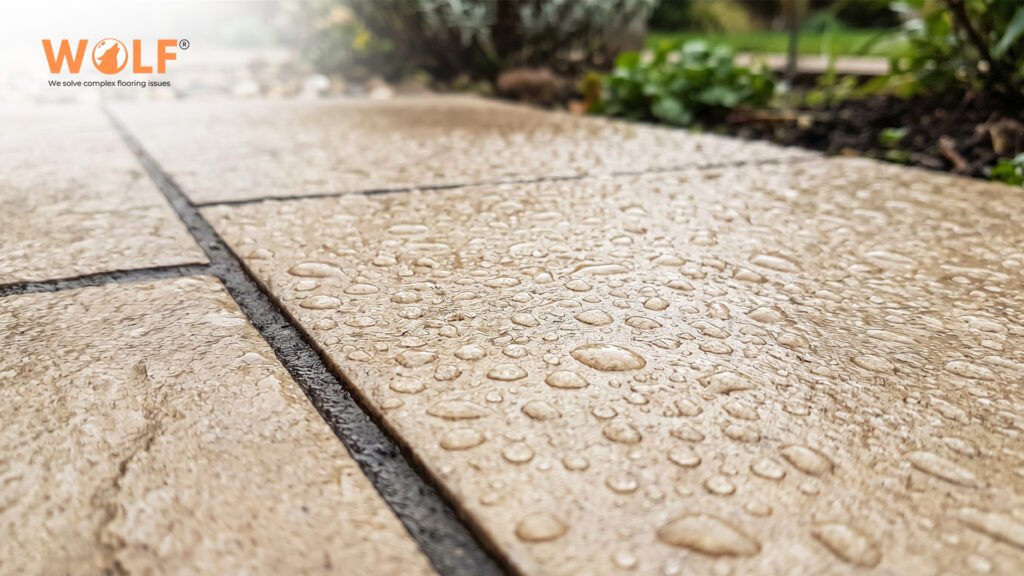
Most outdoor hospitality projects along the Adriatic now specify porcelain based on slip rating, water absorption, and frost resistance before aesthetics even enter the conversation.
You can check our manufacturing certifications and quality testing to see the outdoor performance documentation Wolf provides for export buyers.
Two formats dominate Croatian outdoor projects right now. Both have practical reasons behind them.
The 600×600mm format handles drainage slopes around pool edges more easily. More grout lines also means better overall traction in wet zones. Smaller format tiles are more forgiving during installation on uneven outdoor substrates too.
For pool surrounds, outdoor walkways, garden dining areas, and rooftop terraces, this is still the most widely specified size.
600×600mm matte porcelain tiles for pool decks in warm stone-look visuals are among the most requested formats for Adriatic residential and hospitality projects.
Matte surfaces are also easier to maintain, they hide water spots, salt residue, and dust more naturally than any glossy finish would.
Larger terraces benefit from fewer grout lines. The 600×1200mm format creates a cleaner visual and connects outdoor and indoor spaces more smoothly when the same tile runs through both.
Contemporary Croatian villa design increasingly uses this approach, same tile indoors and out, creating a seamless transition through large glass doors onto the terrace.
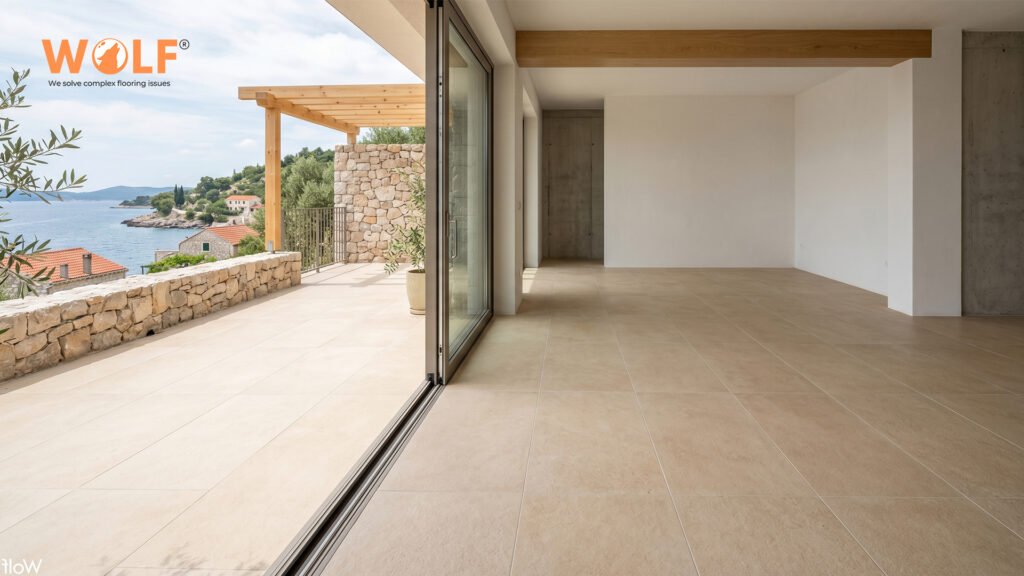
600×1200mm matte porcelain tiles for outdoor terraces work well for covered patios, hotel lounges, and open balconies where a more architectural finish is the goal.
Cold grey concrete-look tiles had their moment. Coastal Croatia has moved past that.
The strongest demand right now is for surfaces that feel connected to the landscape around them. These are the finishes coming up most consistently across Adriatic residential and hospitality projects:
Travertine-effect outdoor porcelain is popular for a specific reason: it photographs well. For villa rental listings and hotel marketing, warm matte stone-look tiles create an atmosphere that cold or dark surfaces don’t. That matters commercially, not just aesthetically.
Croatian developers are no longer comparing Indian and Italian porcelain on price alone.
The conversation has shifted because technical performance from leading Indian manufacturers now genuinely holds up against outdoor specs that Croatian hospitality and residential projects require. Water absorption, UV stability, frost resistance, R11 slip rating, these can be documented and verified, and they’re the same criteria buyers apply to Italian products too.
Many porcelain tile suppliers Croatia works with today source matte outdoor collections directly from India because the pricing difference becomes substantial on large hospitality projects. When you’re covering several thousand square metres of terrace and pool deck across a development, that gap matters.
Experienced matte finish porcelain tile exporters in India now produce outdoor-rated collections specifically designed for Mediterranean and European climates, not repurposed indoor products with an outdoor label.
The difference becomes obvious on larger projects. That’s where cost decisions stop being preferences and start being project economics.
If you’re evaluating Indian suppliers for the first time, our guide to sourcing tiles from India for Croatian buyers covers how Croatian importers approach that process in detail.
Outdoor porcelain tiles are heavier per pallet than most indoor formats. Container planning for a large terrace or pool deck project needs to happen early.
Adriatic ports receiving porcelain tile shipments from India include Rijeka, Split, and Ploče. Each has established freight handling for tile containers.
Export-ready suppliers should provide moisture-protected packing, batch documentation, slip-resistance certificates, and full export paperwork for EU import clearance.
You can see our export process to Mediterranean and European markets for how Wolf handles container coordination. You can also meet our dedicated export team if you want to talk through logistics before requesting samples.
Photos don’t tell you the grip. They don’t tell you how a tile handles midday sun in August or how the finish reads when wet.
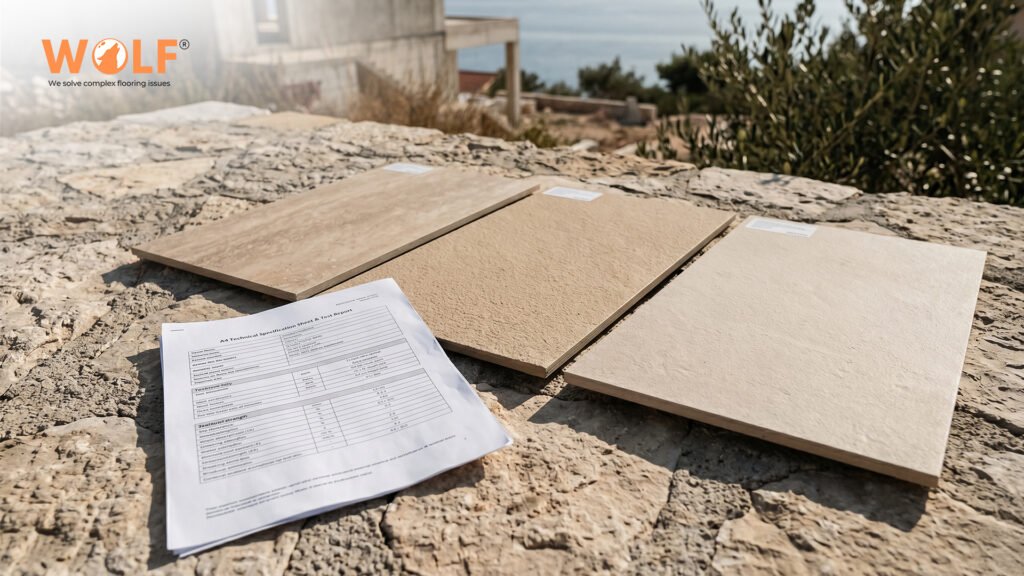
Before finalising any outdoor tile order, ask for physical samples along with:
Request outdoor-rated samples with test reports for your upcoming Adriatic project. That way, you can evaluate the finish and the technical performance side by side before committing to container quantities.
Porcelain absorbs almost no water, so salt and moisture can't work into the surface the same way. It holds colour under UV exposure and needs far less seasonal maintenance than most stone options near the sea.
Matte finish provides better grip in wet conditions, reduces glare under direct Dalmatian sunlight, and ages more consistently than polished surfaces. For pool decks and open terraces, it's the safer and more practical choice long term.
24×48 matte porcelain suits open terraces where fewer grout lines create a cleaner look. 24×24 is more practical around pools and sloped surfaces where grout distribution helps with drainage and traction.
Rijeka, Split, and Ploče are the main Adriatic ports used for porcelain tile imports. Container planning should start early since outdoor porcelain is heavier per pallet than most indoor formats.
Before any container is booked. Slip resistance ratings, water absorption data, and frost resistance classification should all be verified at sample stage, before delivery.
Reputable exporters provide full documentation including CE marking, water absorption test reports, slip resistance certification, and frost resistance data. These are the same standards applied to Italian and Spanish tile imports.
For coastal use, yes. Concrete is porous, absorbs salt moisture over time, and needs regular sealing. Outdoor porcelain requires almost no maintenance, doesn't absorb water, and holds its surface finish far longer in sea-facing conditions.