
Close
Walk into any new residential building going up in Sofia or Varna right now and check the floor spec. Chances are, it’s porcelain. And much of that porcelain is coming from India.
This starts at the specification stage, before a single tile gets ordered. Architects are making this call early because it solves practical problems like durability, batch consistency, and finish quality across multi-unit housing projects where every unit needs to match. This is why Indian porcelain tiles for Bulgarian residential projects are now being specified earlier in the design process.
Bulgaria’s residential construction has been growing steadily, not just in Sofia, but in Varna and Burgas too. And as that market has grown, buyer expectations have shifted. People buying or renting new apartments notice finishes. They care how things look after a year of actual use and wear.
Developers working on multi-unit housing projects are responding to that. They’re specifying materials that hold up, stay consistent across dozens of units, and don’t create maintenance calls six months after handover.
Many Bulgarian developers are now working directly with porcelain tile manufacturers in Morbi for export, especially those already supplying Eastern Europe. The access to design range, supply volume, and price-to-quality ratio compared to European alternatives is why this keeps happening.
India’s leading porcelain tile manufacturer and exporter, Wolf Porcelain Tiles, is one of the Morbi-based suppliers that architectural firms across Europe have been working with for residential project specifications.
This decision usually gets made at the specification stage. Once you compare both properly, porcelain tends to win for residential builds.
It’s denser than ceramic. Water absorption is significantly lower, which matters in wet areas and where underfloor heating is used, which is common in Bulgarian apartments. Surface prints are sharper too, which is also important when your spec calls for stone-look or marble-effect tiles that actually need to look convincing.
From a bulk tile supply perspective, porcelain also gives developers fewer long-term headaches. No resealing. Less staining. Lower replacement rate. For someone handing over 30 or 40 identical units, that consistency carries real value.
Porcelain tile exporters in India to Eastern Europe have been supplying this market long enough that most have their logistics and documentation processes dialled in for European buyers.
If you’re comparing materials during specification, review this vitrified vs porcelain tile comparison for Bulgarian buyers before locking your material specification, it covers the technical differences without overcomplicating things.
Bulgarian residential interiors have been leaning toward calm, neutral aesthetics. Nothing too loud. Spaces that feel clean and liveable without trying too hard.
Three styles showing up consistently in residential specs right now:
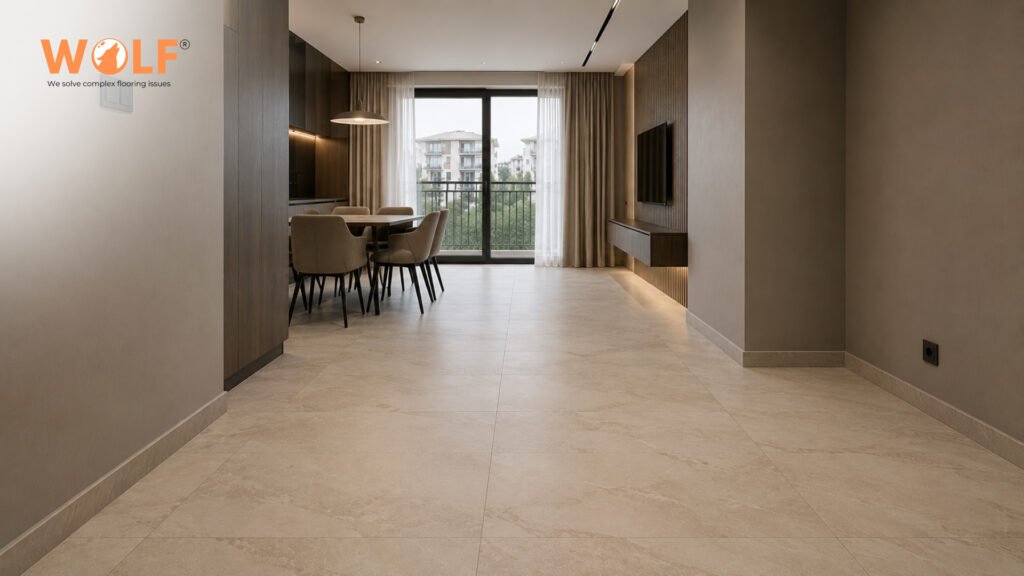
3. Light marble-effect : subtle veining on white or near-white base. Still strong for bathrooms and for premium units wanting an upscale feel without going bold.
Large format tile manufacturers in Morbi are producing all three styles in volume, which means consistent supply for full-building specifications without mixing sources.
Tile size affects installation speed, grout visibility, and how a room actually feels. Getting this right at the residential project specification stage saves problems later.
1200×1200mm porcelain tiles for open-plan living rooms are the most specified format for this use right now. The 48×48 format reduces grout lines across large floors and feels like one continuous surface. Matte finish is the safer call here, doesn’t show footprints or cleaning marks.
600×1200mm porcelain tiles for bedrooms and hallways hit the right balance. The 24×48 format elongates narrower corridors and works with most bedroom proportions without dominating the space.
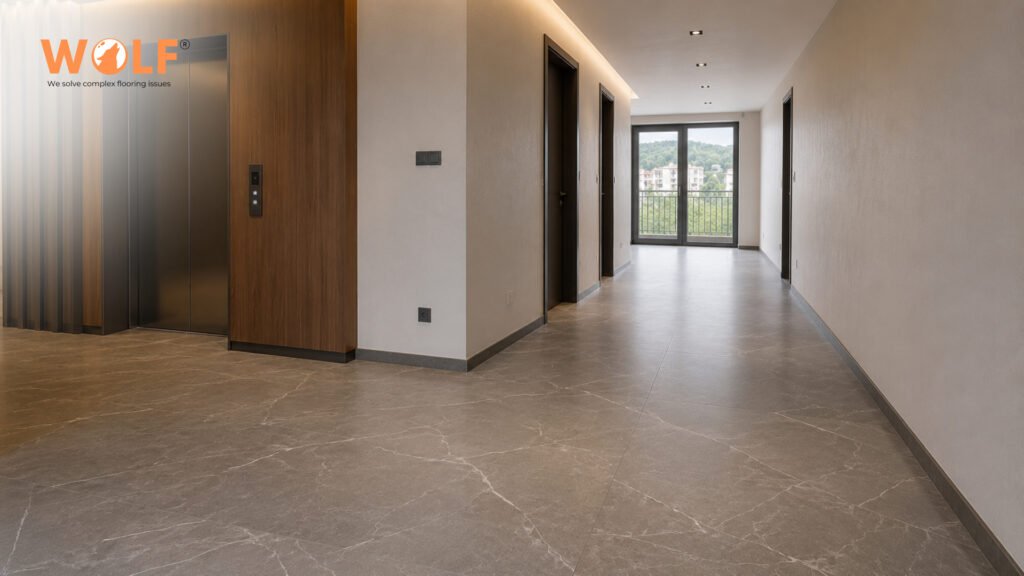
Slope adjustments, waterproofing layers, and smaller wall areas make 600×600mm porcelain tiles for bathrooms the practical standard. Matte finishes here also help with slip resistance, important for residential handover sign-offs.
Most residential specs don’t mix too many finishes. Keeping it simple works.
Matte is dominant across all floor areas. Hides wear better, no glare issues, and work with most lighting setups.
Glossy tends to show up on bathroom walls or smaller accent areas. Not usually full floors.
High-gloss gets used in premium kitchen or living room accents. On a full residential floor it looks great for the first month and impractical after that.
Safe spec for a multi-unit building: matte floors throughout, glossy wall tiles in wet areas if the design calls for it.
Mostly around sourcing verification. Here’s how to handle each part.
CE marking and EN 14411 compliance are non-negotiable for residential project specifications in Europe. Review Wolf’s manufacturing legacy and certifications, these include LEIIL, FOIEO, and management system certifications relevant to European buyers.
Water absorption percentage, breaking strength, abrasion resistance. Any serious porcelain tile manufacturer in Morbi exporting to Europe has these ready. If they can’t produce them quickly, that’s usually a red flag.
Catalogue images aren’t enough. Finishes read differently under different lighting conditions, and tone can vary slightly between batches. Confirm with actual tiles in your hands.
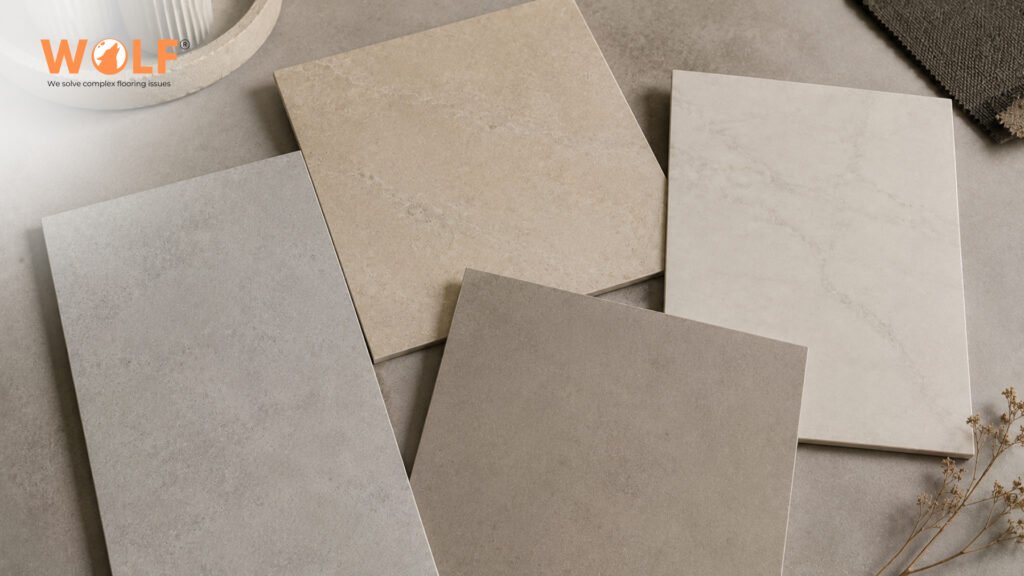
Confirm batch consistency for multi-unit projects
This is where residential project specifications often trip up. Tiles from two separate batches with slight shade variation across units create problems at handover. Ask about this specifically before finalising quantities.
Common Specification Mistakes in Bulgarian Residential Projects
A few things that consistently cause issues at the tile specification stage:
Each of these is a straightforward fix at the planning stage. Much harder to deal with after installation has started.
Shipping and Logistics to Bulgarian Ports
Once the specification is confirmed, the logistics are more straightforward than most people expect.
Main entry points for tile imports into Bulgaria are Varna and Burgas by sea. Transit time from Morbi typically runs 35 to 40 days, depending on the shipping line and current freight schedules.
Some consignments use overland routing through Thessaloniki into Bulgaria. This is usually used for smaller consignments or when there’s a timing reason to avoid sea freight.
Many porcelain tile exporters in India to Eastern Europe, including manufacturers like Wolf Porcelain Tiles, already have structured export processes for EU projects, packaging, documentation, and customs guidance handled on their end. The full picture of our export process and European delivery is worth reviewing before you confirm quantities and timelines.
If you’re finalising materials this month, Indian porcelain tiles for Bulgarian residential projects should already be locked at the specification stage, delays here can push your entire project timeline.
Request architect specification sheets and samples, these include finish samples, tile dimensions, technical test reports, and CE documentation. Everything you need to complete a full material specification and present confidently to the client or contractor.
Once that’s in place, the rest of the specification process becomes a lot more straightforward.
Supply consistency, design range, and price-to-quality ratio compared to European alternatives. For multi-unit buildings, having one reliable source across all units is a practical advantage.
Yes. Compared to European suppliers, Indian porcelain offers a better price-to-quality ratio, especially for bulk orders in multi-unit housing projects.
Yes. CE marking and EN 14411 compliance are standard for exporters supplying European markets. Always request documentation before specifying.
1200×1200mm (48×48) is the most specified format for open-plan residential areas, fewer grout lines and a cleaner finish across large floors.
Matte across all floor areas. Lower maintenance, no glare, and works in all lighting conditions.
Typically 25 to 35 days to Varna or Burgas by sea.
Yes, and you should. Physical sample review is standard before any project specification is finalised.
Varna and Burgas are the main entry points. Overland routing through Thessaloniki is also used for some consignments.