
Close
Most importers already know they want Indian tiles. The hard part is figuring out who to actually trust with your containers. Get that wrong and you’re spending months fixing one bad order instead of building a supply chain. Use this tile exporter evaluation checklist to verify what matters before you commit to anyone.
India’s tile industry is centered in Morbi, Gujarat, and it supplies buyers across Europe, North America, and the Middle East. The options are extensive and the quality gap between suppliers is significant.
The first thing to nail down is whether the exporter actually makes tiles or just sells them.
India’s tile export market splits into two groups: manufacturers and traders. Manufacturers own their production lines, control raw material inputs, and take direct responsibility for quality. Traders source from multiple factories and act as middlemen between you and whoever actually made the tile.
For repeat orders, private label ranges, or large commercial projects, that difference becomes a real problem fast. When you buy from a manufacturer, there’s one accountable party. You can ask about batch reports, kiln parameters, shade consistency protocols, caliber tolerances. When something goes wrong, you’re talking to someone with the authority to fix it. When you buy through a trader, accountability gets fragmented. They may not know which factory made a given batch or be able to guarantee shade consistency on a reorder placed six months later.
A buyer we spoke to described receiving a full container with shade variation across 40% of the tiles. When they went back to the supplier, the supplier couldn’t confirm which production batch the tiles came from. Two months of back-and-forth followed with no resolution.
A real manufacturer answers these specifically. A trader redirects to catalogues and pricing.
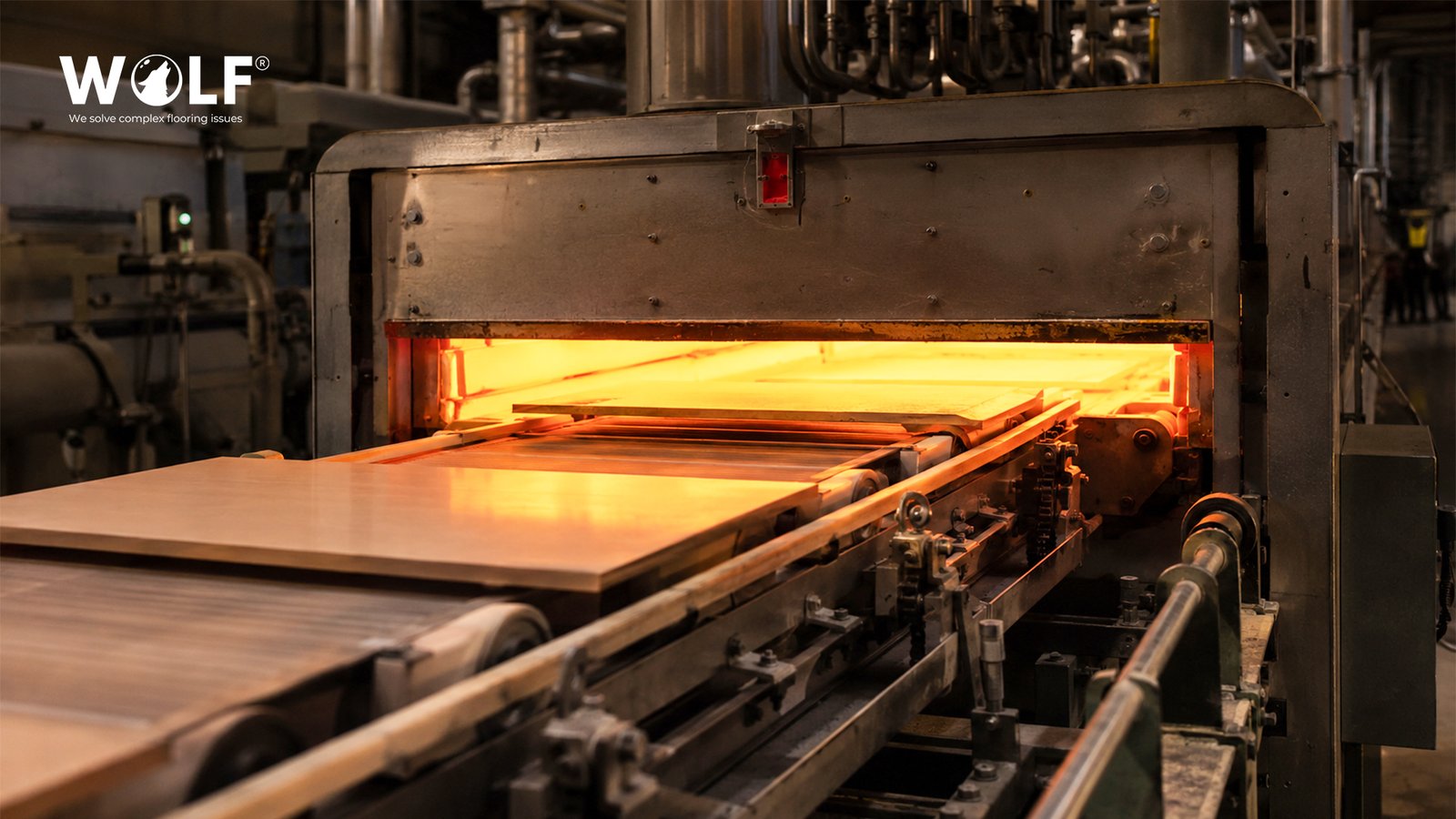
Wolf operates from a production facility in Morbi, Gujarat using Italian manufacturing technology across multiple dedicated production lines built for export-grade porcelain surfaces. Review our manufacturing facility in Morbi before shortlisting. For buyers comparing the best porcelain tile manufacturers in India for export, production infrastructure is the foundation everything else is built on.
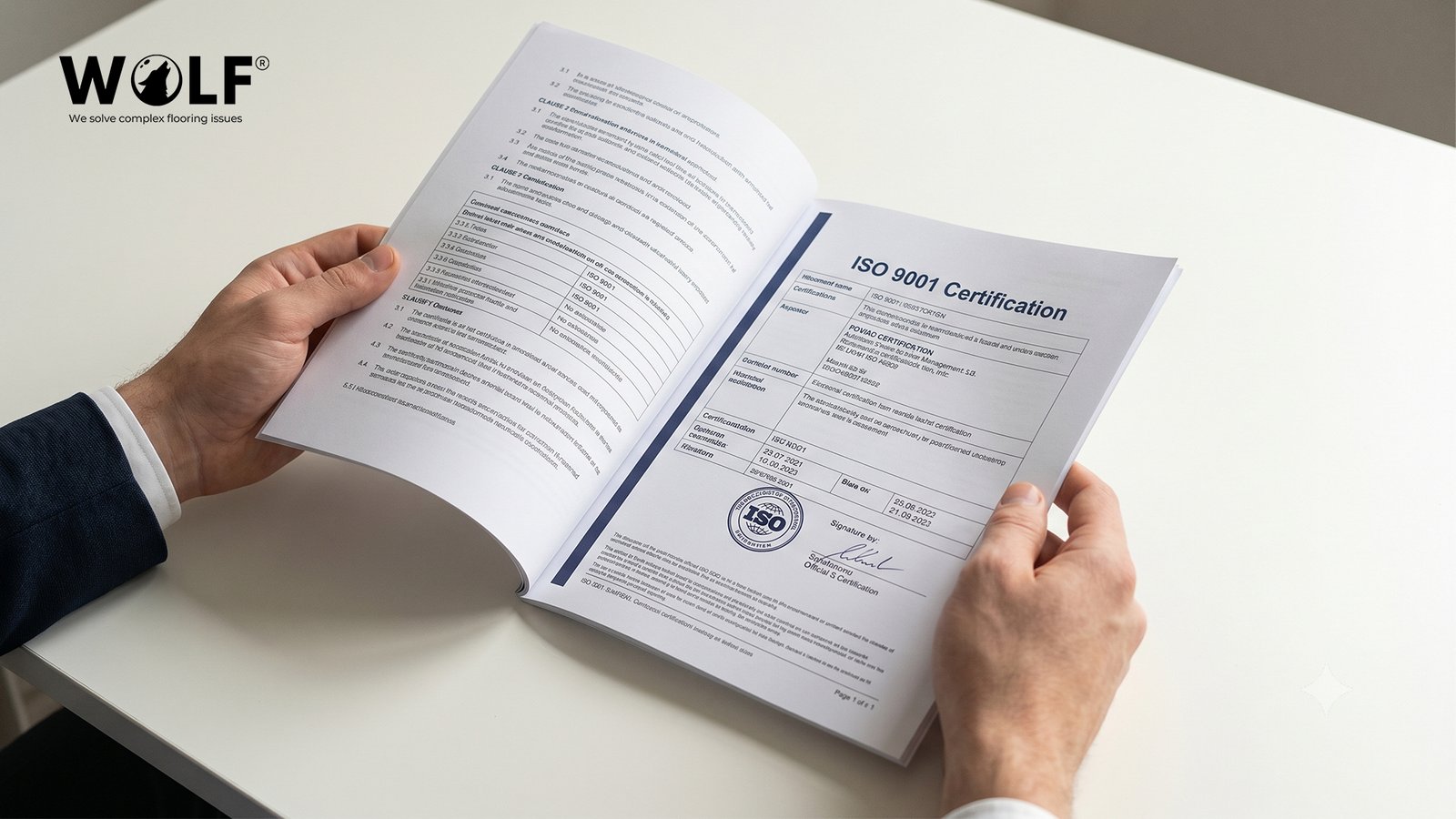
Buyers assume the supplier has the right certifications, don’t ask to see the actual documents, and only find out there’s a problem when a shipment gets held at port or rejected from a project spec. If you’re importing into Europe or North America, compliance documentation isn’t optional.
ISO 9001 covers quality management systems. A supplier with active ISO 9001 has had their production processes and quality control independently audited. You’re working with a supplier who operates systematically, not reactively.
CE Marking is mandatory for products entering the European Economic Area. Without it, your tiles can face complications in EU commercial project specs or retail distribution.
EN 14411 is the European standard for ceramic tiles, covering water absorption, breaking strength, surface abrasion resistance, and dimensional tolerances. Architects and procurement managers in Germany, the Netherlands, the UK, ask for this by default.
Certifications tell you what a supplier can do on paper. Export track record tells you what they’ve actually done, and whether they’ve done it for buyers like you.
Making tiles and exporting them are two different things. A Morbi tile manufacturer can have excellent production and still create problems at every stage of shipping: wrong customs documentation, inconsistent labeling, no understanding of pallet standards in Germany versus Canada.
One importer we work with had a shipment held at CBSA because the certificate of origin used the wrong formatting. It cost them two weeks and demurrage fees. Their previous Gujarat tile exporter had no experience with Canadian customs requirements. They found out at the worst possible moment.
Market-specific experience matters. A supplier strong in Africa or the Middle East doesn’t automatically understand what a German importer expects from documentation, or what Canadian customs brokers need to clear a shipment. The experience has to be relevant, not just extensive.
Wolf Group has over 20 years of experience as a ceramic tile India export supplier, currently active in 40+ countries, with documented familiarity with CBSA and CBP requirements for North American buyers. For European buyers in Germany, the Netherlands, and the UK, the export team understands the dispatch timelines, documentation expectations, and communication standards those markets run on.
Most importers start with one collection. The ones who build long-term relationships always end up needing more. A supplier who can only serve you at the level of your first order will eventually become a problem.
On private label: ask how many OEM clients the supplier currently serves, what the minimum volume is for a dedicated run, and how they handle reorder consistency for private label SKUs. Those questions separate suppliers who actually do this from those who say they do.
Wolf’s porcelain tile collections are built for the format and finish requirements of European. Buyers can explore the 600x600mm porcelain collection as a starting point. For distributors building their own brand, private label tile manufacturing support is available, including custom carton design and dedicated production runs.
How a supplier handles your sample request is how they’ll handle your order.
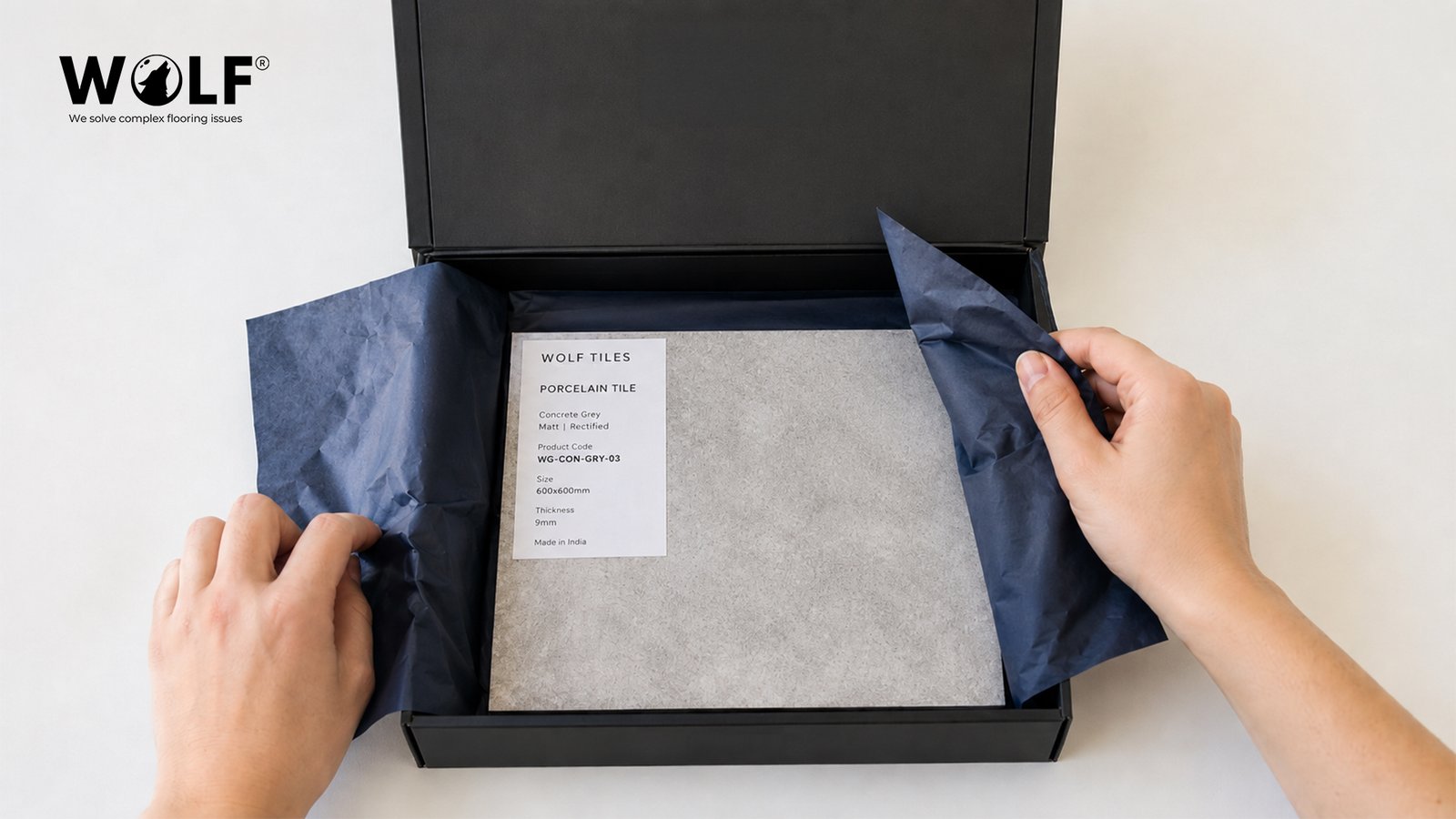
A supplier who takes two weeks to reply, sends tiles without proper labeling, or can’t answer basic technical questions is showing you their standards. A supplier who replies within 24 hours, sends properly packed and labeled samples with full technical documentation, and follows up proactively is showing you something different.
Also worth testing: ask a moderately complex question about documentation handling for your specific market. The answer tells you immediately whether you’re talking to someone with real export knowledge.
Wolf’s export inquiries are handled directly by the international sales team, with structured sample coordination for buyers across European markets. Contact our export team to test response time, request samples, and discuss your requirements.
Send us your requirements. We reply within 24 hours with samples, pricing, and full documentation.
Most buyers don’t think about this until they’ve had a bad experience. By then, it’s expensive.
Poor pallet construction lets tiles shift during transit, resulting in breakage that makes entire pallets commercially worthless. Inefficient loading increases freight cost per square meter. Errors in commercial invoices, wrong HS codes, and mislabeled cartons trigger customs holds that delay delivery by weeks and generate demurrage charges that eat into your margin.
For Canadian importers, CBSA requires precise certificate of origin formatting under CUSMA. For US buyers, incorrect country of origin declarations can trigger CBP audits that delay entire consignments.
Suppliers with robust export operations already expect these questions. Suppliers who push back on loading photos are showing you something important about how their back-end actually works.
Review the container loading guide and documentation process before confirming any supplier.
Before committing to any Indian tile supplier, verify these six things:
Do they own their factory? Can they guarantee consistency on repeat orders?
ISO 9001, CE, and EN 14411 for European buyers.
Documented experience in your specific market, not just general export volume.
Full range support, genuine OEM capability, and reorder consistency.
Fast response, clear communication, organised sample process.
Structured loading, loading photos, and a complete documentation package.
If you’re still building your sourcing process, the guide on how to place your first tile order is a useful next step.
Ready to start your Wolf evaluation?
Send us your requirements and we’ll send samples, certifications, full pricing, and compliance documentation for your market. No commitment needed.
Verify factory ownership, active certifications, market-specific export experience, and documentation handling before placing any order.
Look for suppliers with active CE marking and EN 14411 certification who can share compliance documentation immediately on request.
Yes, manufacturers in Morbi hold CE marking, EN 14411, and ISO 9001 that meet EU project specification requirements.
Most Morbi manufacturers work in full container load quantities, one 20-foot or 40-foot FCL, though some offer partial containers for trial orders.
Yes, ask about minimum volumes for dedicated OEM runs and how reorder consistency is managed for private label SKUs.
Consistent production, current EU certifications, and structured container loading, the sample phase tells you which category a supplier falls into before you commit.