What Does It Cost to Import Porcelain Tiles from India to Poland? Full Landed-Price Breakdown (2026)
July 21, 2026
Every week a Polish buyer asks us the same thing on WhatsApp. What’s your price per m²?
Fair enough. But the FOB price on a Morbi quote is maybe 60% of what that tile costs you standing in your warehouse near Warsaw. The rest hides in freight, duty, VAT handling and delivery. If you don’t know those lines before ordering, you can’t honestly compare a direct import against your local distributor. You’re guessing.
So here’s every line, in order. By the end you can build the landed cost per m² for any quote you get, ours or anyone’s. And if you’d rather skip the maths, request a free sample and cost sheet and we’ll send current Poland numbers for your exact spec. The same method works if you’re buying into Czechia, Slovakia or the Baltics by the way, only the VAT mechanics and inland leg change.
The five cost layers of a landed tile price
Every container arriving in Poland carries five layers:
FOB price at the factory in Morbi
Sea freight and insurance to Gdańsk or Gdynia
Customs duty, plus anti-dumping duty on Indian tiles right now
Import VAT at 23%, which for most registered buyers is cash flow, not cost
Clearance and inland delivery to your warehouse
Add them up, divide by the m² in the box. That’s your landed price. We’ve run this same breakdown forCanadian buyers and the structure never changes. Only the numbers do.
Layer 1: FOB price at Morbi
FOB means the price covers manufacturing, packing, and the loaded container going onto the vessel at Mundra After that, the costs are yours.
Three things move the FOB number.
Size – A 600×600mm tile and a 1200×1800mm slab are different products. Different pressing, firing, handling. Large formats cost more per m². They’re also what Polish commercial projects keep specifying.
Finish – Glazed matt, polished, textured, marble-look. Each sits at its own point on the price ladder. If you’re weighing India against other origins on this, our comparison ofIndia vs China vs Turkey as tile sources covers where each one wins.
Technical grade – The one buyers skip and shouldn’t. Tiles going anywhere near a Polish terrace, balcony, facade or entrance need frost-grade porcelain, water absorption at or below 0.5%. Costs a bit more at the factory. Saves you a failed installation two winters later. We’ve written a full guide onwhy frost-resistant porcelain matters for Polish winters.
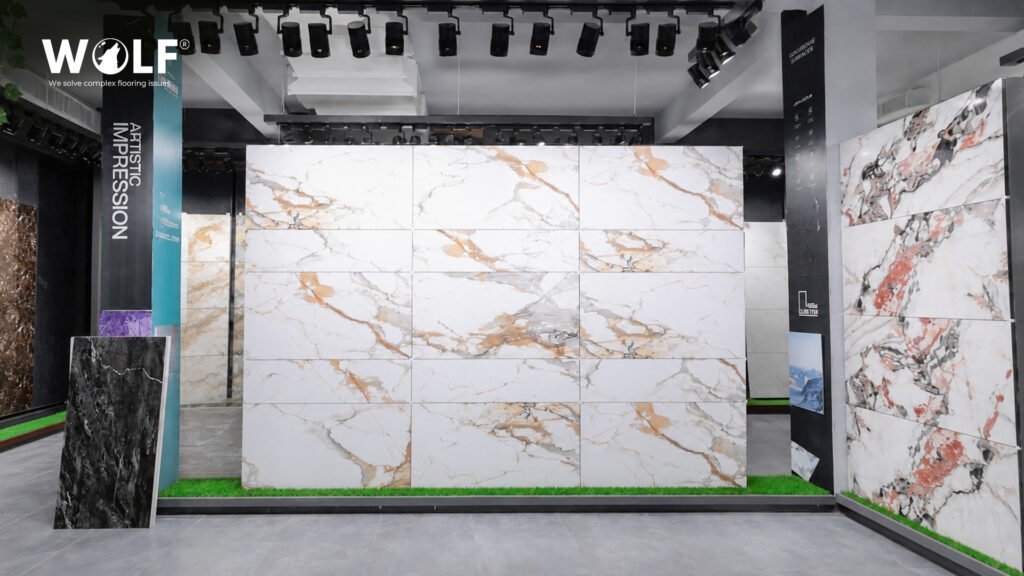
Size, finish and technical grade set the FOB number, large formats and premium finishes sit higher on the price ladder.
Tiles ship in 20ft containers, and weight is the limit, not space. Roughly 25 to 26 tonnes fits, which for standard 8mm 600×600 porcelain is about 1,520 m². Thicker and larger formats load fewer m². Exact quantities per size are in ourcontainer loading and packing guide.
Layer 2: Sea freight and insurance to Gdańsk or Gdynia
Mundra to Gdańsk (Baltic Hub) or Gdynia runs about 45 to 55 days on the water. Freight rates move constantly. A number older than a few weeks has expired, so ask for a fresh CIF quote every time.
The maths that matters: freight is fixed per container, so more m² loaded means less per m². An $1,800 freight bill over 1,520 m² is about $1.18 per m². Half-load the container and that doubles. Full containers of mixed sizes beat small trial orders on landed price, almost every time.
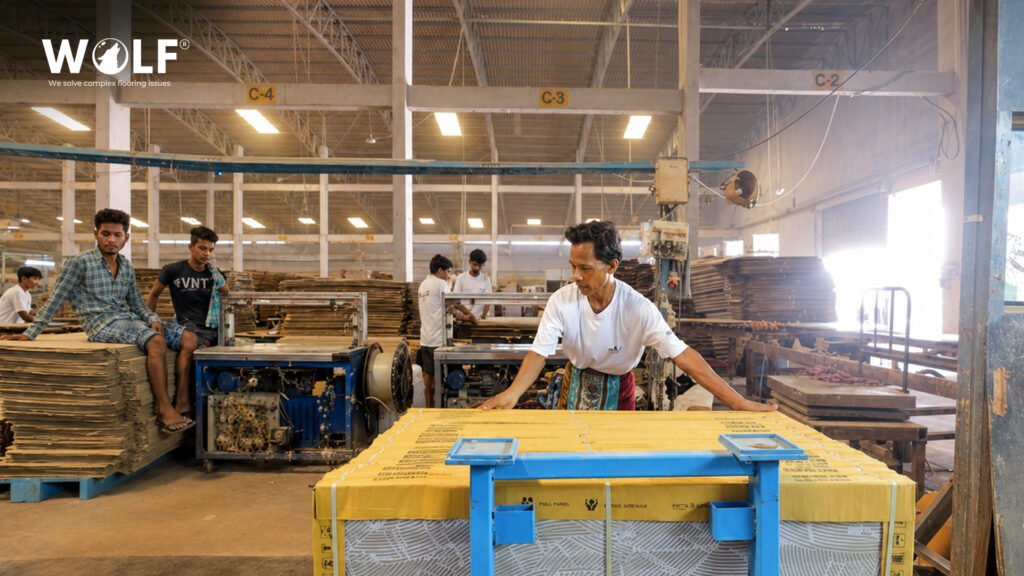
Freight is fixed per container, so a full 20ft (~1,520 m²) spreads the cost thinner than a half-load.
Marine insurance is small, around 0.3 to 0.5% of cargo value. Don’t skip it to save $30.
Layer 3: Customs duty, and the honest picture on the India-EU FTA
We’ll be straight here because a lot of content on this topic isn’t.
Two duties currently apply to Indian porcelain tiles entering Poland:
The standard EU customs duty on ceramic tiles under HS 6907. Check the live TARIC rate for your exact CN code.
An EU anti-dumping duty on Indian ceramic tiles, in force since 2023, roughly 6.7% to 8.7%. The exact rate is company-specific: the EU assigned each investigated Indian manufacturer, or “exporter group,” its own rate, so the duty depends on whose tiles are in your container.
Both are calculated on CIF value. So yes, Indian tiles carry a duty cost that Spanish or Italian tiles don’t. Polish buyers keep importing from Morbi anyway, because even with duty in, the landed price for comparable quality leaves a margin. The worked example below shows how. German buyers run the same calculation, ourGermany cost breakdown walks through their version.
Now the FTA. India and the EU concluded a free trade agreement in January 2026. Politically done, not yet in force. The realistic timeline for it to become operational is early 2027. When it does, preferential duty treatment kicks in and landed costs drop further. Here’s our full breakdown of theIndia-EU FTA duty savings and what changes.
Practically, that means supplier relationships built now get more valuable in 2027, not less. Buyers who wait for the FTA before sourcing will start from zero while their competitors already have tested quality and running orders.
Layer 4: Import VAT and clearance
Poland charges 23% import VAT on CIF plus duty. On paper it’s the biggest line here. For a VAT-registered Polish business it usually isn’t a cost at all. It’s cash flow.
Two routes: Standard route – Pay the VAT at clearance, reclaim it through your VAT return. You get it back, you just wait.
Article 33a – If you qualify, import VAT settles through your VAT return instead of at the border. Nothing leaves your account at clearance. Anyone importing regularly should set this up with their customs agent. It frees serious working capital.
Clearance itself, the agent’s fee plus terminal handling plus documentation, typically runs a few hundred euro per container. Your agent needs the commercial invoice, packing list, bill of lading, certificate of origin, and the CE marking and Declaration of Performance documents. Any serious manufacturer supplies those as standard.
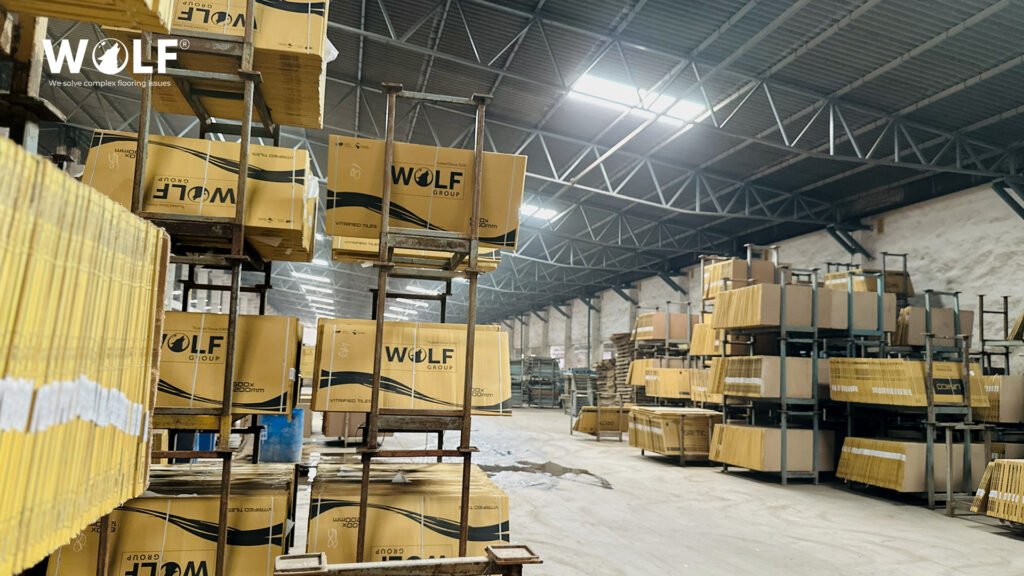
The final layers - clearance, VAT handling and inland delivery to your warehouse in central Poland.
Layer 5: The worked example, and the tile import cost in Poland per m2
Illustrative numbers for one 20ft container of 600×600mm glazed porcelain, about 1,520 m². Your real quote will differ by spec. This is the method.
Cost line
Per container
Per m²
FOB Morbi
$6,384
$4.20
Sea freight to Gdańsk
$1,800
$1.18
Insurance
$65
$0.04
CIF value
$8,249
$5.42
Duty + anti-dumping (~13% combined, example)
$1,072
$0.71
Clearance + delivery to central Poland
$700
$0.46
Landed cost (ex VAT)
$10,021
~$6.59
Import VAT sits on top at 23% but comes back to you, so it stays off the real cost line.
Call it $6.50 to $7.00 per m² landed for this spec in mid-2026 conditions, somewhere around 24 to 26 zł at current exchange rates. Now put that next to what comparable-quality glazed porcelain costs you through local distribution. You know your market, run the numbers. For most buyers the gap justifies the longer lead time several times over. And that’s the point. This was never about the lowest-grade tile at the lowest price. It’s comparable quality at a landed cost that gives you margin your locally-supplied competitors don’t have.
As a working range, standard 600×600mm glazed porcelain lands around $7 to $8.50 per m² excluding VAT, counting FOB, freight, duty, anti-dumping and delivery. Large formats and premium finishes land higher. Exact numbers depend on spec and current freight.
Divide your total landed cost (FOB + freight + insurance + duty + clearance + delivery) by the m² in the container. For a full 20ft of standard porcelain that's typically $7 to $8.50 per m2 ex VAT in 2026.
The standard EU duty on ceramic tiles plus an EU anti-dumping duty of roughly 6.7% to 8.7% depending on the manufacturer, both on CIF value. The India-EU FTA will reduce this once it enters into force, expected in 2027.
Not necessarily. Qualifying Polish importers use Article 33a to settle import VAT through their VAT return instead of paying at clearance. Otherwise you pay at the border and reclaim it.
Yes, a lot. Size, finish and technical grade all move the FOB price. For Polish outdoor use, frost-grade low-absorption porcelain is the spec that matters most, and it's worth every gross.
One more thing before you order
The cheapest line to get wrong is the spec. A container that cracks after its first Polish winter is the most expensive tile you’ll ever buy, whatever the landed price says. Before finalising any order with outdoor or entrance areas, read our buyer’s guide onwhy frost-resistant porcelain matters for Polish winters