

Prices from EU distributors keep climbing, and Romania is one of the fastest-growing markets on the continent right now. That gap is why more Romanian distributors are looking at how to import porcelain tiles from India to Romania directly, instead of buying through a European middleman.
Going direct means dealing with a few unfamiliar things: who to order from in Morbi, whether your samples will match the container, what happens at Constanța customs, and what the real landed cost looks like once duty and VAT are added, converted back into lei for your own books. This guide walks through all of it, step by step. Wolf Porcelain Tiles covers that chain as one accountable partner, and each step below flags where that removes risk, though the process itself applies to whoever you end up ordering from?
Morbi, Gujarat, accounts for up to 90% of India’s Porcelain tile exports, according to Gujarat government figures, so it’s the obvious starting point. But “Morbi manufacturer” covers everything from small production units to large integrated factories running their own kilns and presses.
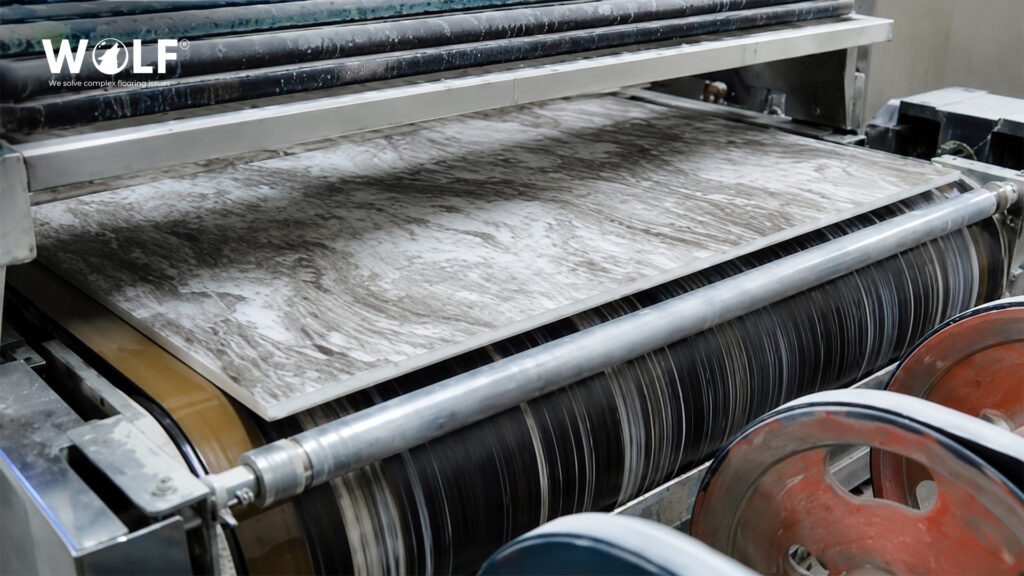
The first thing to check is whether you’re talking to an actual manufacturer or a trading company reselling someone else’s production. A manufacturer controls quality, batch consistency and lead times directly. A trader adds a layer between you and the factory floor, and one more place things can go wrong or get marked up.
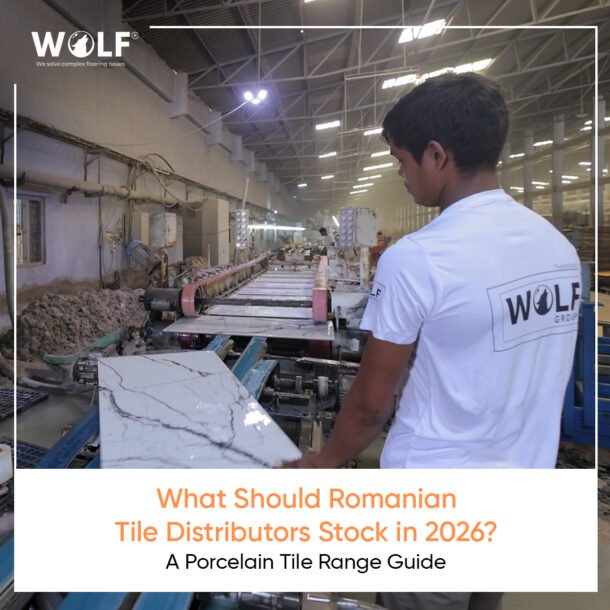
Wolf runs its own production lines in Morbi, exporting to 40+ countries as a porcelain tile exporter, so orders come from source rather than through a middleman. For context on how Indian manufacturing compares to other sourcing options, see this India vs China vs Turkey buyer comparison.
Manufacturing capability is only half the equation. You also need an exporter who’s actually shipped to the EU and knows what Romanian customs expects on the paperwork.
Ask about export volume, which countries they currently ship to, and whether they can show documentation from a recent EU shipment. A supplier new to exporting might make a great tile but stumble on something as basic as formatting a commercial invoice correctly, and that delays a container at port.
Wolf’s export team prepares the commercial invoice, packing list and certificates as a matched set before the container ships, so nothing is missing when it reaches Constanța. The Canada export process guide walks through what a comparable EU-standard shipment package looks like end to end, if you want to see the paperwork side in more detail.
Get physical samples before committing to anything. Three things worth checking:
Request a sample before locking in an order. Wolf dispatches samples quickly so you’re not waiting weeks to get to a decision.
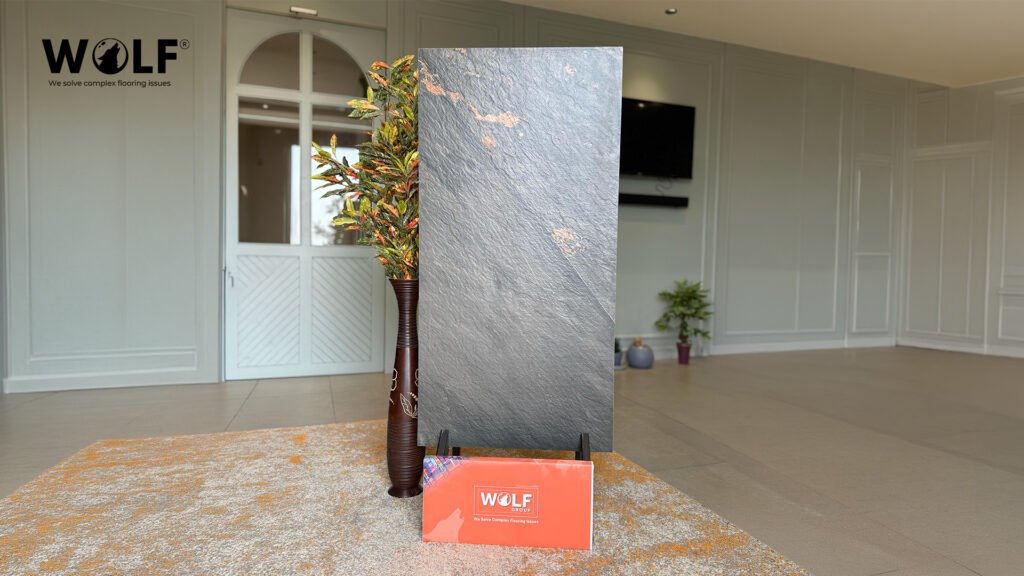
Once tiles are picked, you’ll lock in size formats, finish, quantity per SKU, and payment terms. This is also where the container mix gets decided, and the right mix of sizes and finishes is what actually moves once stock lands. The follow-up guide on what to stock in Romania in 2026 goes deeper on this.
Wolf’s large-format and 800×1600mm collections give a sense of what’s currently in production if you want to see sizes before specifying.
Once terms are agreed, you’ll typically get a proforma invoice and pay a deposit to move into production. Ask for a pre-shipment inspection before the container is sealed, a third party or the supplier’s own QC team checking the goods against spec before they leave the factory, not after they’ve landed and it’s too late to do anything.
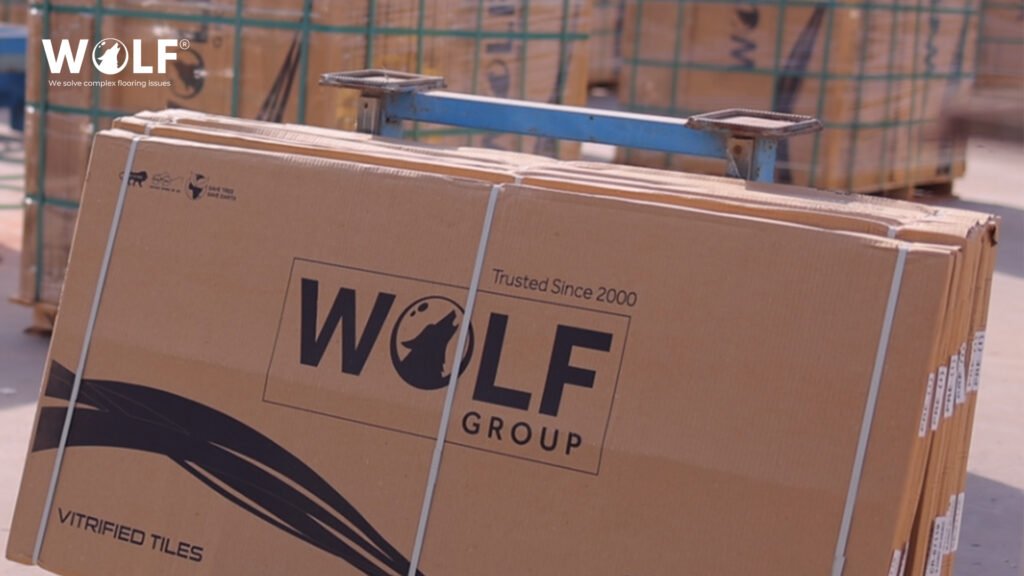
Wolf runs pre-shipment inspection as standard on every container and sends a photo report before sealing, so problems get caught at the factory instead of at your warehouse.
Constanța is Romania’s main deep-sea gateway and the largest port on the EU’s Black Sea coast. Shipments typically route from Mundra or Kandla through the Suez Canal. As of mid-2026, transit usually runs four to six weeks depending on routing, though Red Sea shipping schedules have been shifting through 2025 and 2026, so confirm current timing with your freight forwarder rather than treating this as fixed.
Wolf consolidates and loads containers to protect tile edges and corners in transit, not just to fill the space.
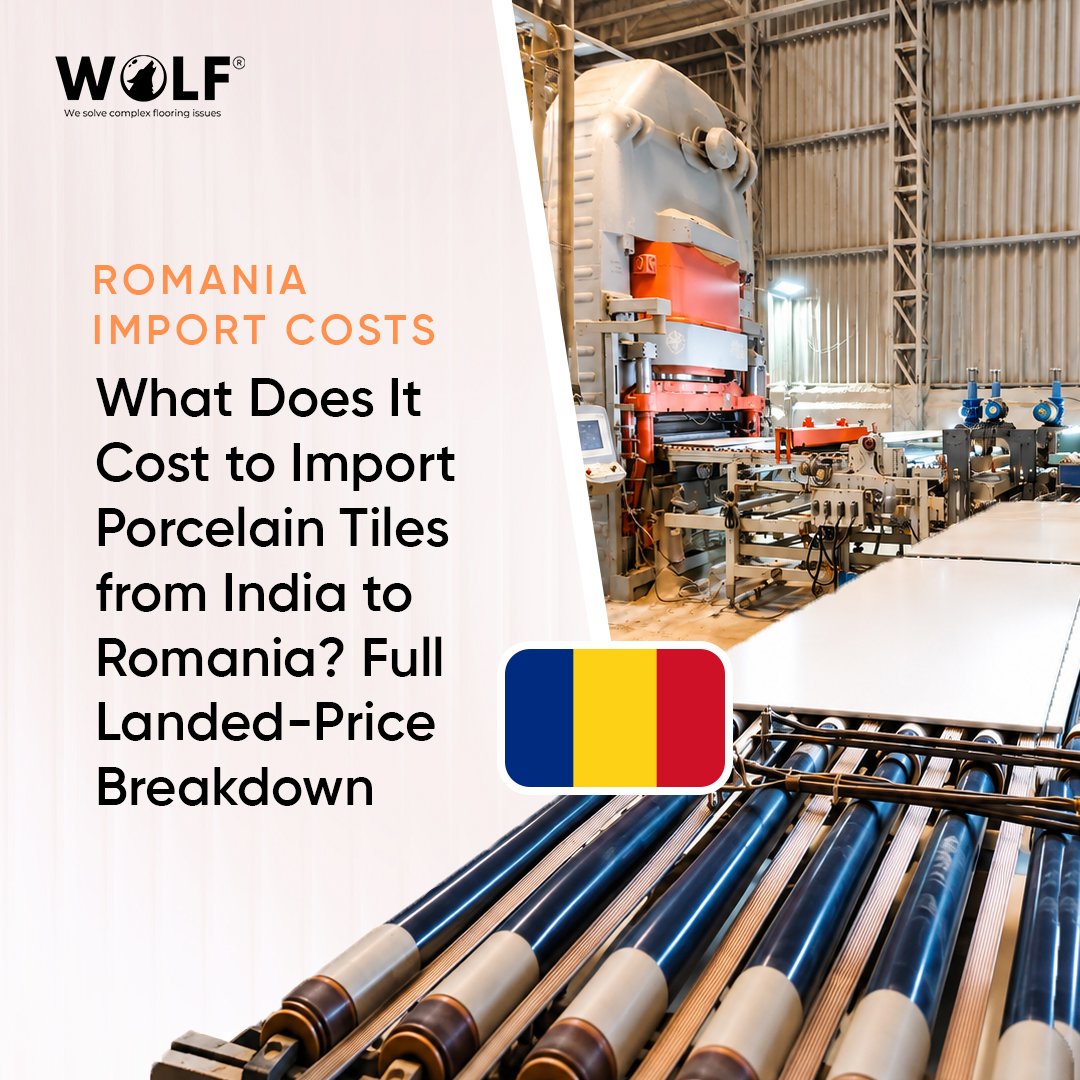
Here’s the actual number breakdown. Indian porcelain tiles entering the EU under HS code 6907 21 (water absorption ≤0.5%) carry two duties, both calculated on CIF value:
India and the EU concluded a trade agreement in January 2026, but it isn’t in force yet, so full duty applies as of 2026. Once it does take effect, this is likely to change, and it’s worth checking back on this page when it does.
You’ll also need an EORI number (your EU customs identifier) if you don’t have one, plus CE marking and a Declaration of Performance, the document confirming the tiles meet EN 14411, the European standard for porcelain tile characteristics and testing.
Wolf supplies EORI-ready export documentation, CE marking and a Declaration of Performance with every shipment. For how this picture is expected to shift once the FTA takes effect, see the India-EU FTA duty guide. The same duty stack applies to any EU country importing from India, not just Romania; the Poland import guide walks through an identical structure landing at a different port.
Worked example (€10,000 CIF): 5% standard duty (€500) plus anti-dumping at 7.7% for illustration (€770) adds €1,270 in duty, putting your landed cost at €11,270. Import VAT of 21% then applies on top of that, adding €2,367. That brings cash paid at the border to €13,637, but the VAT portion is recoverable in your next VAT return if you’re registered, so it’s a cash-flow line, not a real cost.
Worked example at container scale (€18,000 CIF): duty at the same rates adds €2,286 (landed cost €20,286), and VAT adds €4,260 (cash at border €24,546, with €4,260 of that reclaimable).
Both figures are illustrative. Actual CIF value depends on your specific order; confirm current FOB ranges with Wolf’s export team.
Romania’s standard VAT rate is 21% (raised from 19% in August 2025), applied to CIF value plus duty. If you’re VAT-registered, this is generally reclaimable. Some VAT-registered importers can also use Romania’s import VAT deferment mechanism, which shifts VAT into the periodic VAT return instead of paying cash at the border, worth checking with your customs broker, since it changes the cash flow picture significantly on a first order.
Correct, complete paperwork at this stage is what keeps clearance moving instead of getting flagged for extra checks.
None of these eight steps are complicated alone. What actually trips up a first-time importer is not knowing what to expect at each one. Do it once with a reliable partner and reordering gets a lot more routine.
While this guide focuses on Romania, the same route and duty structure applies for buyers further along the Black Sea and into Moldova, since containers land at the same port either way.
Once your first container’s landed, the next question is what to actually stock to sell fast and protect margin. That’s covered in the companion post, publishing this Friday: what Romanian distributors should stock in 2026.
You import by shortlisting a Morbi manufacturer, ordering samples, agreeing specifications and terms, shipping to Constanța, and clearing EU customs, paying standard duty, anti-dumping duty and 21% import VAT.
Indian porcelain tiles entering Romania carry the EU standard MFN duty of 5% on porcelain tiles (HS 6907 21), since India's EU tariff preferences on porcelain products are suspended through 2028, plus an EU anti-dumping duty of 6.7–8.7%, both on CIF value. The India-EU FTA is not yet in force in 2026.
A typical first order is one 20ft container. Exact square metreage depends on tile size and format, so ask your supplier for a packing list for the specific sizes you want.
They usually arrive at Constanța, Romania's main deep-sea port on the Black Sea, shipped from Mundra or Kandla.
No spam, no obligation.