
Close
If you’re a Belgian distributor or contractor buying through EU wholesalers, you’ve probably wondered what happens if you import porcelain tiles from India to Belgium directly. For most buyers ordering container volumes, the landed cost per m² still works out meaningfully better than European distribution pricing, at comparable quality. And that’s after paying every duty currently on the books, which we’ll walk through honestly, including the anti-dumping duty most guides pretend doesn’t exist.
The catch is that going direct feels complicated the first time. Which factory do you trust? What paperwork does Belgian customs want? And how does the 21% VAT actually hit your cash flow.
This guide walks through the whole thing, step by step, the way a first-time Belgian importer would actually do it. We’re Wolf Porcelain Tiles, we manufacture in Morbi, and we’ve been shipping to European buyers for over 20 years. This is written from the factory side of hundreds of these shipments. No theory.
Almost every porcelain tile that leaves India comes from one place: Morbi, in Gujarat. It’s the largest tile manufacturing cluster in the world after China, with hundreds of factories in one district.
That’s good news and bad news. Good because you get enormous choice in sizes, finishes and price points. Bad because the quality range across those hundreds of factories is genuinely wide.
Where Belgian buyers usually start:
If you want the general version of this process for any EU country, we’ve covered how European importers order porcelain tiles from India. This post is the Belgium-specific version, with the ports, VAT rules and duty numbers that apply to you.
Build a shortlist of 3 to 5 factories. Don’t try to evaluate twenty. You’ll drown in WhatsApp messages and sample boxes.
This step is where most first orders go right or wrong. Here’s the checklist to run when choosing an Indian porcelain tile supplier for Belgium, including on us:
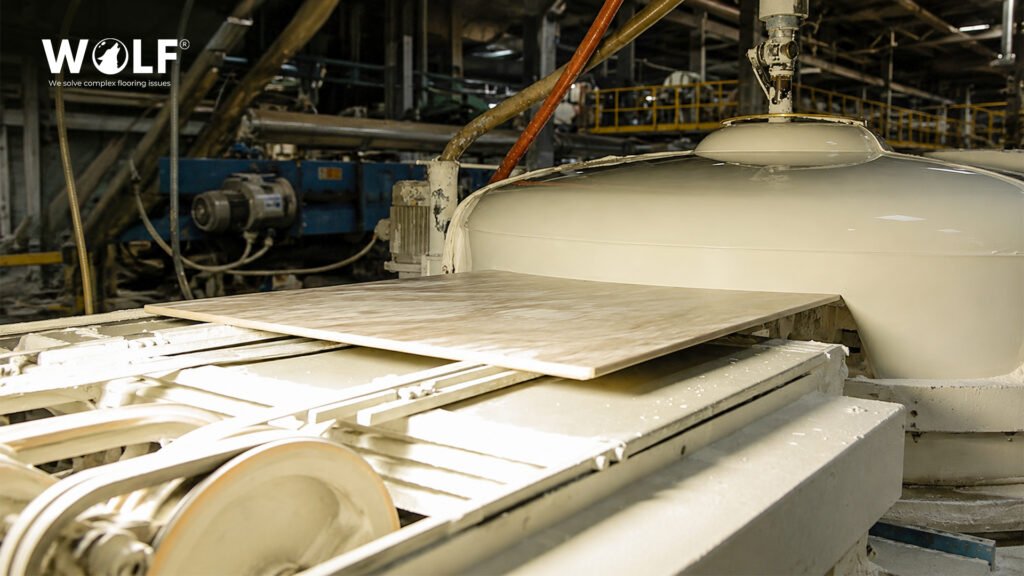
We’ll be direct about where we stand on this list: five production lines, the full size range up to 1200x1800mm, CE and EN 14411 documentation as standard, and 40+ countries served including regular EU shipments. That’s the bar. Hold every factory to it.
If you’re weighing India against other sourcing countries first, our India vs China vs Turkey comparison covers that decision. And for how other Belgian buyers have structured direct sourcing, see how Belgian construction firms cut tile costs.
Never place a first order without physical samples. Photos lie, even honest ones. Screens can’t show you surface texture, edge rectification or shade consistency.
Picture a distributor in Ghent shortlisting from a catalogue: the tile he’d pick from photos and the tile he’d pick after holding samples are often two different products from the same page. That gap is exactly what the sample box exists to close.
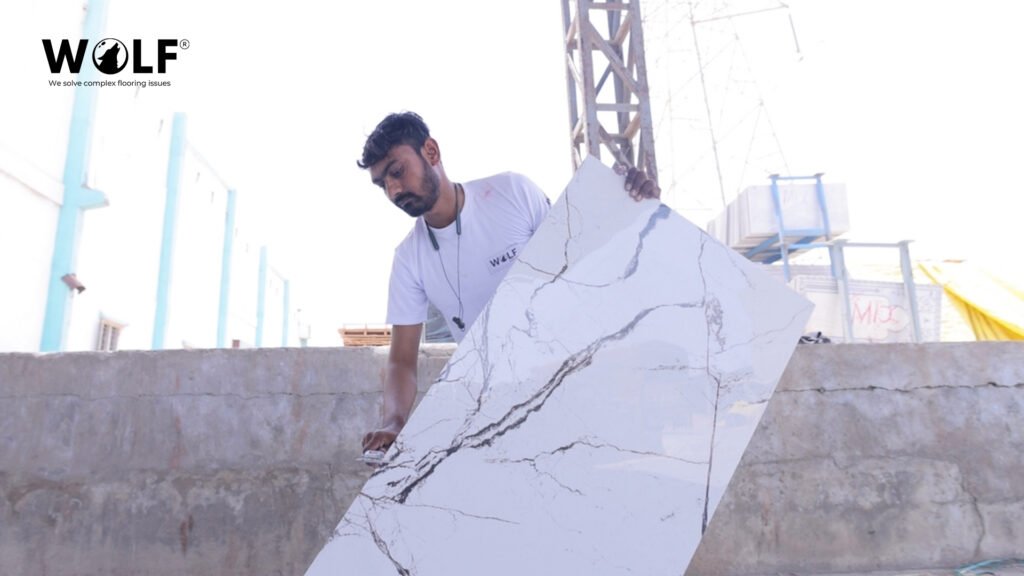
You can request free tile samples from us, and any serious factory will do the same.
When the box arrives, check:
If a supplier hesitates on samples or wants to charge heavily for them, that tells you something.
Now the commercial conversation. You’ll settle:
Once specs and price are agreed, the sequence looks like this:
This is usually the moment the nerves kick in for a first-time buyer, real money moving to a factory 6,000 km away. The inspection agreement in point 4 is what settles those nerves, so don’t skip it.
Quick pause. If you want real numbers for your sizes, we’ll send you 3 free samples plus a Belgium import cost sheet with current FOB, freight and the full duty stack. Request it here or message us on WhatsApp. It takes two minutes.
Tiles leave India from Mundra in Gujarat and close to Morbi, which keeps haulage costs down before the container even reaches the port. Sea transit to Antwerp-Bruges typically runs 35-45days depending on routing and transshipment.
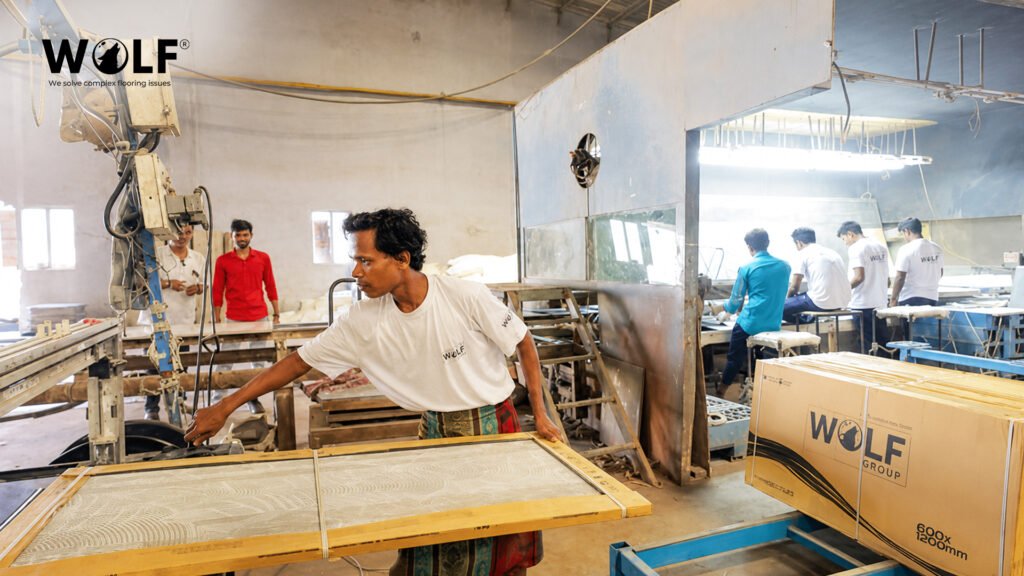
Antwerp-Bruges is the default entry port, and most Antwerp importers of porcelain tiles stick with it for the clearance infrastructure and inland connections. Zeebrugge works well if your warehouse sits closer to the coast.
Realistic total timeline from order confirmation to tiles in your warehouse: 8 to 10 weeks. Plan your stock accordingly and don’t let anyone promise you six.
Let’s do the duty picture properly, because most guides get this wrong or skip the uncomfortable part.
The tile import duty in Belgium today has three layers:
Even with all three layers priced in at today’s rates, direct container imports from Morbi land comfortably below EU distribution pricing for most volumes. Those are the honest numbers, and it’s why we’d rather show you the full stack than hide the anti-dumping line the way competitor content does.
Now the paperwork checklist for Belgian customs:
We’ve published a full Belgium tile standards verification checklist that covers exactly what to verify on the certification side before your order ships. Use it alongside this list.
A good factory prepares all of this as routine. If you’re chasing a supplier for a DoP while your container sits at Antwerp accruing demurrage, the savings evaporate fast.
Belgium charges 21% import VAT, calculated on CIF value plus duty. For a full container that’s a serious chunk of cash due at the border.
Except it doesn’t have to be.
Belgium’s ET 14000 licence lets VAT-registered importers defer import VAT to their periodic VAT return instead of paying at clearance. You declare it and deduct it in the same return.
For most businesses, the cash-flow hit basically disappears.
Plenty of competitor guides never mention this, and it’s one of the strongest reasons Belgium is a great port of entry for Indian tiles. Talk to your accountant or customs broker about getting the licence set up before your first shipment.
After clearance, your forwarder trucks the container to your warehouse. Check the load against the packing list on arrival, photograph any transit damage immediately, and you’re done. And here’s the thing about that first-container anxiety from Step 5: by the second or third order, this entire cycle runs on a routine email thread and a couple of WhatsApp messages. The process only feels big once.
Current FOB pricing, freight to Antwerp, the full duty stack including anti-dumping rates, and per-m² landed figures. Plus three samples of your choice, shipped free.
FOB price + freight + EU duty + 6.7 to 8.7% anti-dumping duty + 21% VAT (deferrable via ET 14000). Request our Belgium cost sheet for current per-m² figures.
Usually one 20ft container, mixed across a few designs and sizes.
35 to 45 days port to port. 8 to 10 weeks order to warehouse.
Yes, if the factory manufactures EN 14411 and provides CE marking with a DoP. Ask for documents before ordering.
Yes. The India–EU FTA is not in force yet, preferential rates start around 2027.